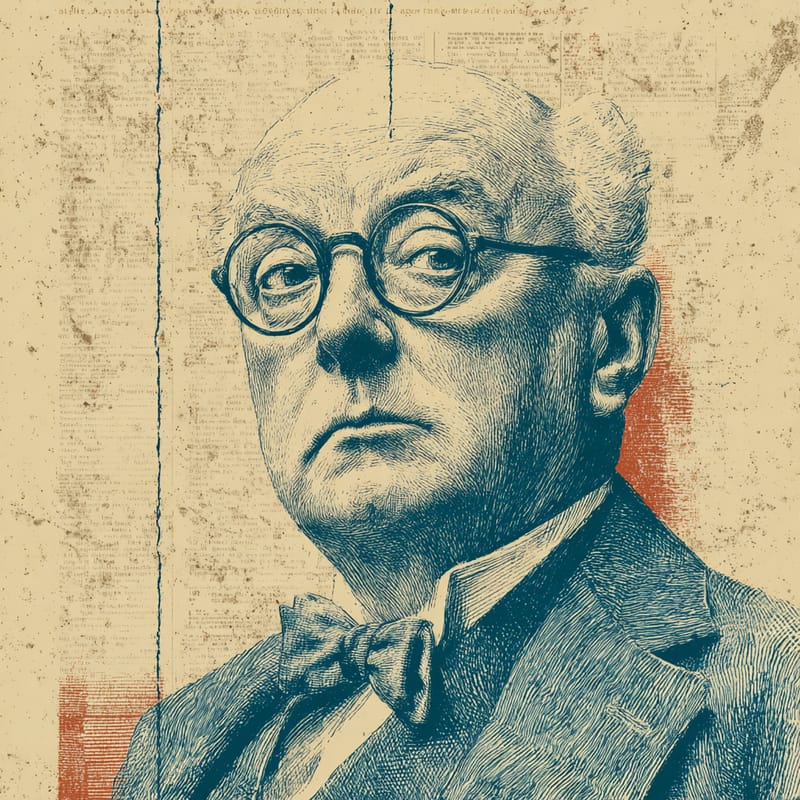
Russell Kirk
The conservative mind
Tradition, order, and the moral imagination.
Reactionary Paleo-ConservativeOne of 729 ideologies · enter the Paleo-Conservative hall →- Role
- Writer & theorist
- Era
- 1918–1994
- Region
- United States
- Social band
- Reactionary
- Placement
- +68 · +45 · −72
§ Where Russell Kirk stands
3 axesKirk defended private property and free enterprise as bulwarks of freedom and order; one of his conservative principles holds that freedom and property are closely linked. But he distrusted abstract market theory, consumerism and industrial gigantism, and in his 1981 essay Libertarians: the Chirping Sectaries he condemned libertarians for reducing society to economic self-interest.
Kirk held that order is the first need of any society and that it rests on inherited institutions, custom and religion rather than on planning or abstract rights. The Roots of American Order (1974) traced the American constitutional order to Jerusalem, Athens, Rome and London, and he defended local institutions, the family and the church against both centralised bureaucracy and radical individualism.
Kirk was a thoroughgoing traditionalist who believed that political problems are at bottom religious and moral. He borrowed T. S. Eliot's phrase the permanent things for the enduring norms of faith, family and custom, defended Burke's moral imagination against ideology, and in 1964 was received into the Catholic Church, the year he married Annette Courtemanche.
How close are you to Russell Kirk?
Three statements, one per axis. Answer them and we’ll drop you on the compass next to them.
§ The story
HistoricalRussell Amos Kirk (1918–1994) was an American political theorist, historian, critic and novelist. Born in Plymouth, Michigan, the son of a railway engineman, he studied at Michigan State College and Duke University, served in the US Army during the Second World War and earned a doctorate of letters at the University of St Andrews in Scotland. His dissertation became The Conservative Mind (1953), and he spent most of his life writing from his family's home at Mecosta, Michigan, which he called Piety Hill.
The Conservative Mind traced a lineage from Edmund Burke through John Adams, Coleridge and Disraeli to modern writers, giving post-war American conservatism an intellectual pedigree; an enthusiastic review in Time helped make it a bestseller. Kirk founded the journal Modern Age in 1957 and The University Bookman in 1960, wrote a column for National Review for a quarter of a century and published popular ghost stories. Late in life he attacked libertarians and neoconservatives, opposed the 1991 Gulf War and backed Pat Buchanan's 1992 presidential bid.
Notable for
- 01'The Conservative Mind'
- 02Founded 'Modern Age'
- 03Defined American traditionalism
Key works & moments
- 1953Publishes The Conservative Mind, developed from his St Andrews doctoral dissertation.
- 1955Begins his long-running column in William F. Buckley Jr.'s new magazine, National Review.
- 1957Founds the conservative quarterly journal Modern Age.
- 1974Publishes The Roots of American Order.
- 1981Attacks libertarianism in the essay Libertarians: the Chirping Sectaries.
- 1993Publishes The Politics of Prudence, including his ten conservative principles.
§ Minds closest to Russell Kirk
All minds →

§ Also in the Paleo-Conservative hall
Enter the hall →§ Common questions
4 answersWhat was Russell Kirk's political ideology?
Russell Kirk was a traditionalist conservative: on the 99ideologies three-axis compass, a Reactionary Paleo-Conservative. Economically he sat on the right (+68), defending private property and enterprise while distrusting consumerism and abstract market theory. On governance he leaned towards order and authority (+45), rooting society in inherited institutions, religion and custom rather than in planning or abstract rights. Socially he was deeply traditional (−72), a Catholic convert devoted to what he called, after T. S. Eliot, the permanent things.
Was Russell Kirk left-wing or right-wing?
Right-wing, as a founding figure of post-war American conservatism. Kirk's defence of tradition, religion, property and inherited order belongs squarely to the right. But he criticised much of the modern right too: he derided libertarians as chirping sectaries, accused neoconservatives of turning foreign policy into an ideological crusade, opposed the 1991 Gulf War and disliked industrial capitalism's erosion of community. That is why paleoconservatives, more than mainstream Republicans, claim him as their own.
What are Russell Kirk's ten conservative principles?
They are Kirk's summary of the conservative disposition, set out in The Politics of Prudence (1993) as an expansion of the six canons in The Conservative Mind. They are belief in an enduring moral order; respect for custom, convention and continuity; the principle of prescription, or the wisdom of inherited arrangements; prudence; a love of variety; recognition of human imperfectability; the link between freedom and property; voluntary community; prudent restraints on power and passion; and the reconciliation of permanence with change.
Which minds are closest to Russell Kirk?
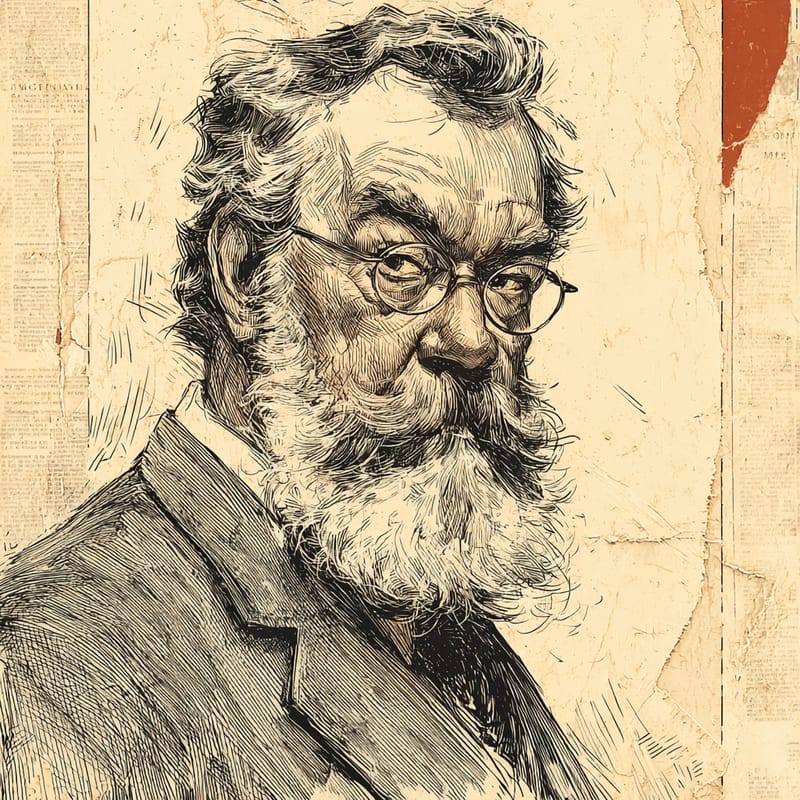
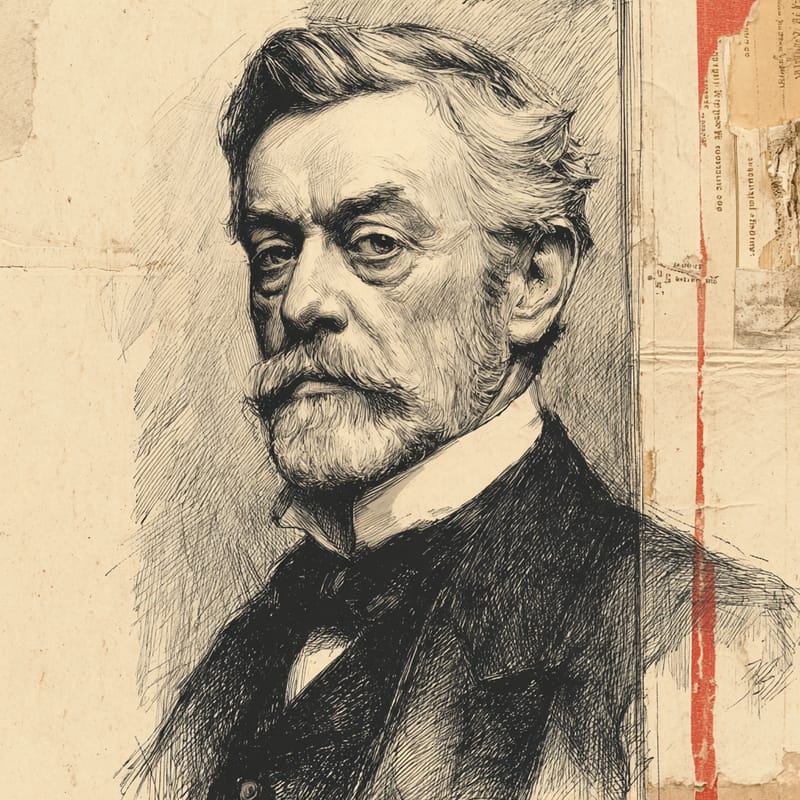
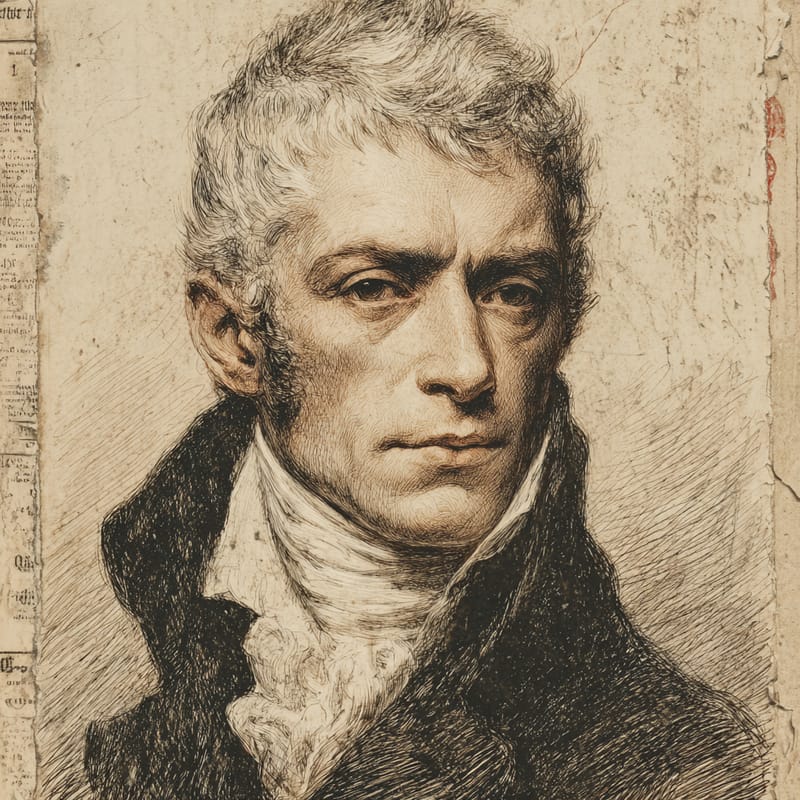
On the 99ideologies three-axis compass, the minds closest to Russell Kirk are Richard M. Weaver (99% alike), Patrick Buchanan (98% alike) and John Randolph of Roanoke (97% alike). The furthest is Emma Goldman (0% alike).