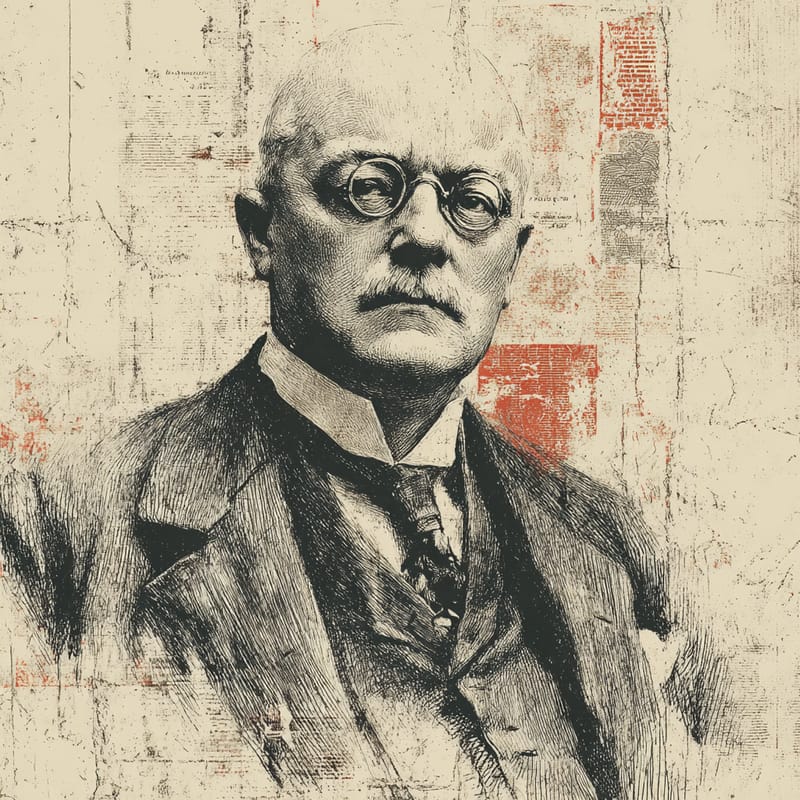
Robert F. Wagner
Labour's New Deal champion
The right to organise, in law.
Heterodox Social LiberalOne of 729 ideologies · enter the Social Liberal hall →- Role
- Senator
- Era
- 1877–1953
- Region
- United States
- Social band
- Heterodox
- Placement
- −30 · +22 · +28
§ Where Robert F. Wagner stands
3 axesWagner wrote much of the New Deal's economic architecture: the Wagner Act of 1935 put federal law behind collective bargaining, he sponsored the Social Security Act in the Senate, and the Wagner–Steagall Housing Act of 1937 funded public housing. His labour law blamed unequal bargaining power for depressing wages and purchasing power, casting stronger unions as a way to stabilise capitalism rather than replace it.
He built durable federal machinery for workers and tenants, from the National Labor Relations Board to the United States Housing Authority, extending Washington's reach into workplaces and cities. A product of Tammany Hall's machine politics, he nonetheless pursued change through legislation and the courts, and the Supreme Court upheld his labour law in 1937.
Wagner was a moderately progressive voice on race and refugees for his era. He co-sponsored the Costigan–Wagner anti-lynching bill, defeated by a Southern filibuster in 1935, and in 1939 the Wagner–Rogers bill to admit 20,000 refugee children from Nazi Germany, which died in Congress. Both defeats marked the limits of the New Deal coalition he served.
How close are you to Robert F. Wagner?
Three statements, one per axis. Answer them and we’ll drop you on the compass next to them.
§ The story
HistoricalRobert Ferdinand Wagner (1877–1953) was born in Nastätten, in the German province of Hesse-Nassau, and emigrated to New York as a child, growing up poor in Manhattan's Yorkville. He rose through the Tammany Hall Democratic organisation to lead the New York State Senate, and with Al Smith as his deputy he chaired the Factory Investigating Commission set up after the 1911 Triangle Shirtwaist fire. After serving as a state judge he was elected to the US Senate in 1926 and sat until ill health forced him to resign in 1949.
In Washington Wagner became the New Deal's chief legislative craftsman. The National Labor Relations Act of 1935, known as the Wagner Act, guaranteed private-sector workers the right to organise and bargain collectively and created the National Labor Relations Board; he also introduced the Social Security Act in the Senate and co-wrote the Housing Act of 1937. His bills for national health insurance and against lynching failed, business critics blamed his labour law for a wave of strikes, and the Taft–Hartley Act of 1947 later rolled back parts of it.
Notable for
- 01The Wagner Act (National Labor Relations Act)
- 02Public-housing legislation
- 03New Deal social architecture
Key works & moments
- 1911Chairs New York's Factory Investigating Commission after the Triangle Shirtwaist fire.
- 1926Elected to the US Senate from New York.
- 1934–35Co-sponsors the Costigan–Wagner anti-lynching bill; Southern senators block it.
- 1935The Wagner Act guarantees collective bargaining; he also steers the Social Security Act.
- 1937The Wagner–Steagall Housing Act creates the US Housing Authority to fund public housing.
- 1943Introduces the Wagner–Murray–Dingell bill for national health insurance.
§ Minds closest to Robert F. Wagner
All minds →

§ Also in the Social Liberal hall
Enter the hall →§ Common questions
4 answersWhat was Robert F. Wagner's political ideology?
Robert F. Wagner was a New Deal liberal and the leading labour legislator of his era: on the 99ideologies three-axis compass, a Heterodox Social Liberal. Economically he sat left of centre (−30), writing the laws that protected unions, created Social Security and funded public housing, while aiming to stabilise capitalism rather than abolish it. On governance he favoured a stronger federal state with new regulatory agencies (+22), and socially he was moderately progressive (+28), backing anti-lynching legislation and refugee relief.
Was Robert F. Wagner left-wing or right-wing?
Left of centre within American politics. Wagner stood on the labour-liberal wing of the Democratic Party and pushed further than Franklin Roosevelt was willing to go on national health insurance and anti-lynching legislation. But he was a Tammany Hall organisation politician and a pragmatic reformer, not a socialist: his central idea was that strong unions would raise purchasing power and so make a private-enterprise economy work better.
What did the Wagner Act do?
The National Labor Relations Act of 1935 gave most private-sector workers in the United States a legal right to form unions, bargain collectively and strike. It outlawed employer tactics such as firing union members or setting up company-controlled unions, and created the National Labor Relations Board to run union elections and enforce the law. The Supreme Court upheld it in 1937 and union membership rose sharply; the Taft–Hartley Act of 1947 restricted it, but it remains the foundation of American private-sector labour law.
Which minds are closest to Robert F. Wagner?
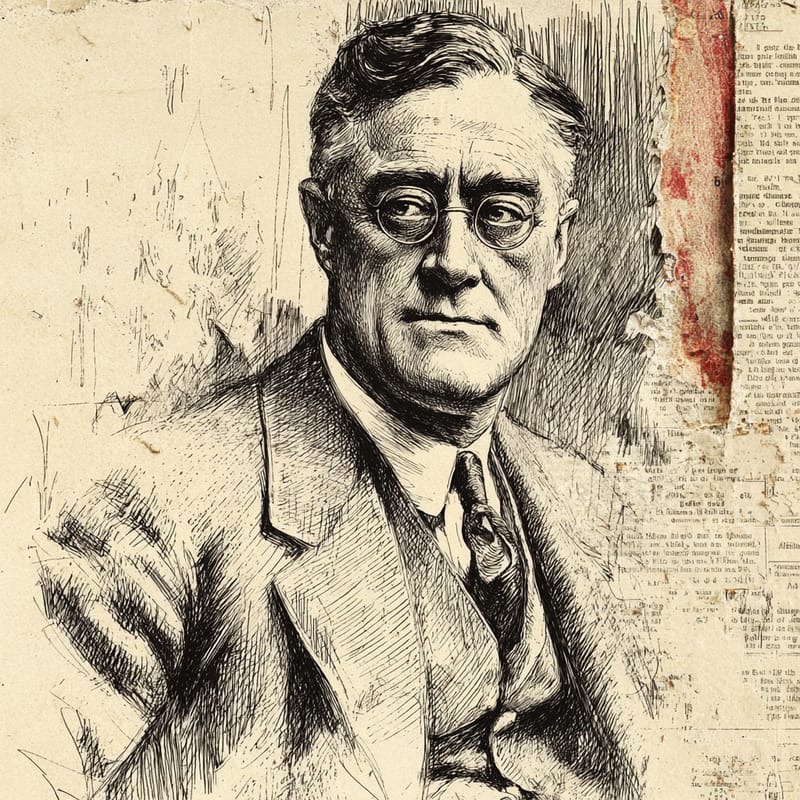
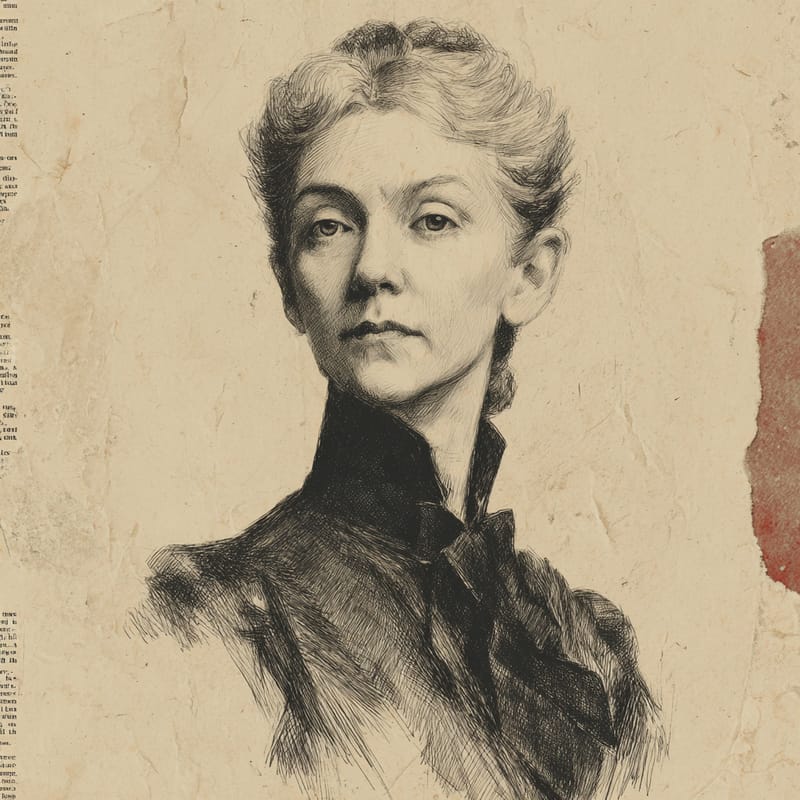
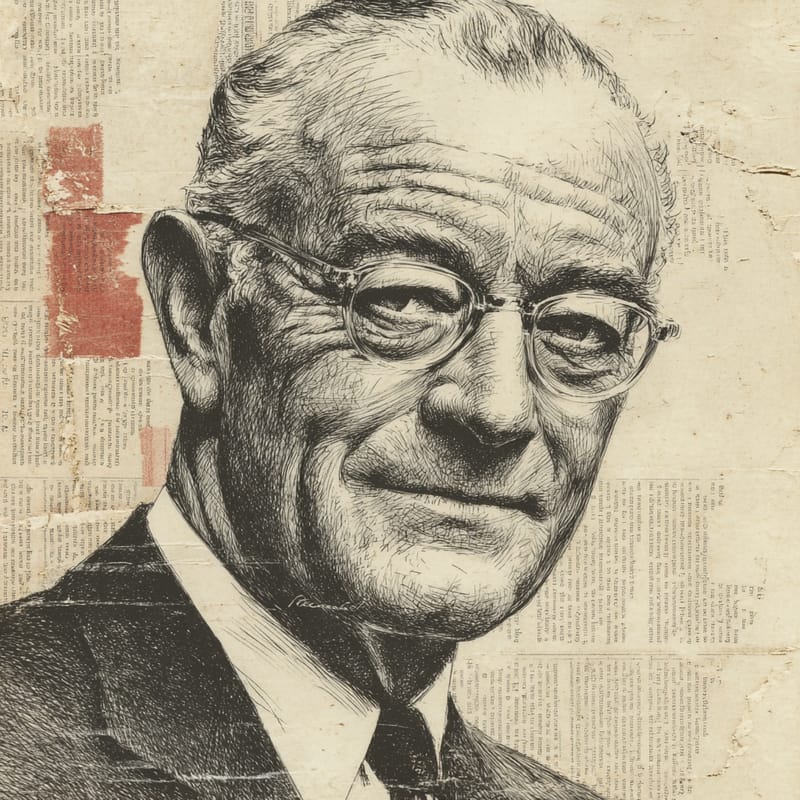
On the 99ideologies three-axis compass, the minds closest to Robert F. Wagner are William Temple (98% alike), L. T. Hobhouse (97% alike) and Lyndon B. Johnson (97% alike). The furthest is Hans-Hermann Hoppe (24% alike).