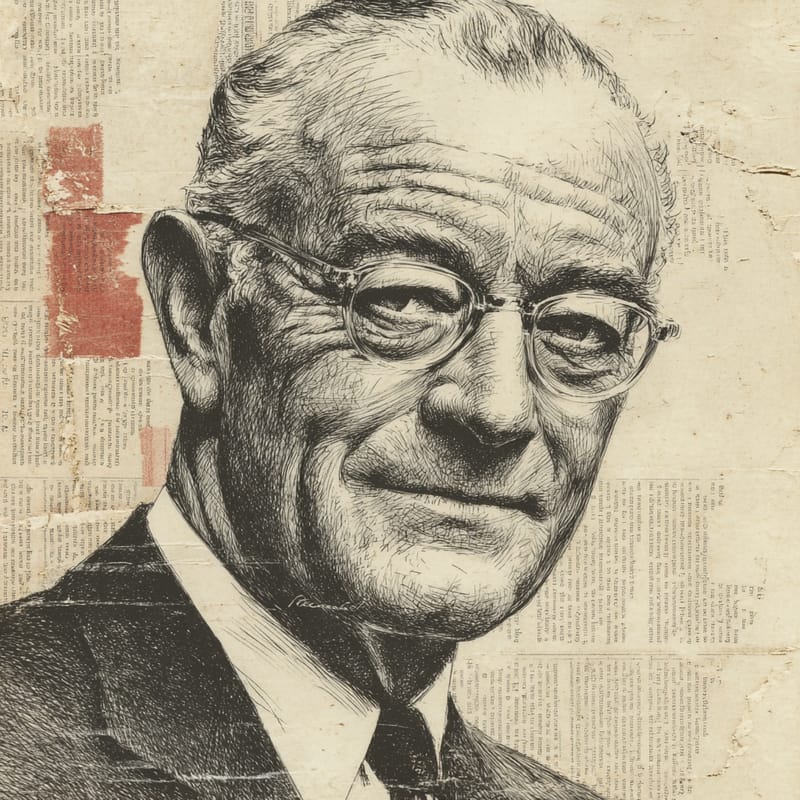
Hubert Humphrey
The happy warrior
Civil rights and the activist state.
Reformist Social LiberalOne of 729 ideologies · enter the Social Liberal hall →- Role
- Vice President & Senator
- Era
- 1911–1978
- Region
- United States
- Social band
- Reformist
- Placement
- −32 · +24 · +45
§ Where Hubert Humphrey stands
3 axesHumphrey was a New Deal liberal who wanted government to guarantee jobs, health care and a floor of security, and a long-time supporter of health insurance for the elderly, enacted as Medicare in 1965. He co-sponsored the Humphrey–Hawkins full-employment bill, signed in 1978 after his death. He worked through a private-enterprise economy rather than against it, favouring farm supports, trade and growth over public ownership.
Humphrey believed in using federal power and the Senate's own rules to force change on reluctant states, as when he helped break the filibuster against the 1964 Civil Rights Act. His liberalism also had a hard anti-communist edge: he drove Popular Front leftists out of Minnesota's Democratic-Farmer-Labor Party in 1948 and sponsored the 1954 Communist Control Act, which stripped the Communist Party of its legal rights.
On race Humphrey was years ahead of his party's leadership. As mayor he created a municipal fair employment practices commission in Minneapolis, his 1948 convention speech committed the Democrats to civil rights at the cost of a Southern revolt, and as whip he steered the Civil Rights Act of 1964 to passage on the Senate floor.
How close are you to Hubert Humphrey?
Three statements, one per axis. Answer them and we’ll drop you on the compass next to them.
§ The story
HistoricalHubert Horatio Humphrey Jr. (1911–1978) was a Minnesota Democrat who served as mayor of Minneapolis from 1945 to 1948, as a US senator in 1949–1964 and 1971–1978, and as Lyndon Johnson's vice president from 1965 to 1969. Born in Wallace, South Dakota, he trained as a pharmacist in his father's drugstore before studying political science, helped merge Minnesota's Democratic and Farmer-Labor parties in 1944 and co-founded the liberal group Americans for Democratic Action in 1947.
Humphrey's speech at the 1948 Democratic convention won a strong civil-rights plank and prompted Southern delegates to walk out and back Strom Thurmond's Dixiecrat ticket. As Senate majority whip he managed the Civil Rights Act of 1964 through a months-long Southern filibuster. His loyalty to Johnson's Vietnam policy shadowed his 1968 presidential campaign, which he lost narrowly to Richard Nixon after a convention marred by clashes between police and anti-war protesters in Chicago. He returned to the Senate and spent his last years pressing for a federal full-employment guarantee.
Notable for
- 011948 civil-rights convention speech
- 02Architect of the Civil Rights Act
- 03Co-created the Peace Corps and Medicare
Key works & moments
- 1945Elected mayor of Minneapolis; later creates a municipal fair-employment commission.
- 1948Convention speech wins a civil-rights plank; elected to the US Senate that November.
- 1964As Senate whip, steers the Civil Rights Act past a Southern filibuster.
- 1965Sworn in as Lyndon Johnson's vice president.
- 1968Wins the Democratic nomination amid Chicago protests, then loses narrowly to Richard Nixon.
- 1978Dies in January; the Humphrey–Hawkins full-employment act becomes law that October.
In their own words
“To those who say that we are rushing this issue of civil rights, I say to them we are 172 years late.”
§ Minds closest to Hubert Humphrey
All minds →

§ Also in the Social Liberal hall
Enter the hall →§ Common questions
4 answersWhat was Hubert Humphrey's political ideology?
Hubert Humphrey was a mid-century American liberal in the New Deal tradition: on the 99ideologies three-axis compass, a Reformist Social Liberal. Economically he sat left of centre (−32), backing full employment, Medicare and anti-poverty spending within a private-enterprise economy. On governance he leaned towards a strong, active federal state (+24), using national power against segregation and backing tough anti-communist laws, and socially he was clearly progressive (+45), above all on civil rights.
Was Hubert Humphrey left-wing or right-wing?
Left of centre, but a liberal rather than a socialist. Humphrey stood on the left wing of the Democratic Party for most of his career, championing civil rights, organised labour, health insurance and full employment. Yet he was also a Cold War anti-communist who drove the Popular Front left out of Minnesota politics and defended the Vietnam War as vice president, which led the New Left of 1968 to see him as an establishment figure rather than one of its own.
Why did Hubert Humphrey lose the 1968 election?
Mainly because of Vietnam and a divided party. Humphrey entered the race only after Lyndon Johnson withdrew, skipped the primaries and won the nomination at a Chicago convention overshadowed by televised clashes between police and anti-war protesters. Tied to Johnson's war, he trailed badly until a September speech in Salt Lake City proposing a halt to the bombing of North Vietnam. He closed the gap but lost to Richard Nixon by less than one point of the popular vote, while George Wallace carried five Southern states.
Which minds are closest to Hubert Humphrey?
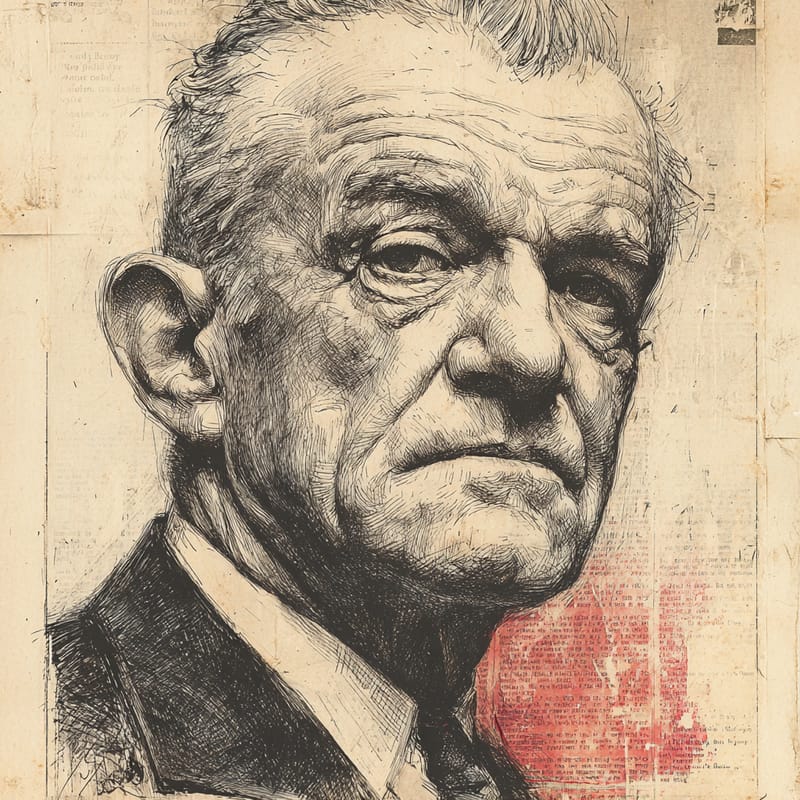
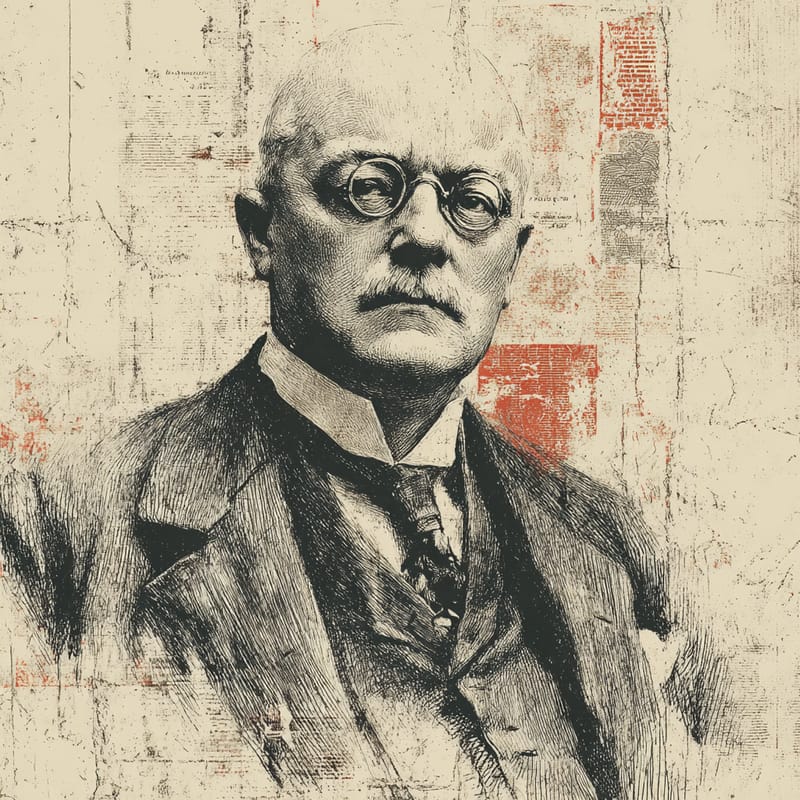
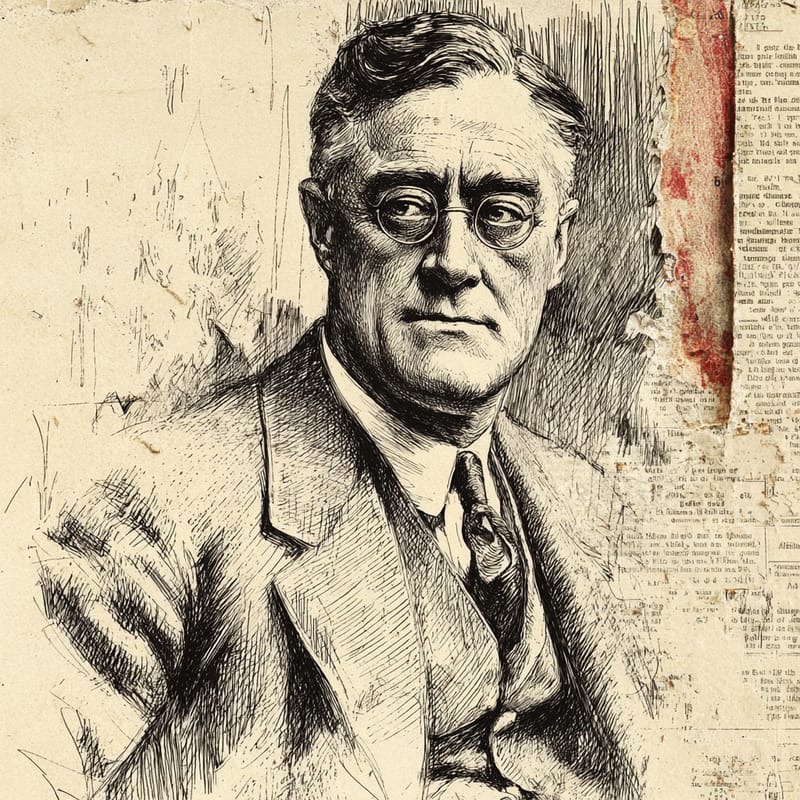
On the 99ideologies three-axis compass, the minds closest to Hubert Humphrey are President Andrew Shepherd (97% alike), L. T. Hobhouse (96% alike) and Roy Jenkins (95% alike). The furthest is Hans-Hermann Hoppe (20% alike).