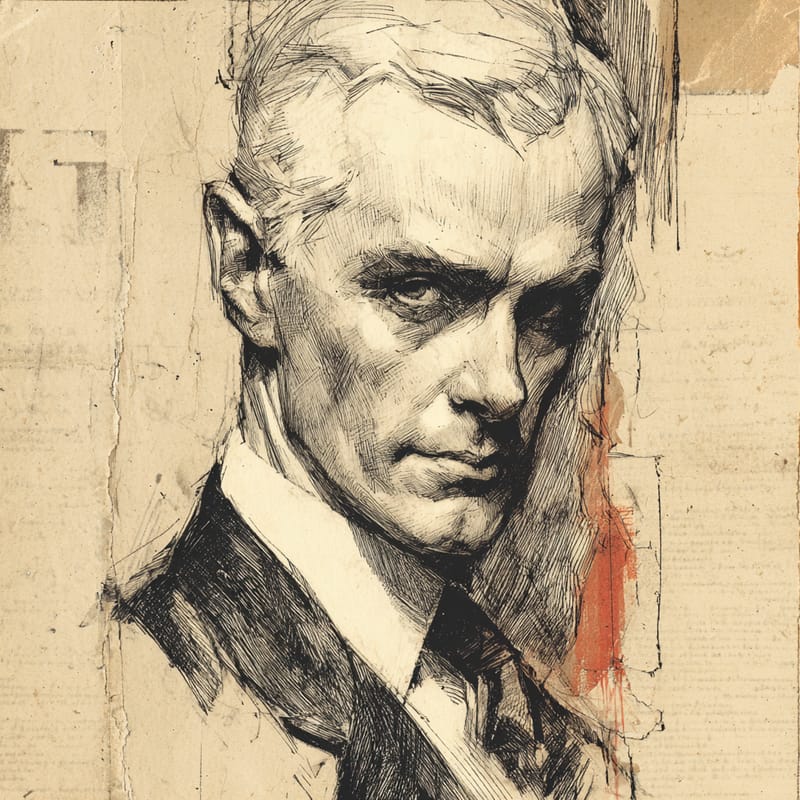
Francis Urquhart
You might think that…
Market conservatism, ruthlessly played.
Traditional Liberal ConservativeOne of 729 ideologies · enter the Liberal Conservative hall →- Role
- Politician (fiction)
- From
- House of Cards (UK)
- Region
- United Kingdom
- Social band
- Traditional
- Placement
- +55 · +12 · −40
§ Where Francis Urquhart stands
3 axesUrquhart rises through the Conservative government that follows Margaret Thatcher's and defends its free-market settlement as naturally as he defends his own position. In To Play the King he treats a new king's public concern about poverty and social division as an attack on his government, and he never questions the market order, though he values economic policy mainly as a lever of power.
Urquhart bends every institution to his will: as chief whip he collects compromising secrets on colleagues, he manipulates the press and the party's leadership election, and in To Play the King he outmanoeuvres a monarch who dares to challenge his government. Yet he keeps the outward forms of parliamentary government intact, corrupting the system from within rather than overthrowing it.
Urquhart is a patrician Tory of the old establishment who believes in hierarchy, order and the authority of those born to rule. He despises the reforming instincts of the King and the modernisers around him, and his cold contempt for sentiment, set against the idealism of Mattie Storin, makes him a figure of traditional power stripped of any moral restraint.
How close are you to Francis Urquhart?
Three statements, one per axis. Answer them and we’ll drop you on the compass next to them.
§ The story
FictionFrancis Urquhart is the Conservative chief whip turned prime minister at the centre of Michael Dobbs's novel House of Cards (1989) and its BBC television adaptation of 1990, written by Andrew Davies and starring Ian Richardson. Passed over for promotion by Henry Collingridge, the weak prime minister who succeeds Margaret Thatcher, Urquhart uses leaks, blackmail and a young political journalist, Mattie Storin, to destroy his rivals and take the top job, confiding his schemes directly to the audience.
Dobbs, a former chief of staff at Conservative Party headquarters, drew on the court politics of the late Thatcher years, and Richardson's Shakespearean asides made Urquhart a modern Richard III. The television sequels, To Play the King (1993) and The Final Cut (1995), pit him against a reforming monarch and then against his own past. His evasive catchphrase entered British political vocabulary, and in 2013 the story was remade by Netflix with Frank Underwood as an American counterpart.
Notable for
- 01'You might very well think that…'
- 02Machiavellian chief whip
- 03Original 'House of Cards'
Key works & moments
- 1989Michael Dobbs publishes the novel House of Cards, introducing the scheming chief whip Francis Urquhart.
- 1990The BBC adaptation airs, with Ian Richardson as Urquhart addressing the camera directly.
- Series oneBrings down Prime Minister Henry Collingridge and wins the Conservative leadership.
- Series oneThrows Mattie Storin from the roof of the Palace of Westminster when she uncovers his crimes.
- 1993To Play the King sets Urquhart against a new king who voices concern for the poor.
- 1995The Final Cut closes the television trilogy with Urquhart's assassination.
In Francis Urquhart's words
“You might very well think that; I couldn't possibly comment.”
§ Minds closest to Francis Urquhart
All minds →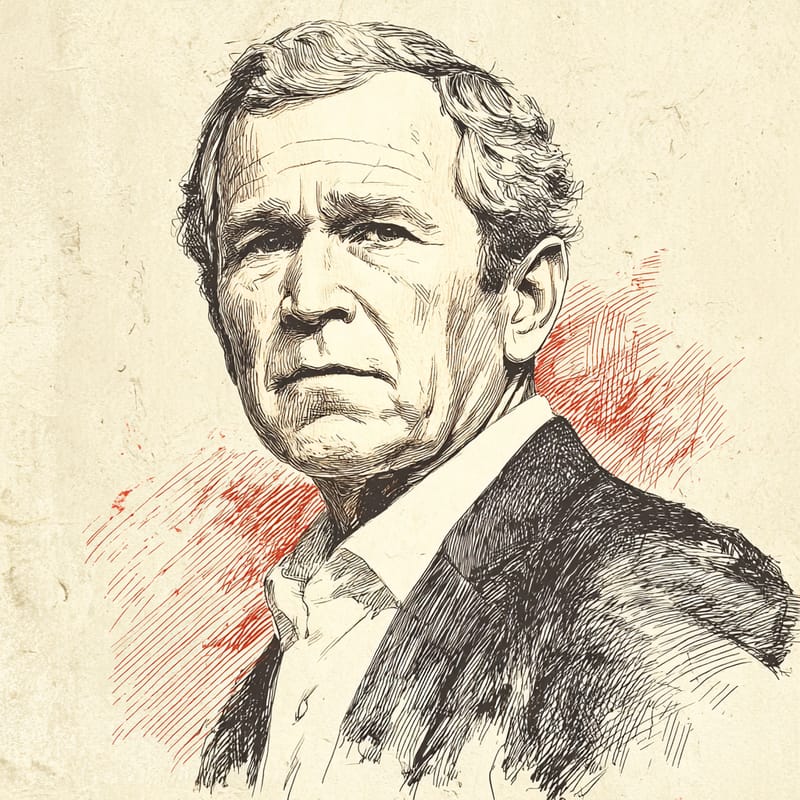

§ Also in the Liberal Conservative hall
Enter the hall →§ Common questions
4 answersWhat is Francis Urquhart's political ideology?
Francis Urquhart is an establishment Conservative for whom ideology serves ambition: on the 99ideologies three-axis compass, a Traditional Liberal Conservative. Economically he sits clearly on the market side (+55), a defender of the free-market settlement of the Thatcher years. On governance he leans authoritarian (+12), bending Parliament, the press and even the monarchy to his will while keeping their outward forms, and socially he is traditional (−40), a patrician believer in hierarchy, order and the old Tory establishment.
Is Francis Urquhart left-wing or right-wing?
Right-wing. Urquhart is a Conservative chief whip and prime minister who rises through the Tory party of the post-Thatcher years, defends its free-market record and despises the reforming instincts of the King in To Play the King. But Michael Dobbs wrote him less as an ideologue than as a study of power: his loyalty is to himself, and he will betray colleagues, allies and his own party's leader whenever it serves his ambition.
Is Francis Urquhart based on a real politician?
Not on any single figure. Michael Dobbs, who had worked as chief of staff at Conservative Party headquarters under Margaret Thatcher, wrote House of Cards drawing on the intrigue he had seen in the party, and the novel imagines the struggle to succeed her. Ian Richardson's performance borrowed heavily from Shakespeare's Richard III, whose direct addresses to the audience Urquhart's asides echo. The character later inspired Frank Underwood in the American remake.
Which minds are closest to Francis Urquhart?
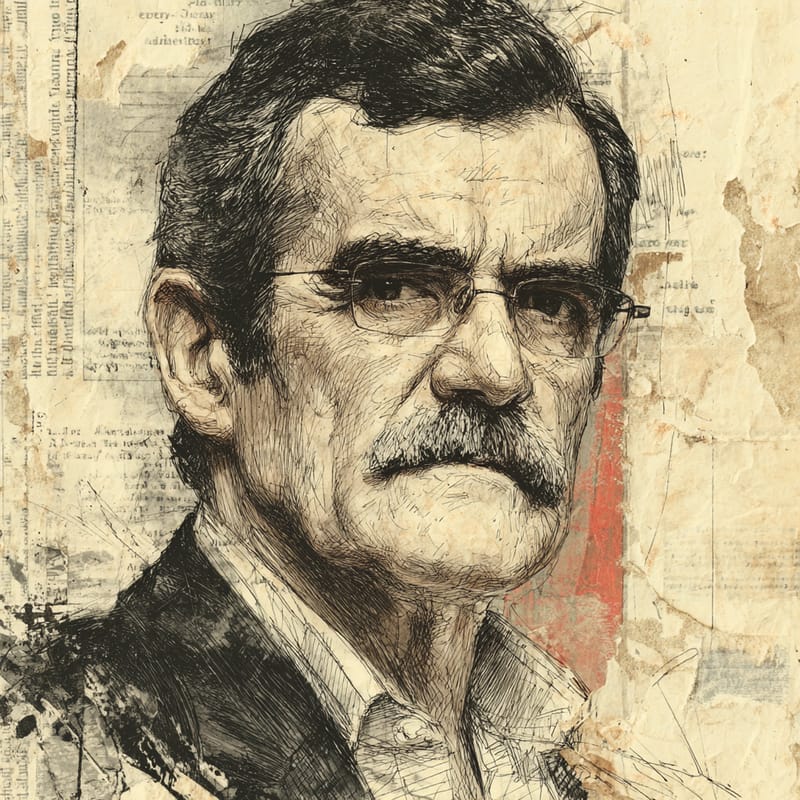
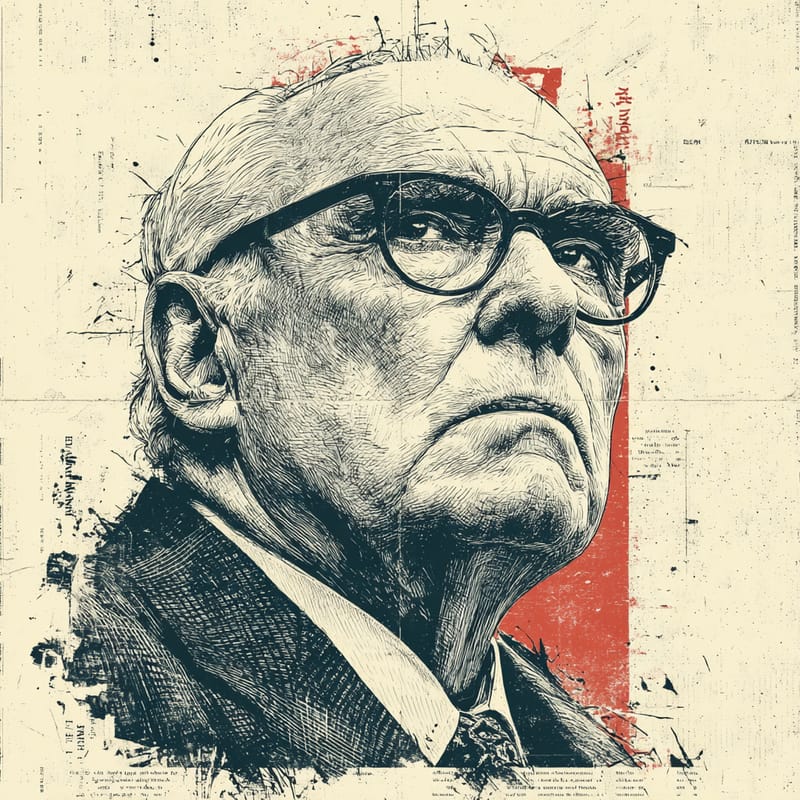
On the 99ideologies three-axis compass, the minds closest to Francis Urquhart are George W. Bush (99% alike), José María Aznar (98% alike) and Helmut Kohl (95% alike). The furthest is Emma Goldman (12% alike).