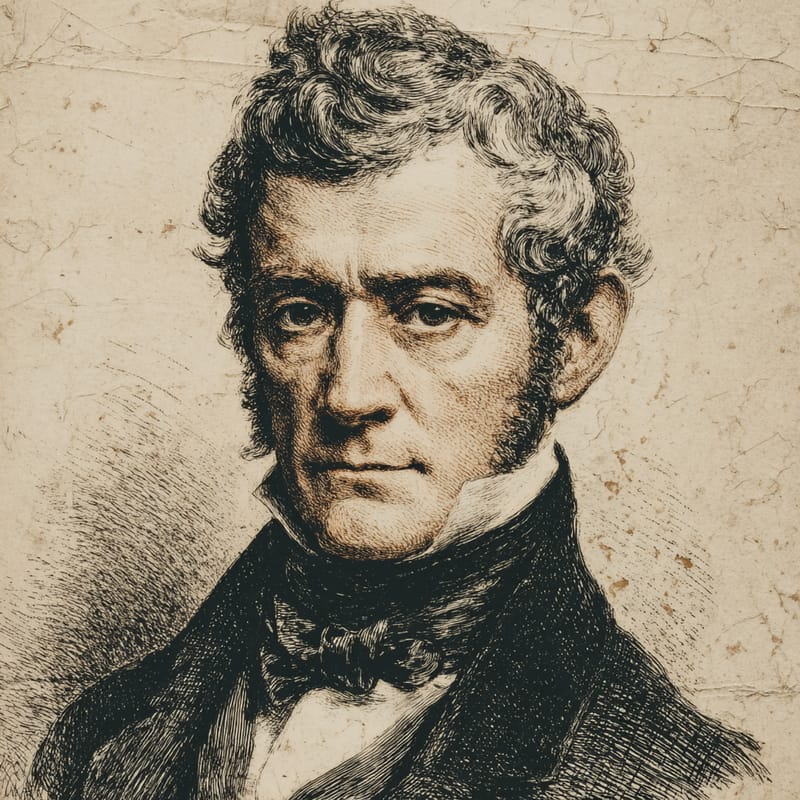
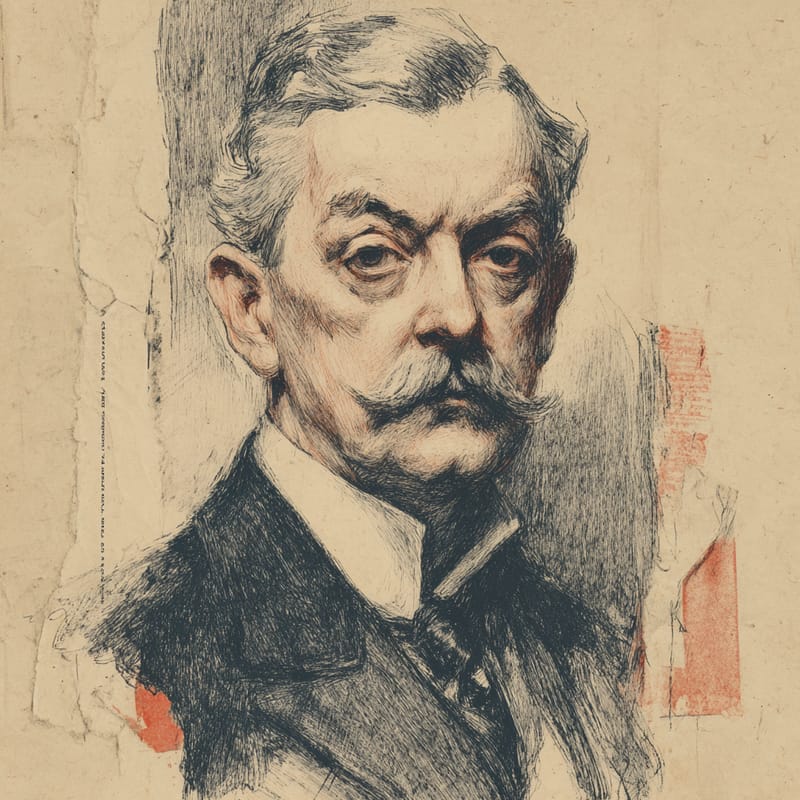
Robert Peel
The pragmatic founder
Free trade over party dogma.
Rooted Liberal ConservativeOne of 729 ideologies · enter the Liberal Conservative hall →- Role
- Prime Minister
- Era
- 1788–1850
- Region
- United Kingdom
- Social band
- Rooted
- Placement
- +50 · +10 · −30
§ Where Robert Peel stands
3 axesPeel turned the Conservatives toward free trade: his 1842 budget slashed tariffs and revived income tax in peacetime to replace the lost revenue, the Bank Charter Act 1844 tied the issue of new banknotes to the Bank of England's gold reserves, and in 1846 he repealed the Corn Laws. His willingness to tax incomes and to accept the Factory Act of 1844 marks the limit of his economic liberalism.
Peel strengthened the state's capacity to keep order, creating the Irish Peace Preservation Force in 1814 and the Metropolitan Police in 1829, and his government fell in 1846 over an Irish coercion bill. Yet he also consolidated the criminal law and removed the death penalty for many offences in the 1820s, governing as a constitutional reformer rather than a reactionary.
Peel defended the Church of England and the existing constitution, opposing the 1832 Reform Act and, for years, Catholic Emancipation, which earned him the nickname Orange Peel. But he accepted change when he judged resistance more dangerous: he carried emancipation in 1829 and increased the state grant to the Catholic seminary at Maynooth in 1845, angering Protestant opinion within his own party.
How close are you to Robert Peel?
Three statements, one per axis. Answer them and we’ll drop you on the compass next to them.
§ The story
HistoricalSir Robert Peel (1788–1850) was prime minister of the United Kingdom in 1834–35 and from 1841 to 1846, and is regarded as a founder of the modern Conservative Party. The son of a wealthy Lancashire cotton manufacturer, he took a double first at Oxford and entered Parliament in 1809. As chief secretary for Ireland from 1812 and home secretary in the 1820s he reformed the criminal law and in 1829 created London's Metropolitan Police, whose officers became known as Bobbies and Peelers.
Peel's career was defined by reversals made in the name of the national interest. Having opposed Catholic Emancipation, he carried it through Parliament in 1829 to avert unrest in Ireland; having led the party of agricultural protection, he repealed the Corn Laws in 1846. His Tamworth Manifesto of 1834 committed Conservatives to accepting the 1832 Reform Act and correcting proven abuses. Repeal split the party, and his government was defeated in the Commons on the night repeal cleared the Lords; his followers, the Peelites, including William Gladstone, eventually joined the Liberals. He died in 1850 after a riding accident.
Notable for
- 01Repealed the Corn Laws
- 02Founded the modern police
- 03Tamworth Manifesto
Key works & moments
- 1819Chairs the committee whose report returns Britain to the gold standard.
- 1829As home secretary, founds the Metropolitan Police and carries Catholic Emancipation.
- 1834Issues the Tamworth Manifesto, accepting the Reform Act and pledging measured reform.
- 1842Reintroduces income tax in peacetime to fund sweeping cuts in tariffs.
- 1844The Bank Charter Act ties new banknote issues to the Bank of England's gold reserves.
- 1846Repeals the Corn Laws with opposition votes, splitting his party and ending his government.
§ Minds closest to Robert Peel
All minds →



§ Also in the Liberal Conservative hall
Enter the hall →§ Common questions
4 answersWhat was Robert Peel's political ideology?
Robert Peel was a reforming Conservative and a convert to free trade: on the 99ideologies three-axis compass, a Rooted Liberal Conservative. Economically he sat clearly on the market side (+50), cutting tariffs, repealing the Corn Laws and tying banknotes to gold, while reviving income tax to pay for it. On governance he leaned slightly authoritarian (+10), building modern policing and backing coercion in Ireland, and socially he was moderately traditional (−30), a defender of the Church of England who accepted change only when he judged it unavoidable.
Was Robert Peel left-wing or right-wing?
Right of centre in the terms of his day. Peel led the Conservatives, defended the Church of England and the Crown, and opposed parliamentary reform in 1832. But he was a pragmatist whose economic liberalism and willingness to reverse himself made him a hero to later Liberals: his free-trade policies outlived him, and his Peelite followers, Gladstone among them, helped form the Liberal Party. In modern terms he is a centre-right economic liberal rather than a reactionary.
Why did Robert Peel repeal the Corn Laws?
Because he had come to believe that free trade in grain served the national interest, and the Irish potato blight of 1845 made the case urgent. Peel took office in 1841 at the head of a party committed to agricultural protection, but years of cutting other tariffs convinced him that cheaper food would benefit workers and industry. Repeal passed in 1846 with Whig and Radical votes while most Conservative MPs opposed him, and in his resignation speech he credited the free-trade campaigner Richard Cobden with the victory.
Which minds are closest to Robert Peel?
On the 99ideologies three-axis compass, the minds closest to Robert Peel are John McCain (99% alike), Nicolas Sarkozy (99% alike) and Brian Mulroney (98% alike). The furthest is Emma Goldman (16% alike).