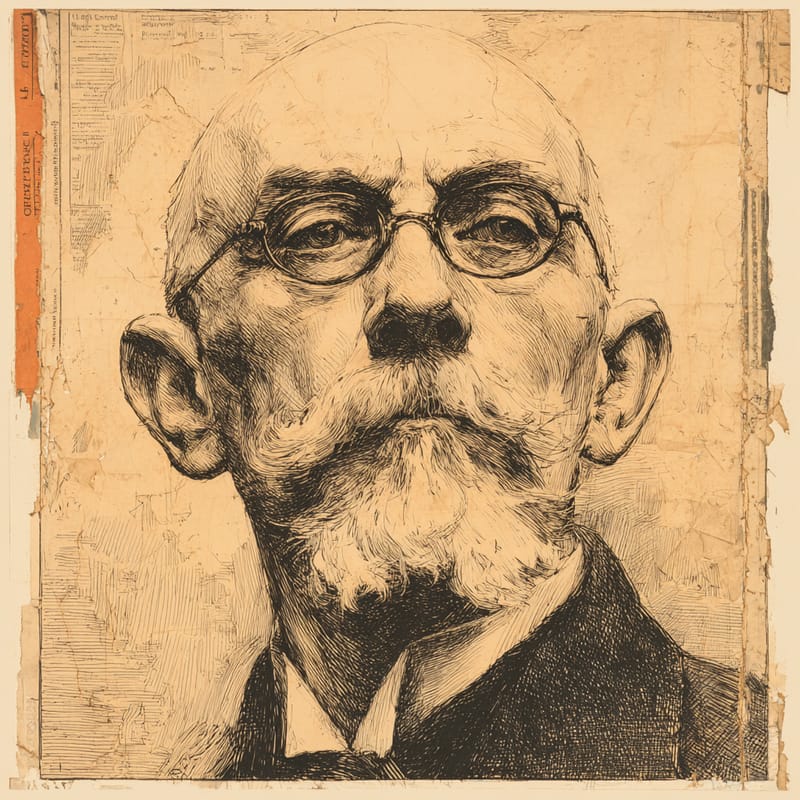
Émile Armand
Living one's anarchism
Free unions, free life.
Reformist MutualistOne of 729 ideologies · enter the Mutualist hall →- Role
- Individualist anarchist
- Era
- 1872–1962
- Region
- France
- Social band
- Reformist
- Placement
- −28 · −78 · +60
§ Where Émile Armand stands
3 axesArmand accepted individual possession and free exchange but rejected capitalist exploitation. Drawing on Proudhon and Tucker, he defended the right of individuals and voluntary associations to own what they produce and to trade it by contract, as he argued in Initiation individualiste anarchiste (1923), while condemning profit, interest and monopolies backed by the state. That market-friendly anarchism keeps him only modestly left of centre.
Armand rejected every external authority, from the state and the law to the church, the party and the trade union. His journal l'en dehors (1922–39), whose title translates roughly as the outsider, championed individuals and small affinity groups living outside the social order as far as they could, and he opposed militarism and conscription throughout his life.
Armand was provocatively progressive on personal life. He campaigned for free love, plural relationships and sexual freedom, organised the amorous camaraderie networks described in La Révolution sexuelle et la camaraderie amoureuse (1934), and defended the right of individuals to choose their own way of life, positions that shocked conventional society and many anarchists.
How close are you to Émile Armand?
Three statements, one per axis. Answer them and we’ll drop you on the compass next to them.
§ The story
HistoricalÉmile Armand, the pen name of Ernest-Lucien Juin (1872–1963), was a French individualist anarchist writer and editor. Born in Paris, he spent part of his youth in the Salvation Army before moving through Tolstoyan Christian anarchism to the individualism of Max Stirner, Benjamin Tucker and Henry David Thoreau. From 1901 he co-edited the review L'Ère nouvelle, and he became the best-known voice of French individualist anarchism for half a century.
Armand edited l'en dehors from 1922 to 1939 and L'Unique from 1945 to 1956, using them to argue for living one's anarchism in everyday life. He was imprisoned during the First World War for aiding deserters. His campaign for amorous camaraderie, a free and plural love among comrades set out in La Révolution sexuelle et la camaraderie amoureuse (1934), made him a pioneer of sexual freedom and a scandal to many fellow anarchists as well as to conventional society.
Notable for
- 01French individualist anarchism
- 02Free-love advocacy
- 03'Life and Society' writings
Key works & moments
- 1890sLeaves the Salvation Army and turns to Tolstoyan Christian anarchism.
- 1901Co-founds the review L'Ère nouvelle.
- 1918Imprisoned for aiding deserters during the First World War.
- 1922Launches l'en dehors, which runs until 1939.
- 1934Publishes La Révolution sexuelle et la camaraderie amoureuse.
- 1945Founds L'Unique, which he edits until 1956.
§ Minds closest to Émile Armand
All minds →

§ Also in the Mutualist hall
Enter the hall →§ Common questions
4 answersWhat was Émile Armand's political ideology?
Émile Armand was an individualist anarchist: on the 99ideologies three-axis compass, a Reformist Mutualist. Economically he sat modestly left of centre (−28), defending individual possession and free exchange while condemning profit, interest and state-backed monopoly. On governance he was strongly libertarian (−78), rejecting the state, law, church and party alike. Socially he was clearly progressive (+60), a pioneer of free love, sexual freedom and personal autonomy.
Was Émile Armand left-wing or right-wing?
Left-wing, though of an unusual individualist kind. Armand belonged to the anarchist movement, opposed militarism and capitalism, and was imprisoned for helping deserters during the First World War. But unlike anarchist communists he defended individual property in the product of one's labour and free exchange, and he distrusted mass movements and trade unions, focusing instead on individuals and small affinity groups living by their own values.
What was Émile Armand's amorous camaraderie?
Amorous camaraderie, or camaraderie amoureuse, was Armand's name for a free, plural and non-possessive love among comrades, in which individuals could form several affectionate and sexual relationships by mutual consent. He presented it as the extension of anarchist freedom from economics and politics into private life, and set it out in La Révolution sexuelle et la camaraderie amoureuse (1934) and in the pages of l'en dehors. It made him a forerunner of later sexual liberation movements but scandalised many fellow anarchists.
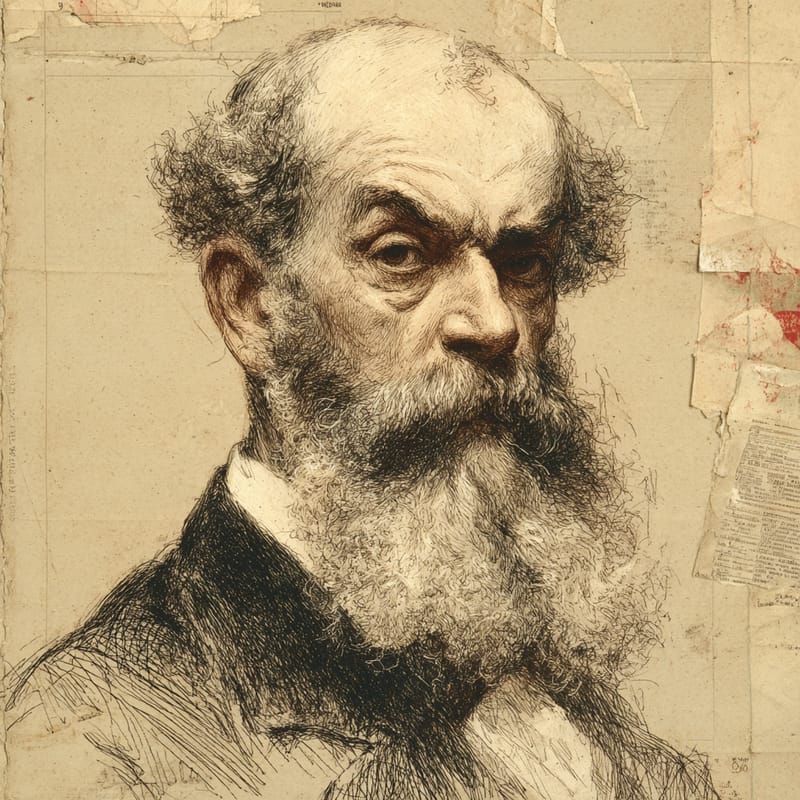
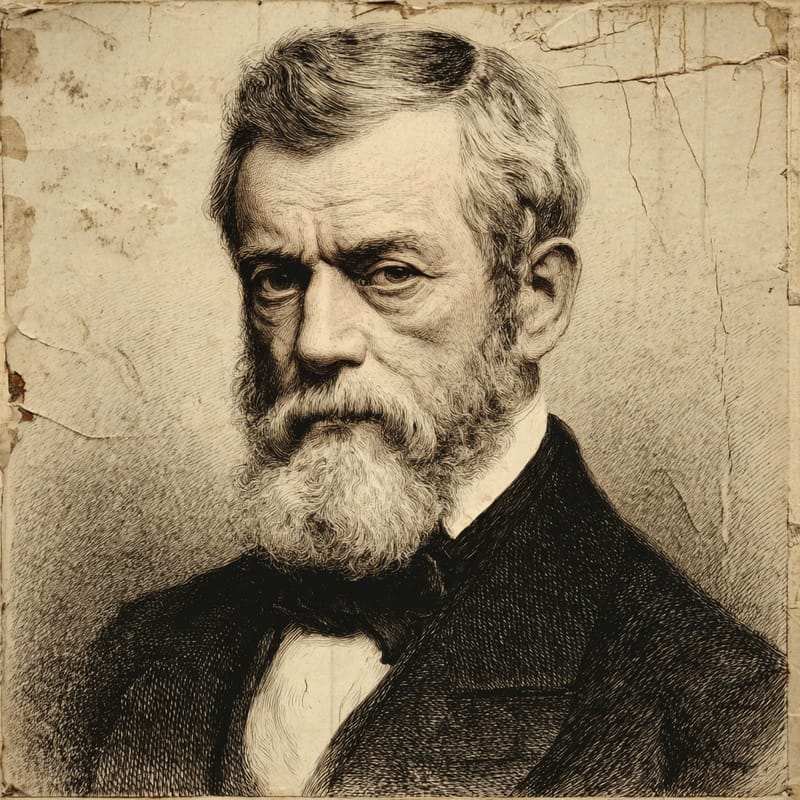
Which minds are closest to Émile Armand?
On the 99ideologies three-axis compass, the minds closest to Émile Armand are Kevin Carson (95% alike), The Cost-Price Market (archetype) (95% alike) and Voltairine de Cleyre (95% alike). The furthest is Adam Sutler (0% alike).