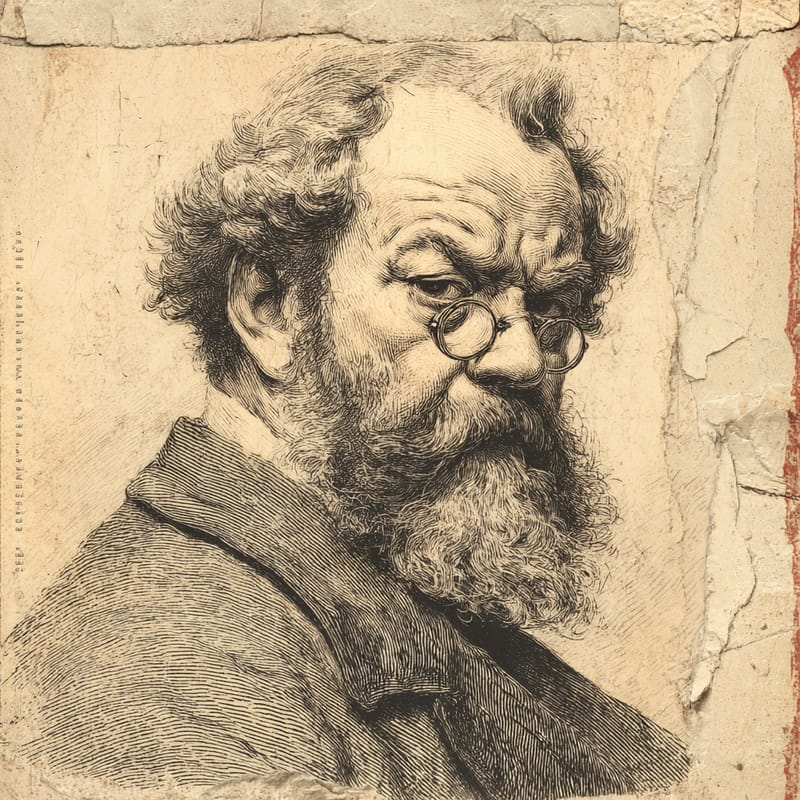
Pierre-Joseph Proudhon
Property is theft
The first to call himself an anarchist.
Reformist MutualistOne of 729 ideologies · enter the Mutualist hall →- Role
- Philosopher
- Era
- 1809–1865
- Region
- France
- Social band
- Reformist
- Placement
- −32 · −72 · +40
§ Where Pierre-Joseph Proudhon stands
3 axesProudhon wanted markets without capitalist profit. He distinguished property, meaning income from rent, interest and profit, from possession, the right to use what one works, and proposed free credit through a People's Bank in 1849 and worker-run associations for large industries in General Idea of the Revolution in the Nineteenth Century (1851). He rejected communism as firmly as capitalism, defending small producers and exchange.
Proudhon wanted government replaced by contracts among free individuals and groups. General Idea of the Revolution (1851) set out a society organised by contract rather than law, and The Principle of Federation (1863) proposed a federation of self-governing communes and regions with only a weak centre. He nevertheless sat in the 1848 Assembly and accepted federal institutions, stopping short of pure anarchy.
For his era Proudhon was a radical, attacking the Church in On Justice in the Revolution and in the Church (1858), a book that drove him into exile in Belgium. But he was deeply patriarchal, holding that women belonged in the home and opposing their political equality, and his private notebooks contain antisemitic passages, making him a progressive with stark limits.
How close are you to Pierre-Joseph Proudhon?
Three statements, one per axis. Answer them and we’ll drop you on the compass next to them.
§ The story
HistoricalPierre-Joseph Proudhon (1809–1865) was a French social theorist and the first person to call himself an anarchist. Born in Besançon to a poor artisan family, he left school to work as a printer and compositor, educated himself and won a scholarship from the Besançon Academy. His book What Is Property? (1840) made him famous with its answer that property is theft, and he went on to found the economic doctrine of mutualism.
Elected to the Constituent Assembly in 1848, Proudhon proposed a tax on rents and interest that was rejected by 691 votes to 2, and in 1849 he founded a People's Bank to provide interest-free credit before being jailed until 1852 for attacking Louis-Napoléon Bonaparte. His influence on French labour, the First International and anarchism was immense, but his legacy is shadowed by his misogyny, including his opposition to women's equality, and by antisemitic outbursts in private notebooks published long after his death.
Notable for
- 01'What Is Property?'
- 02Founded mutualism
- 03First self-described anarchist
Key works & moments
- 1840Publishes What Is Property?, answering that property is theft and declaring himself an anarchist.
- 1846Publishes System of Economic Contradictions; Marx replies with The Poverty of Philosophy in 1847.
- 1848Elected to the Constituent Assembly; his tax on rents and interest loses by 691 votes to 2.
- 1849Founds the People's Bank; jailed until 1852 for attacking Louis-Napoléon Bonaparte.
- 1851Publishes General Idea of the Revolution in the Nineteenth Century.
- 1863Publishes The Principle of Federation.
In their own words
“Property is theft!”
“To be GOVERNED is to be watched, inspected, spied upon, directed, law-driven, numbered, regulated, enrolled, indoctrinated, preached at, controlled, checked, estimated, valued, censured, commanded, by creatures who have neither the right nor the wisdom nor the virtue to do so.”
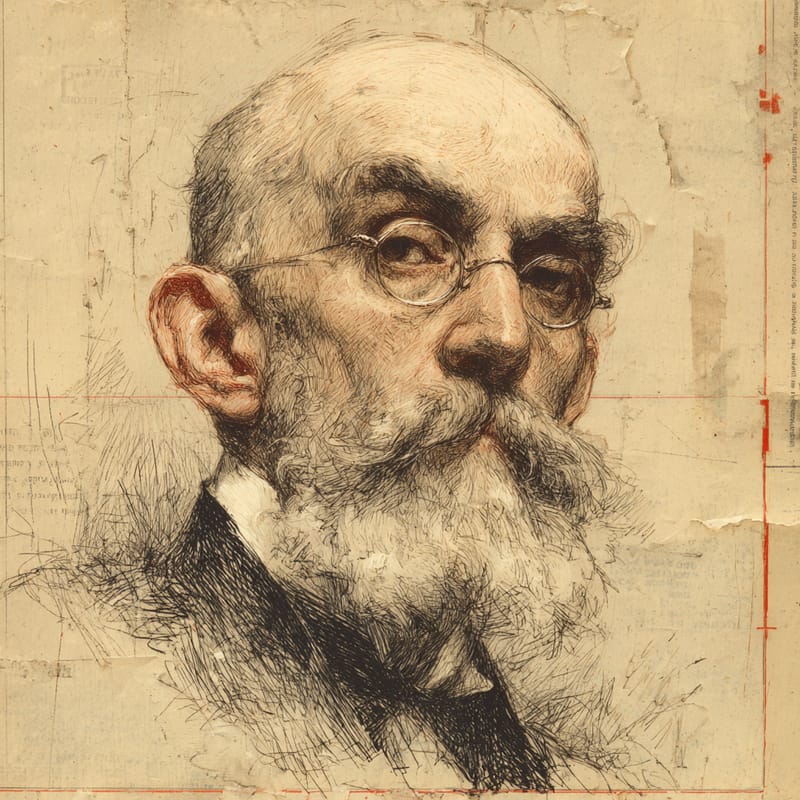
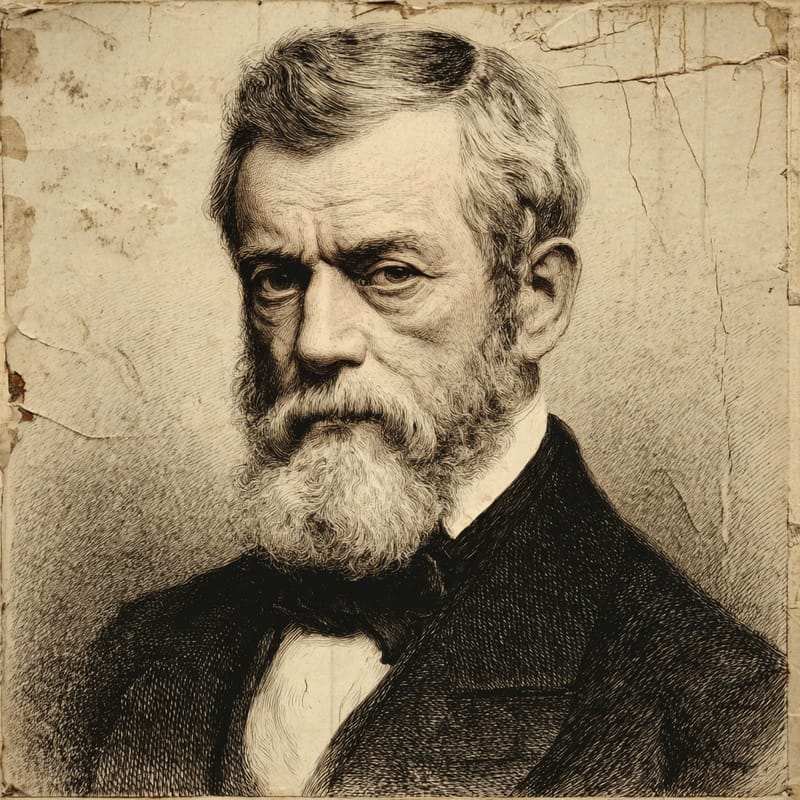
§ Minds closest to Pierre-Joseph Proudhon
All minds →


§ Also in the Mutualist hall
Enter the hall →§ Common questions
4 answersWhat was Pierre-Joseph Proudhon's political ideology?
Pierre-Joseph Proudhon was the founder of mutualism and the first self-described anarchist: on the 99ideologies three-axis compass, a Reformist Mutualist. Economically he sat modestly left of centre (−32), keeping markets and small property but abolishing rent, interest and profit through free credit and workers' associations. On governance he was strongly libertarian (−72), seeking to replace the state with contracts and federation. Socially he was progressive for his age (+40), anticlerical but deeply patriarchal.
Was Pierre-Joseph Proudhon left-wing or right-wing?
Left-wing, and a founder of both the socialist and the anarchist traditions. Proudhon attacked capitalist property, sat on the left of the 1848 Assembly and inspired the French workers who helped found the First International. But he also defended small property, the patriarchal family and markets, opposed communism and scorned Marx's state-centred socialism, and in 1911 nationalists close to the royalist Action française founded a Cercle Proudhon to claim him for the right. He is best seen as a libertarian socialist with conservative streaks.
Did Proudhon really say 'property is theft'?
Yes. The phrase, la propriété, c'est le vol, appears in What Is Property?, published in 1840, and became his most famous line. But Proudhon did not mean that all ownership was illegitimate. He attacked property in the sense of the right to draw rent, interest and profit from the labour of others, while defending possession, the right of producers to hold and use what they work. In later writings, notably the posthumous Theory of Property, he even presented property as a necessary counterweight to the power of the state.
Which minds are closest to Pierre-Joseph Proudhon?
On the 99ideologies three-axis compass, the minds closest to Pierre-Joseph Proudhon are Clarence Lee Swartz (99% alike), Josiah Warren (99% alike) and The Time-Store Keeper (archetype) (99% alike). The furthest is Adam Sutler (2% alike).