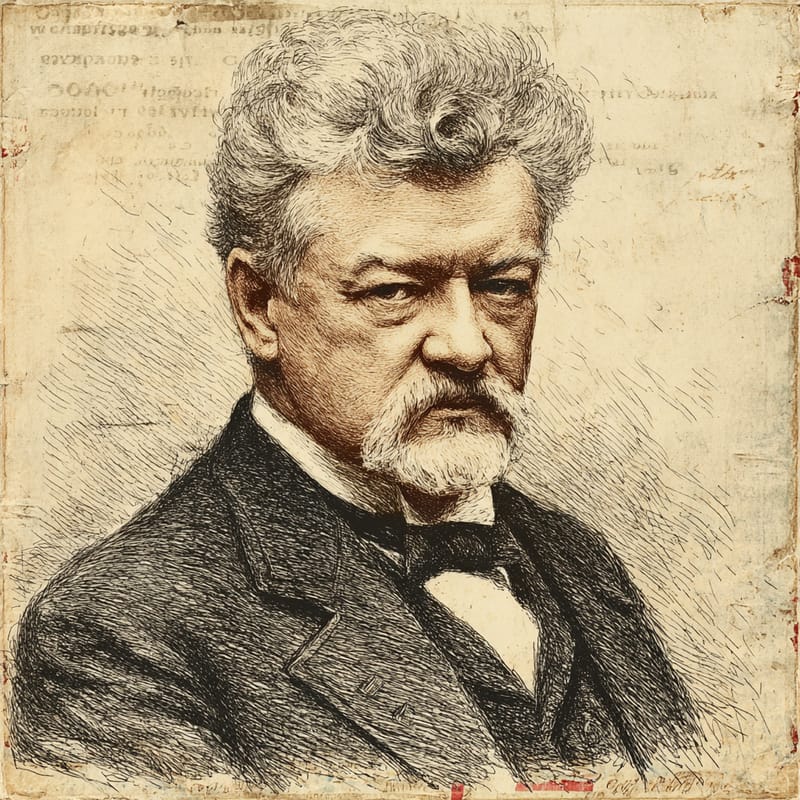
Robert La Follette
Fighting Bob
The people against the trusts.
Reformist ProgressiveOne of 729 ideologies · enter the Progressive hall →- Role
- Senator & Governor
- Era
- 1855–1925
- Region
- United States
- Social band
- Reformist
- Placement
- −50 · −48 · +55
§ Where Robert La Follette stands
3 axesLa Follette fought concentrated corporate power without rejecting private enterprise. As governor he created a state railroad commission and taxed railroads on the value of their property, and in the Senate he sponsored the Seamen's Act of 1915 to protect merchant sailors. His 1924 platform went further, calling for public ownership of the railways and of water power.
He believed in taking power from bosses and giving it to voters. Wisconsin's direct primary law, approved in a 1904 referendum, let citizens rather than party conventions choose nominees, and he backed the direct election of senators, the initiative and the referendum. He also defended dissent, opposing wartime curbs on free speech after voting against war in 1917.
La Follette was a progressive reformer who supported women's suffrage alongside his wife, the activist Belle Case La Follette, and in 1924 publicly condemned the Ku Klux Klan. His opposition to the First World War sprang partly from a Midwestern suspicion of foreign entanglements, shared by many of his German-American constituents.
How close are you to Robert La Follette?
Three statements, one per axis. Answer them and we’ll drop you on the compass next to them.
§ The story
HistoricalRobert Marion La Follette Sr. (1855–1925) was an American politician from Wisconsin, born in a log cabin in Primrose and educated at the University of Wisconsin. A Republican, he served as a county district attorney and three terms in the US House before breaking with the party bosses who controlled the state. Elected governor in 1900, he turned Wisconsin into a laboratory of progressive reform, then served in the US Senate from 1906 until his death.
Known as Fighting Bob, La Follette took on railroads, timber barons and political machines, pioneering the direct primary and the Wisconsin Idea of using university experts to draft legislation. In the Senate he championed labour and farmers, voted against entry into the First World War and was reviled as disloyal. In 1924 he ran for president at the head of a new Progressive Party, carrying Wisconsin and winning about a sixth of the national vote, among the strongest third-party showings in American history. A 1957 Senate committee named him one of its five greatest members.
Notable for
- 01The 'Wisconsin Idea'
- 02Pioneered direct primaries
- 031924 Progressive presidential run
Key works & moments
- 1900Elected governor of Wisconsin after a decade fighting the state's Republican machine.
- 1904Wisconsin voters approve his direct primary law, one of the first statewide systems.
- 1905Signs laws creating a state railroad commission and a civil service system.
- 1909Founds La Follette's Weekly, later The Progressive magazine.
- 1917Votes against declaring war on Germany and survives an attempt to expel him from the Senate.
- 1924Runs for president as a Progressive, winning about one sixth of the popular vote.
§ Minds closest to Robert La Follette
All minds →


§ Also in the Progressive hall
Enter the hall →§ Common questions
4 answersWhat was Robert La Follette's political ideology?
Robert La Follette was a leading Progressive Era reformer: on the 99ideologies three-axis compass, a Reformist Progressive. Economically he sat left of centre (−50), regulating railroads and trusts and later backing public ownership of railways and water power, while accepting private enterprise. On governance he leaned libertarian (−48), championing direct primaries, popular votes and free speech against party machines. Socially he was progressive (+55), supporting women's suffrage and condemning the Ku Klux Klan.
Was Robert La Follette left-wing or right-wing?
Left of centre for his time, though he spent most of his career as a Republican. La Follette's battles against railroads, trusts and party bosses put him on the insurgent, progressive wing of his party, and his 1924 presidential campaign was endorsed by the Socialist Party and the American Federation of Labor as well as farm groups. He was no socialist himself, defending small business and family farms against monopoly, so he is best seen as a radical democratic reformer.
What was the Wisconsin Idea?
It was La Follette's approach of drawing on the University of Wisconsin to shape public policy. During his governorship from 1901 to 1906, professors and experts helped draft laws on railroad regulation, taxation and the civil service, and the Legislative Reference Library founded in 1901 by Charles McCarthy supplied research to lawmakers. McCarthy's 1912 book The Wisconsin Idea gave the approach its name. The principle that a public university should serve the whole state remains part of Wisconsin's identity.
Which minds are closest to Robert La Follette?
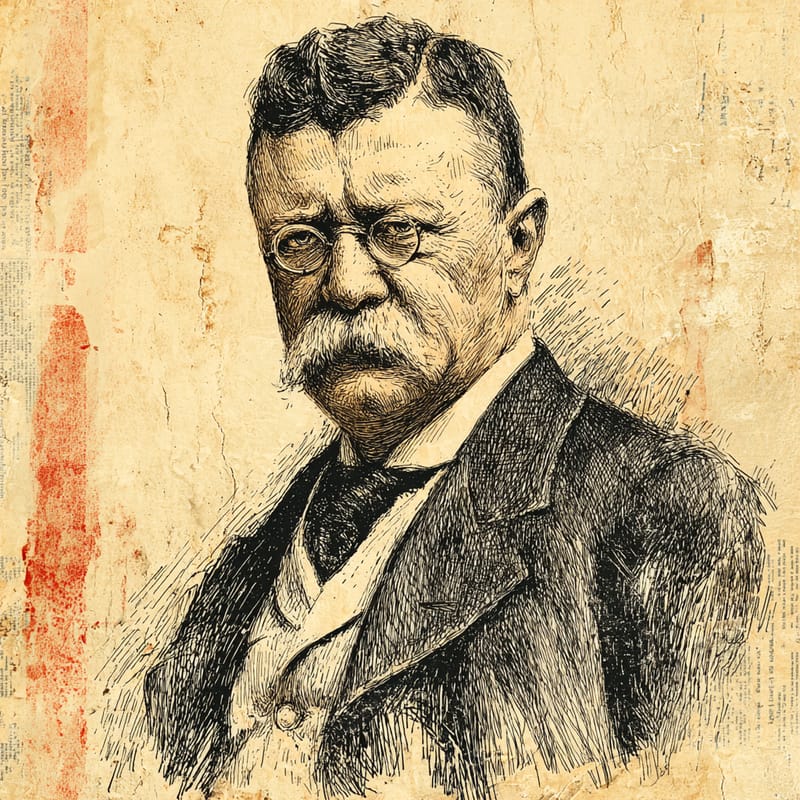
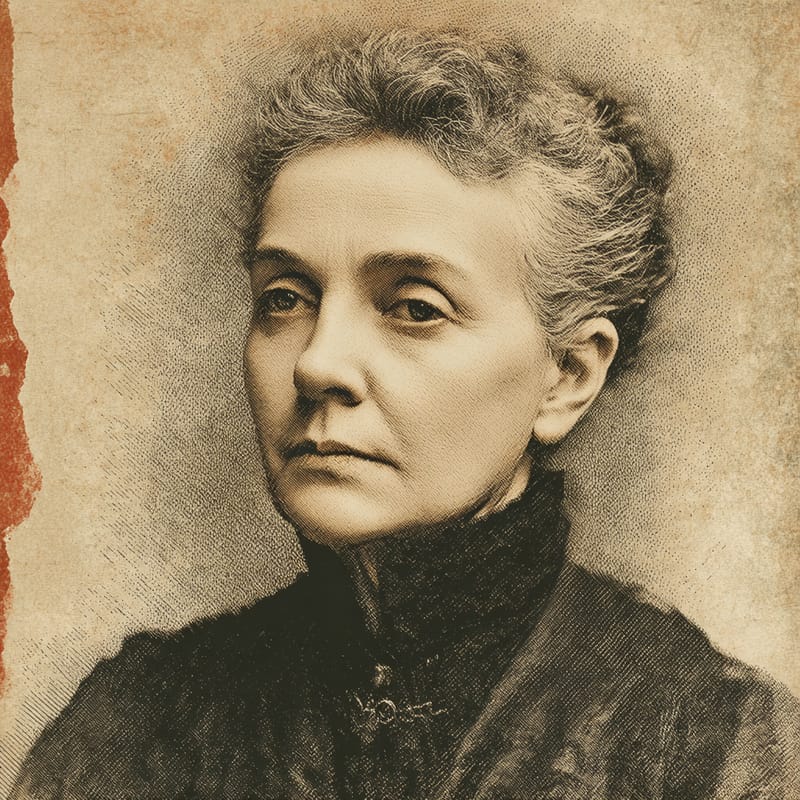
On the 99ideologies three-axis compass, the minds closest to Robert La Follette are Frances Willard (97% alike), John Dewey (97% alike) and Upton Sinclair (96% alike). The furthest is Adam Sutler (1% alike).