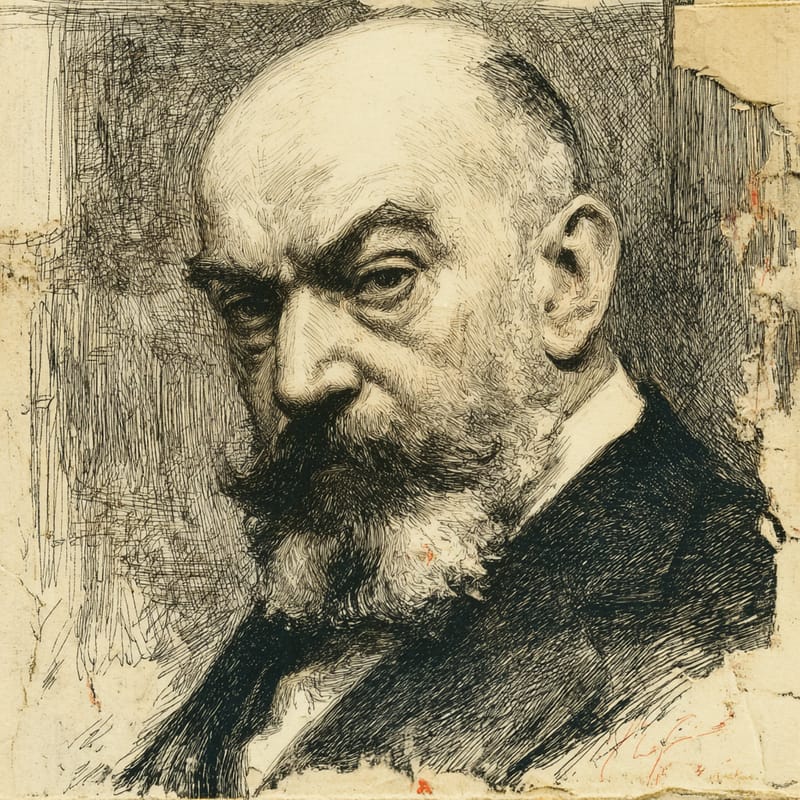
Jean Jaurès
Socialism and the republic
Humane, democratic, anti-militarist.
Reformist SocialistOne of 729 ideologies · enter the Socialist hall →- Role
- Socialist leader
- Era
- 1859–1914
- Region
- France
- Social band
- Reformist
- Placement
- −72 · +22 · +55
§ Where Jean Jaurès stands
3 axesJaurès sought the collective ownership of the means of production, but by democratic evolution rather than sudden expropriation. He helped found the workers' co-operative glassworks at Albi in 1896 after a strike by the Carmaux glassworkers, backed reforms such as the 1910 workers' and peasants' pensions law, and saw the nation's gradual takeover of major industries as the path to socialism.
Jaurès was a parliamentary socialist wedded to the Republic. In his 1900 Lille debate with Jules Guesde on the two methods of socialism, he defended working through republican institutions and alliances to protect democracy, as when he backed Alexandre Millerand's entry into government in 1899. He envisaged an extensive, democratically controlled public sector but rejected insurrectionary shortcuts.
Jaurès was a humanist progressive and internationalist. He campaigned to free Dreyfus, denounced the Ottoman massacres of Armenians in an 1896 speech to the Chamber, supported the 1905 separation of churches and state, criticised the conquest of Morocco and fought the 1913 Three-Year Law extending military service, proposing instead a defensive citizens' army in his book L'Armée nouvelle.
How close are you to Jean Jaurès?
Three statements, one per axis. Answer them and we’ll drop you on the compass next to them.
§ The story
HistoricalJean Jaurès (1859–1914) was the leading figure of French socialism before the First World War. Born in Castres in the Tarn, he excelled at the École normale supérieure, taught philosophy at Albi and Toulouse, and entered the Chamber of Deputies in 1885 as a young moderate republican. The 1892 miners' strike at Carmaux turned him to socialism, and in 1893 he won the Carmaux seat as a socialist, going on to become the movement's greatest orator and a prolific journalist and historian.
Jaurès threw himself into the defence of Alfred Dreyfus, founded the daily L'Humanité in 1904 and in 1905 helped unite France's rival socialist factions in the SFIO. His socialism joined Marxist economics to republican humanism and parliamentary reform, a stance that brought clashes with the more orthodox Jules Guesde. As war approached he campaigned for international working-class action to prevent it, and on 31 July 1914 he was shot dead in a Paris café by the nationalist Raoul Villain, who was acquitted in 1919. His remains were moved to the Panthéon in 1924.
Notable for
- 01Founded 'L'Humanité'
- 02Unified French socialism
- 03Assassinated opposing WWI
Key works & moments
- 1885Elected deputy for the Tarn as a young moderate republican.
- 1893Wins the Carmaux seat as a socialist after backing the miners' strike.
- 1898Publishes Les Preuves, a sustained defence of Alfred Dreyfus.
- 1904Founds the socialist daily L'Humanité.
- 1905Helps unite French socialists in the SFIO, the French Section of the Workers' International.
- 1914Assassinated in a Paris café on 31 July, days before France enters the war.
In their own words
“Courage is to seek the truth and to speak it.”
§ Minds closest to Jean Jaurès
All minds →

§ Also in the Socialist hall
Enter the hall →§ Common questions
4 answersWhat was Jean Jaurès's political ideology?
Jean Jaurès was a democratic, republican socialist who fused Marxist economics with humanism: on the 99ideologies three-axis compass, a Reformist Socialist. Economically he sat well to the left (−72), seeking collective ownership of the means of production through gradual democratic change. On governance he leaned slightly toward the state (+22), envisaging an extensive public sector run through republican institutions. Socially he was clearly progressive (+55), a Dreyfusard, secular republican and internationalist who opposed militarism and colonial conquest.
Was Jean Jaurès left-wing or right-wing?
Left-wing. Jaurès led the socialist movement in France and helped create its unified party, the SFIO, in 1905. He was on the reformist rather than revolutionary wing, believing socialism could be built inside the democratic Republic through elections, co-operatives and social laws, which set him against the more doctrinaire Marxism of Jules Guesde. He remains a reference point for the French left, and politicians from many parties have claimed his legacy.
Why was Jean Jaurès assassinated?
Because his campaign against war made him a hate figure for French nationalists. In July 1914 Jaurès was urging socialists across Europe to press their governments for peace and to consider coordinated workers' action to stop the slide to war. On 31 July, at the Café du Croissant in Paris, he was shot by Raoul Villain, a young nationalist who saw him as a traitor. Germany declared war on France three days later. Villain was acquitted in 1919, a verdict that outraged the left.
Which minds are closest to Jean Jaurès?
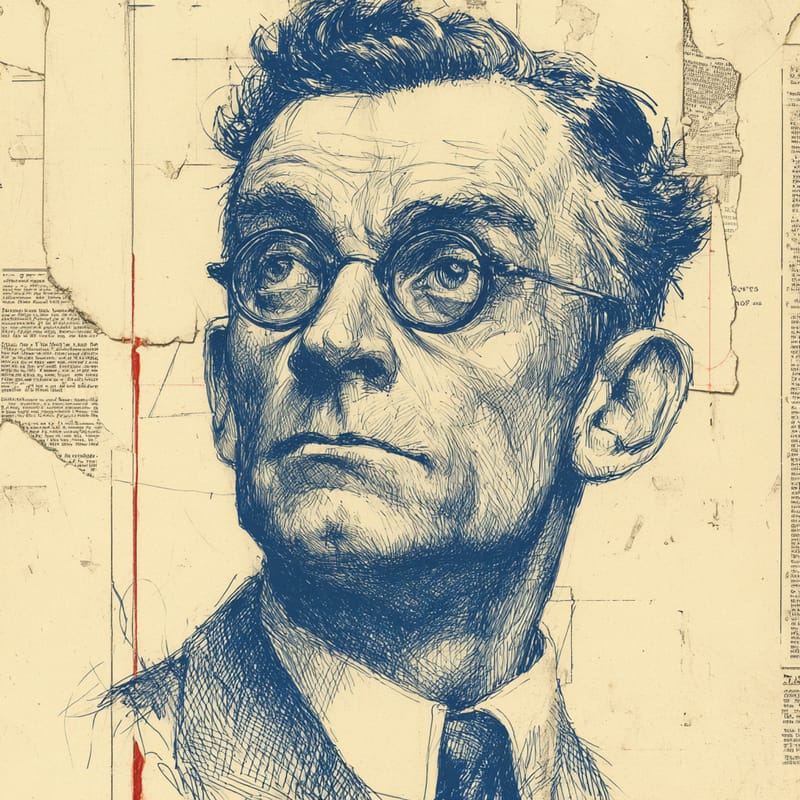
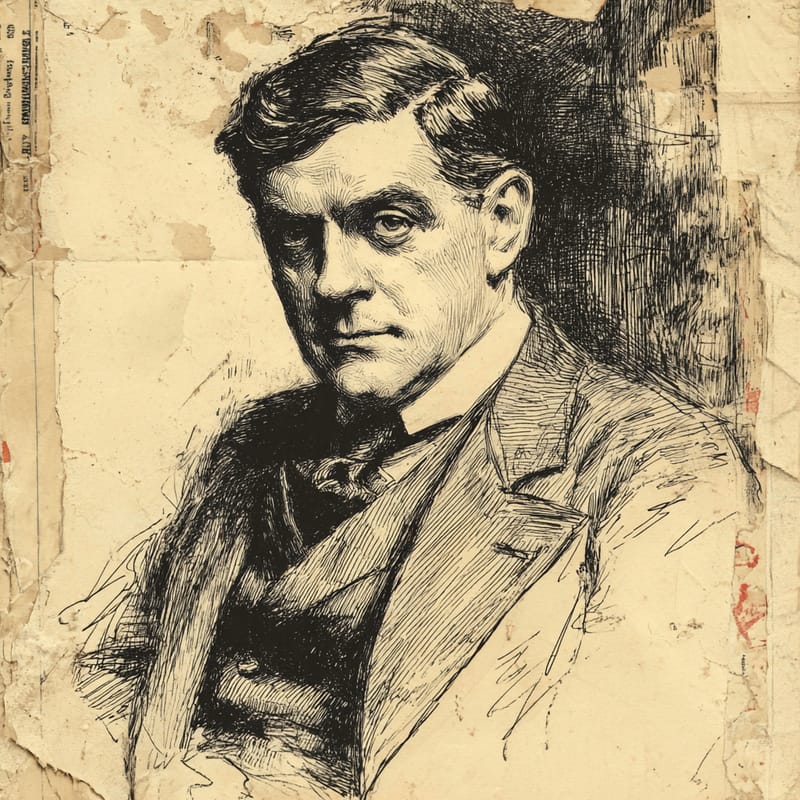
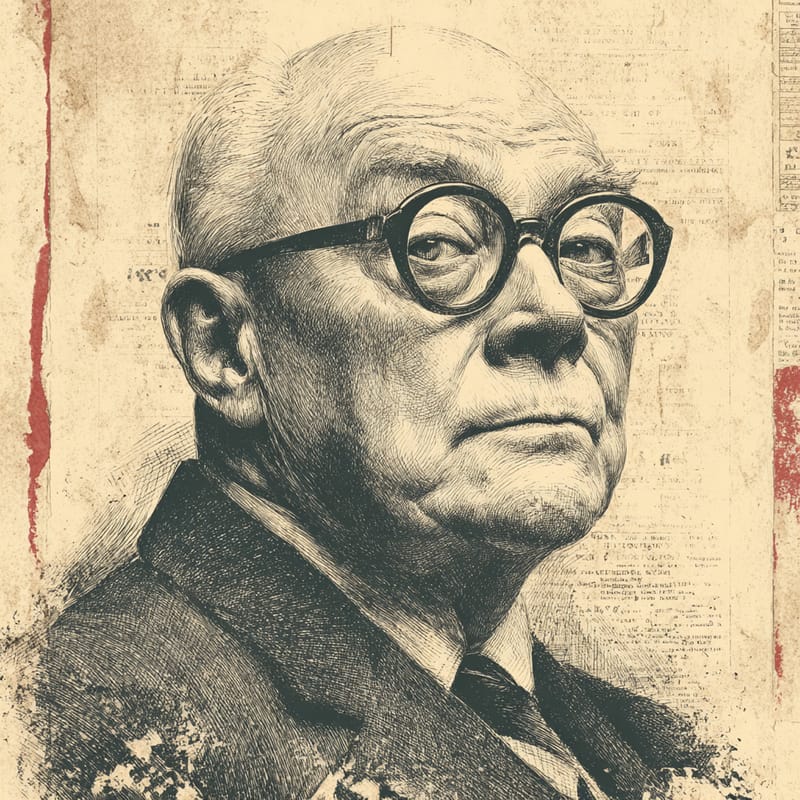
On the 99ideologies three-axis compass, the minds closest to Jean Jaurès are Wolfie Smith (99% alike), Jack London (97% alike) and August Bebel (96% alike). The furthest is Hans-Hermann Hoppe (8% alike).