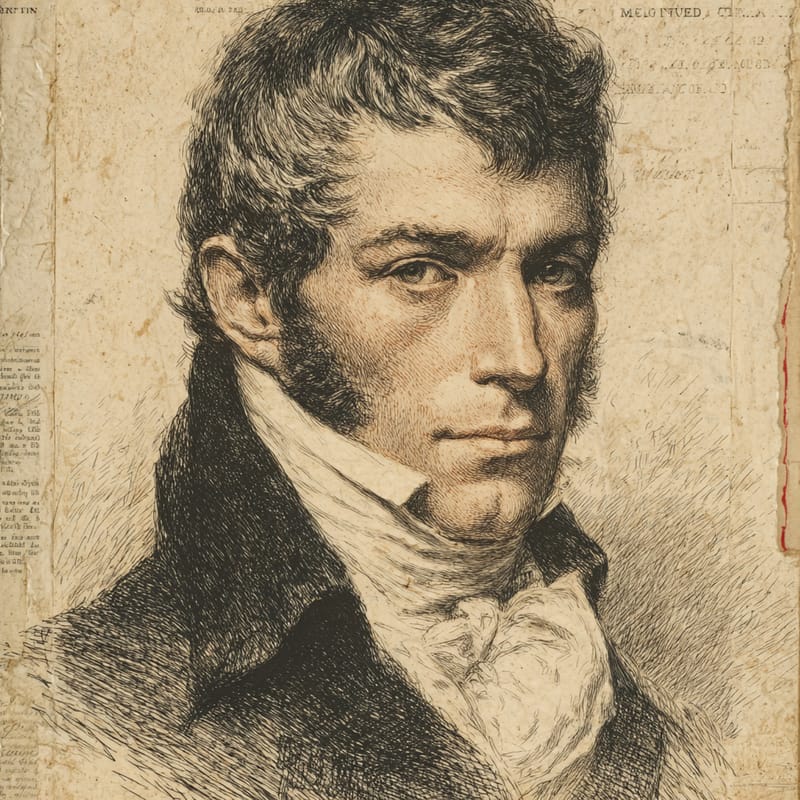
Jean-Baptiste Say
Supply and the entrepreneur
Production opens the door to demand.
Libertarian CapitalistOne of 729 ideologies · enter the Libertarian Capitalist hall →- Role
- Economist
- Era
- 1767–1832
- Region
- France
- Social band
- Centre (no modifier)
- Placement
- +94 · −28 · −8
§ Where Jean-Baptiste Say stands
3 axesSay championed free enterprise and free trade and saw production, organised by the entrepreneur, as the source of wealth. His Treatise on Political Economy (1803) set out the law of markets, holding that goods are ultimately paid for with other goods so that a general glut cannot persist, and argued that tariffs and state privileges divert capital from its most productive uses.
Say was a classical liberal who wanted government cheap, limited and respectful of property, holding that the best tax is the lightest. His break with Napoleon, after which he left the Tribunate in 1804 rather than bend his economics to the regime's needs, showed his independence from state power, though he accepted constitutional monarchy after 1815 and never sought to abolish the state.
Say's social outlook was that of a moderate Enlightenment liberal from a Protestant family. His essay Olbie (1800) imagined a society whose morals were reformed through education, prosperity and enlightened institutions rather than religious authority, and he believed commerce would make people more peaceful and cultivated. He held no radical social programme, however, and taught quietly under the conservative Bourbon Restoration.
How close are you to Jean-Baptiste Say?
Three statements, one per axis. Answer them and we’ll drop you on the compass next to them.
§ The story
HistoricalJean-Baptiste Say (1767–1832) was a French economist and businessman and a leading populariser of Adam Smith's ideas in continental Europe. Born in Lyon to a Protestant merchant family, he trained in commerce partly in England, read The Wealth of Nations and during the Revolution edited La Décade philosophique, the journal of the liberal Idéologues. He sat in Napoleon Bonaparte's Tribunate from 1799 and published his Treatise on Political Economy in 1803.
When Say refused to revise his Treatise to support Napoleon's protectionist and war-financing policies, he left the Tribunate in 1804 and a new edition was blocked until the emperor's fall; he turned instead to running a cotton-spinning mill in northern France. After the Bourbon Restoration he taught industrial economics at the Conservatoire national des arts et métiers from 1820 and became the first professor of political economy at the Collège de France in 1831. His law of markets and his account of the entrepreneur shaped classical economics.
Notable for
- 01Say's Law of markets
- 02'A Treatise on Political Economy'
- 03Theorised the entrepreneur
Key works & moments
- 1794Becomes editor of La Décade philosophique, journal of the liberal Idéologues.
- 1800Publishes Olbie, an essay on reforming a nation's morals through education.
- 1803Publishes his Treatise on Political Economy, setting out the law of markets.
- 1804Leaves Napoleon's Tribunate and founds a cotton-spinning mill in northern France.
- 1820Begins teaching industrial economics at the Conservatoire national des arts et métiers.
- 1831Becomes the first professor of political economy at the Collège de France.
§ Minds closest to Jean-Baptiste Say
All minds →
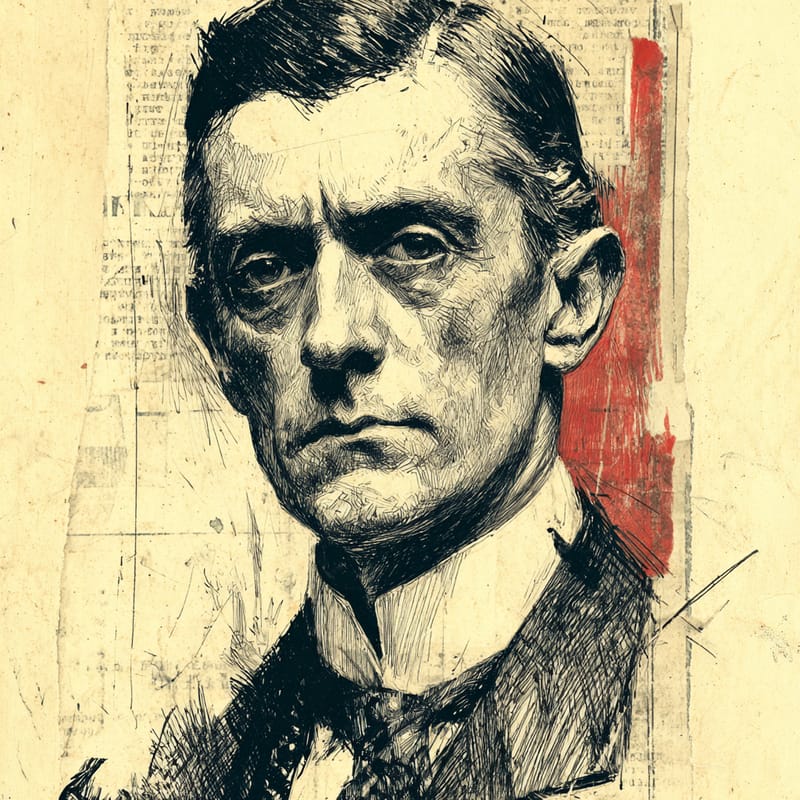
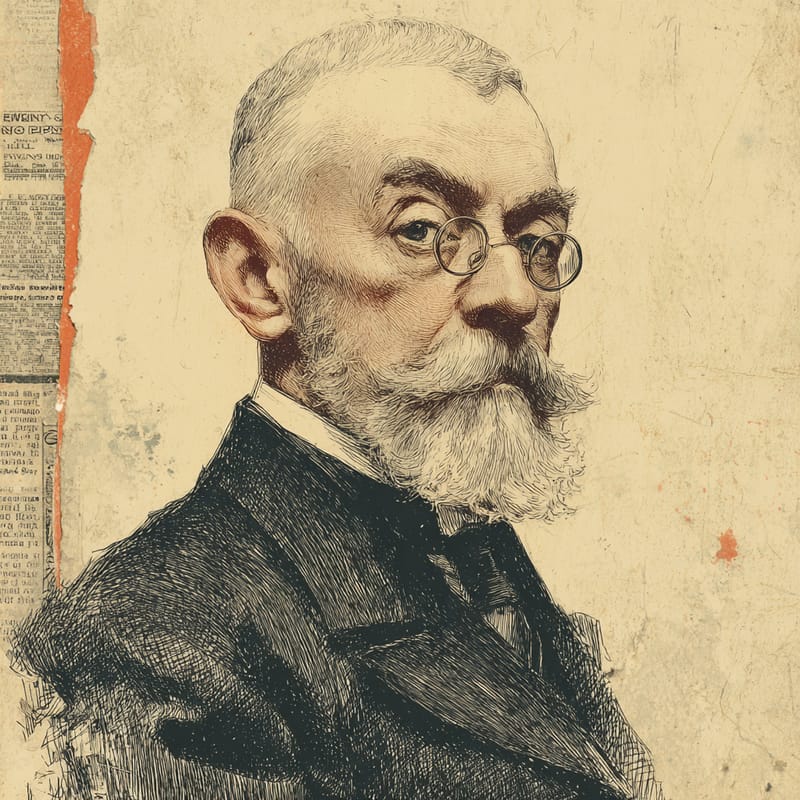


§ Also in the Libertarian Capitalist hall
Enter the hall →§ Common questions
4 answersWhat was Jean-Baptiste Say's political ideology?
Jean-Baptiste Say was a French classical liberal and the leading continental disciple of Adam Smith: on the 99ideologies three-axis compass, a Libertarian Capitalist. Economically he sat near the market extreme (+94), championing free trade, the entrepreneur and his law of markets. On governance he leaned libertarian (−28), favouring cheap, limited government and defying Napoleon's economic demands, and socially he sat close to the centre (−8), a moderate Enlightenment liberal who hoped education and commerce would improve morals.
Was Jean-Baptiste Say left-wing or right-wing?
By the standards of his own era he was a liberal reformer, opposed to aristocratic privilege, Napoleonic despotism and protectionism. In modern terms his economics place him firmly on the free-market right: he defended private enterprise, free trade and light taxation, and his law of markets later became a target for Keynesian economists. His moderate social views and constitutionalism make him a classical liberal rather than a conservative.
What is Say's Law?
Say's Law, or the law of markets, is the principle set out in Say's Treatise on Political Economy (1803) that production creates the means to buy other products, so that goods are ultimately paid for with goods and a general glut of everything at once cannot persist. Partial gluts in particular markets can occur, he accepted, but they reflect shortages elsewhere. The famous summary that supply creates its own demand is not Say's own wording; it was popularised by John Maynard Keynes in 1936, who used it to attack classical economics.
Which minds are closest to Jean-Baptiste Say?
On the 99ideologies three-axis compass, the minds closest to Jean-Baptiste Say are Henry Hazlitt (99% alike), Carl Menger (98% alike) and Ludwig Lachmann (97% alike). The furthest is Pol Pot (3% alike).