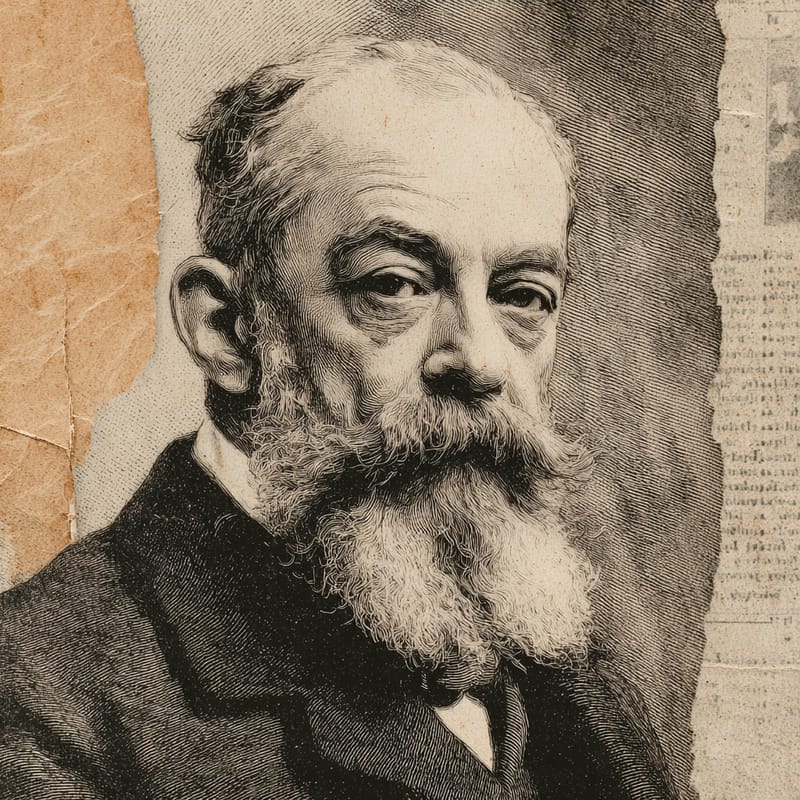
Carl Menger
Founder of the Austrian School
Value is subjective.
Libertarian CapitalistOne of 729 ideologies · enter the Libertarian Capitalist hall →- Role
- Economist
- Era
- 1840–1921
- Region
- Austria
- Social band
- Centre (no modifier)
- Placement
- +92 · −26 · −12
§ Where Carl Menger stands
3 axesMenger's Principles of Economics (1871) grounded all economic value in individuals' subjective judgements of how far goods satisfy their needs, undercutting the labour theory of value that classical economists, and later Marx, relied on. His 1892 essay On the Origin of Money explained money as an unplanned product of market exchange rather than a creation of the state, a theme Hayek later generalised as spontaneous order.
Menger, a classical liberal, saw social institutions such as money, law and language as unintended results of individual action rather than deliberate design, an argument developed in his Investigations into the Method of the Social Sciences (1883). He favoured sound money and limited intervention and took part in the 1892 debates on Austria-Hungary's move to gold, without becoming a doctrinaire opponent of the state.
Menger's social outlook was that of a moderate nineteenth-century liberal, reserved and scholarly rather than crusading. As tutor to Crown Prince Rudolf from 1876 to 1878 he taught a liberal political economy within the Habsburg establishment, and from 1900 he sat in the Austrian House of Lords, accepting the hierarchy of the monarchy while preferring evolved institutions to radical reform.
How close are you to Carl Menger?
Three statements, one per axis. Answer them and we’ll drop you on the compass next to them.
§ The story
HistoricalCarl Menger (1840–1921) was an Austrian economist and the founder of the Austrian School of economics. Born in Neu-Sandez in Austrian Galicia, now Nowy Sącz in Poland, he studied law in Vienna and Prague and took his doctorate at Kraków before working as a journalist and as a market analyst in the government's press office. His Principles of Economics (1871) led to a post at the University of Vienna, where he became a full professor in 1879 after serving as tutor to Crown Prince Rudolf.
Published in the same decade as similar work by William Stanley Jevons and Léon Walras, Menger's Principles launched the marginal revolution by explaining value through the subjective importance individuals attach to particular units of goods, rather than through labour or production costs. His 1883 defence of abstract economic theory provoked the Methodenstreit, a long dispute with Gustav von Schmoller's German Historical School. Through Eugen von Böhm-Bawerk and Friedrich von Wieser, and later Ludwig von Mises and Friedrich Hayek, his ideas became the foundation of the Austrian tradition.
Notable for
- 01Founded the Austrian School
- 02'Principles of Economics' (1871)
- 03The Marginal Revolution
Key works & moments
- 1871Publishes Principles of Economics, launching the Austrian School and the marginal revolution.
- 1876Becomes tutor to Crown Prince Rudolf, accompanying him on travels through Europe.
- 1879Appointed full professor of political economy at the University of Vienna.
- 1883Publishes Investigations into the Method of the Social Sciences, igniting the Methodenstreit.
- 1892Publishes On the Origin of Money and joins debates on Austria-Hungary's currency reform.
- 1900Appointed a life member of the Austrian House of Lords.
§ Minds closest to Carl Menger
All minds →
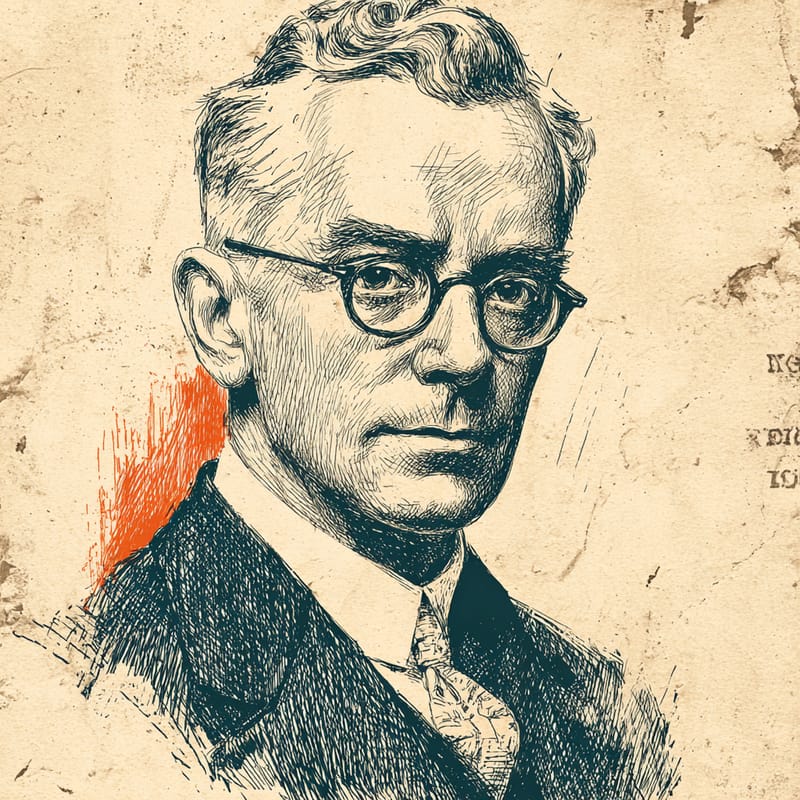
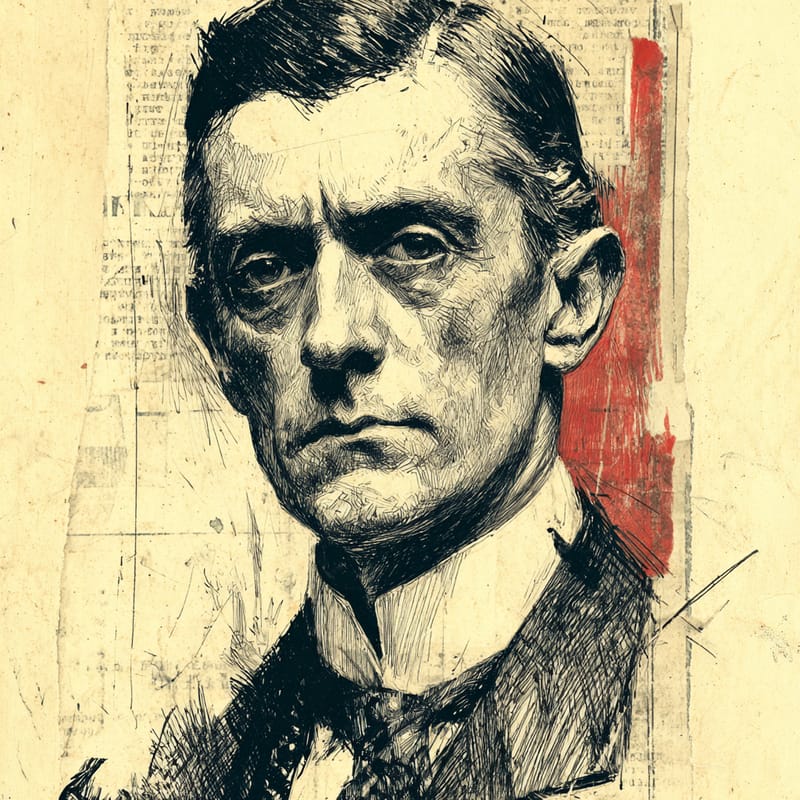
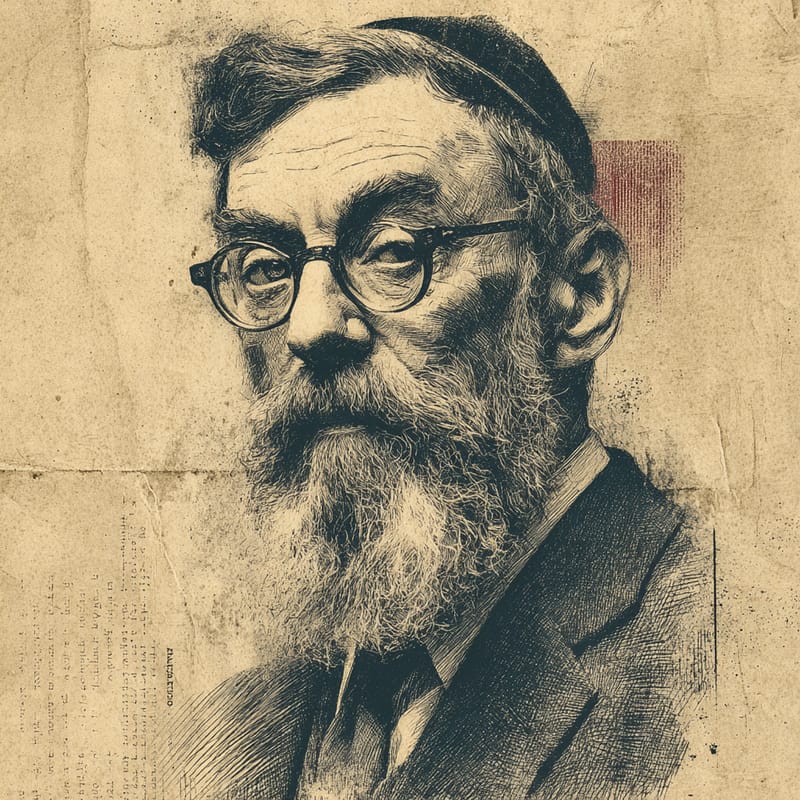

§ Also in the Libertarian Capitalist hall
Enter the hall →The closest minds above are this hall’s whole roster.
§ Common questions
4 answersWhat was Carl Menger's political ideology?
Carl Menger was a classical liberal and the founder of the Austrian School of economics: on the 99ideologies three-axis compass, a Libertarian Capitalist. Economically he sat near the market extreme (+92), grounding value in individual subjective choice and explaining money as a spontaneous market institution. On governance he leaned libertarian (−26), a sound-money liberal sceptical of designed institutions, and socially he sat just on the traditional side of centre (−12), a moderate liberal within the Habsburg establishment.
Was Carl Menger left-wing or right-wing?
His economics belong to the free-market right, though he was a scholar rather than a political campaigner. Menger's subjective theory of value undercut the labour theory of value behind Marxist economics, and his followers built the Austrian School into a leading intellectual opponent of socialism. In the politics of his own day he was a moderate liberal who tutored the heir to the Habsburg throne and later sat in the House of Lords, rather than a conservative or a radical.
What did Carl Menger contribute to economics?
Three foundational ideas. In Principles of Economics (1871) he argued, alongside Jevons and Walras, that value comes from the marginal importance people attach to goods, launching the marginal revolution. In his 1883 work on method he defended abstract theory against the German Historical School, sparking the Methodenstreit. And he explained institutions such as money as spontaneous outcomes of individual action rather than deliberate design, an insight developed by Ludwig von Mises and Friedrich Hayek in the Austrian tradition.
Which minds are closest to Carl Menger?
On the 99ideologies three-axis compass, the minds closest to Carl Menger are Jean-Baptiste Say (98% alike), Eugen von Böhm-Bawerk (98% alike) and Ludwig Lachmann (98% alike). The furthest is Pol Pot (4% alike).