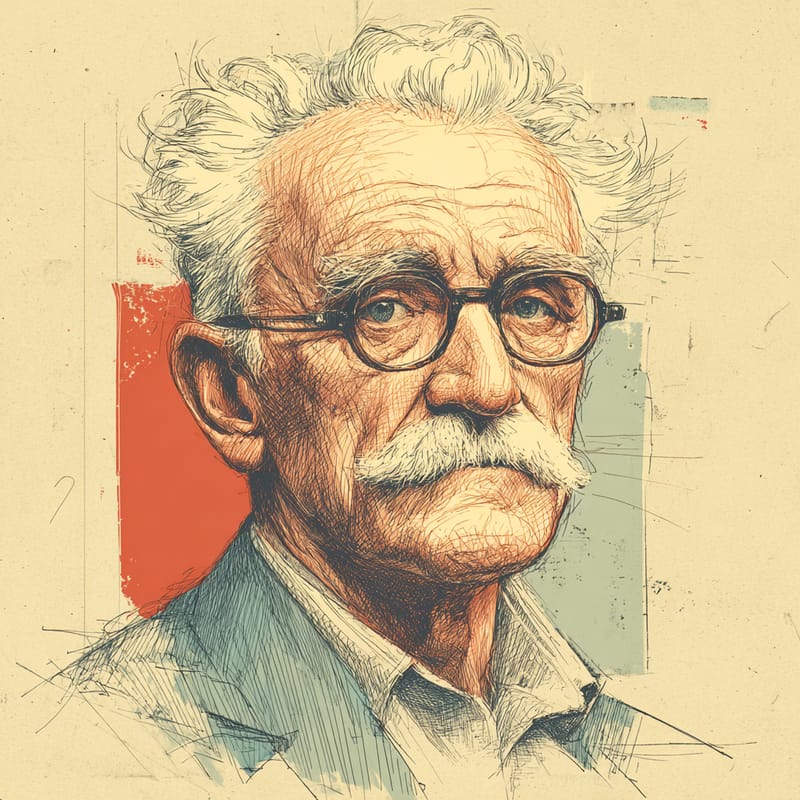
Herbert Marcuse
One-dimensional man
Philosopher of the New Left.
Reformist Orthodox MarxistOne of 729 ideologies · enter the Orthodox Marxist hall →- Role
- Philosopher
- Era
- 1898–1979
- Region
- Germany / US
- Social band
- Reformist
- Placement
- −88 · 0 · +50
§ Where Herbert Marcuse stands
3 axesMarcuse sought the abolition of capitalism, not its reform. In One-Dimensional Man (1964) he argued that advanced industrial society manufactures false needs to keep people working and consuming, and Eros and Civilization (1955) imagined automation and socialised production freeing humanity from 'surplus repression'. He rejected the Soviet model too, criticising its bureaucratic planning in Soviet Marxism (1958).
Marcuse was neither a party loyalist nor a liberal. He called for a 'Great Refusal' of both Western capitalism and Soviet bureaucracy and backed the student and anti-war movements, yet his 1965 essay 'Repressive Tolerance' argued that tolerance should be withdrawn from movements he considered regressive, an illiberal turn that offsets his anti-authoritarian leanings.
Marcuse was a thoroughgoing social progressive. Eros and Civilization (1955) argued for liberating sexuality and play from the discipline of work, An Essay on Liberation (1969) championed the counterculture, students and Third World liberation movements, and his 1974 lecture 'Marxism and Feminism' endorsed the women's movement as a radical force.
How close are you to Herbert Marcuse?
Three statements, one per axis. Answer them and we’ll drop you on the compass next to them.
§ The story
HistoricalHerbert Marcuse (1898–1979) was a German-American philosopher and the member of the Frankfurt School who became most famous in his lifetime. Born to a Jewish family in Berlin, he served in the German army in the First World War, studied under Martin Heidegger in Freiburg and joined the Institute for Social Research in 1933. Fleeing Nazism, he moved to the United States, analysed Nazi Germany for the wartime Office of Strategic Services and then the State Department, and later taught at Brandeis and the University of California, San Diego.
Marcuse's Eros and Civilization (1955) fused Marx and Freud into a vision of a liberated, non-repressive society, and One-Dimensional Man (1964) argued that affluent industrial societies absorb dissent through consumerism and technology. The books made him the leading theorist of the 1960s New Left in the United States and West Germany, and a mentor to Angela Davis. Conservatives attacked him as a corrupter of youth, the American Legion campaigned for his dismissal in 1968, and his essay 'Repressive Tolerance' (1965), which argued for withholding tolerance from regressive movements, remains intensely controversial.
Notable for
- 01'One-Dimensional Man'
- 02Guru of the New Left
- 03'The Great Refusal'
Key works & moments
- 1933Joins the Institute for Social Research, then emigrates to the United States in 1934.
- 1941Publishes Reason and Revolution, defending Hegel against charges of fostering fascism.
- 1955Eros and Civilization synthesises Marx and Freud.
- 1964One-Dimensional Man becomes a founding text of the New Left.
- 1965Publishes the essay 'Repressive Tolerance' and moves to UC San Diego.
- 1969An Essay on Liberation celebrates the student revolts and the counterculture.
In their own words
“A comfortable, smooth, reasonable, democratic unfreedom prevails in advanced industrial civilization, a token of technical progress.”
§ Minds closest to Herbert Marcuse
All minds →
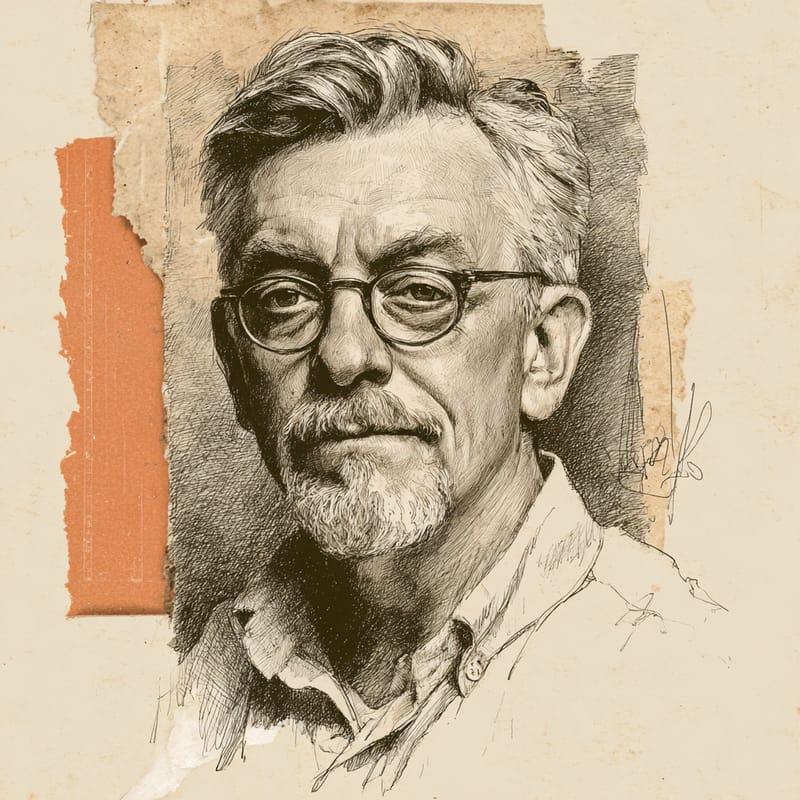
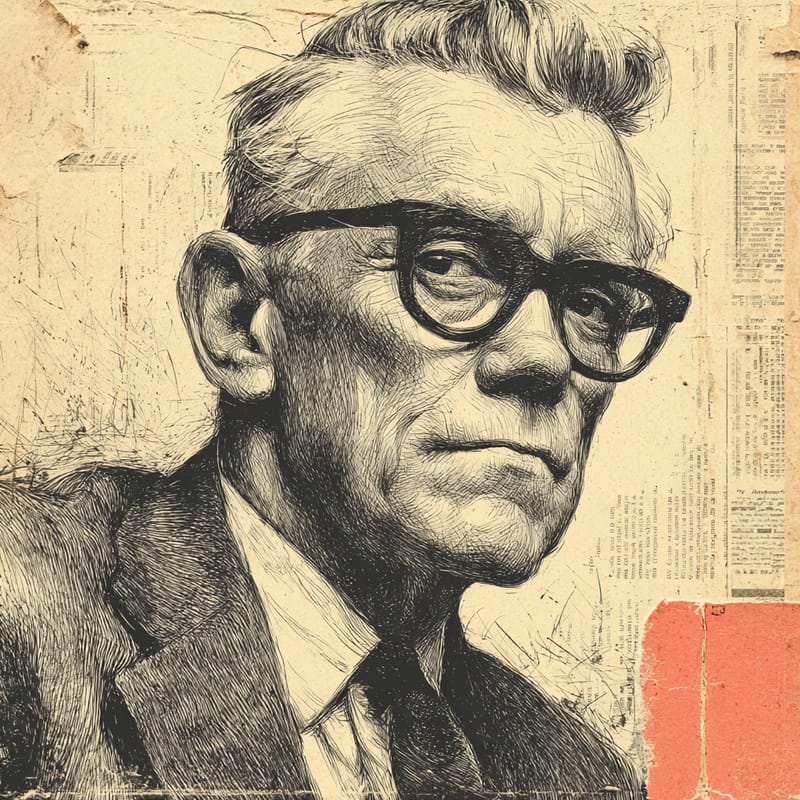
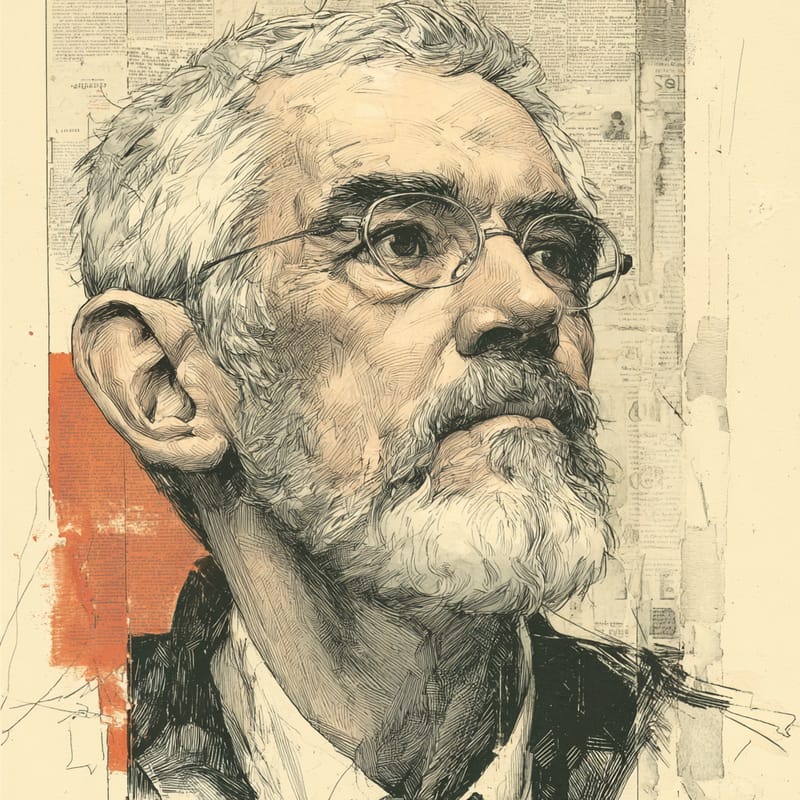

§ Also in the Orthodox Marxist hall
Enter the hall →§ Common questions
4 answersWhat was Herbert Marcuse's political ideology?
Marcuse was a Western Marxist of the Frankfurt School and the leading theorist of the New Left: on the 99ideologies three-axis compass, a Reformist Orthodox Marxist. Economically he sat on the far left (−88), seeking to abolish capitalism and its consumer society. On governance he sat in the middle (0), rejecting Soviet bureaucracy and liberal democracy alike while defending restrictions on regressive movements, and socially he was clearly progressive (+50), championing sexual, racial and cultural liberation.
Was Herbert Marcuse left-wing or right-wing?
Left-wing, and on its radical wing. Marcuse wanted to replace capitalism with a socialist society free of exploitation and needless toil, and he was the most influential philosopher for the student and anti-war movements of the 1960s. He differed from Soviet-style communists by condemning bureaucratic dictatorship, and from many Marxists by looking beyond the industrial working class to students, minorities and the Third World as agents of change.
What did Herbert Marcuse mean by repressive tolerance?
He meant that tolerance in liberal capitalist societies can protect domination instead of challenging it. In the 1965 essay 'Repressive Tolerance', Marcuse argued that when the media and institutions are dominated by established interests, giving an equal hearing to all views entrenches the status quo. He proposed 'liberating tolerance', meaning intolerance towards movements of the right and toleration of movements of the left. Critics across the spectrum have attacked the essay as a rationale for censorship, and it remains central to debates about free speech.
Which minds are closest to Herbert Marcuse?
On the 99ideologies three-axis compass, the minds closest to Herbert Marcuse are Max Horkheimer (97% alike), Eric Hobsbawm (97% alike) and Theodor Adorno (96% alike). The furthest is Adam Sutler (2% alike).