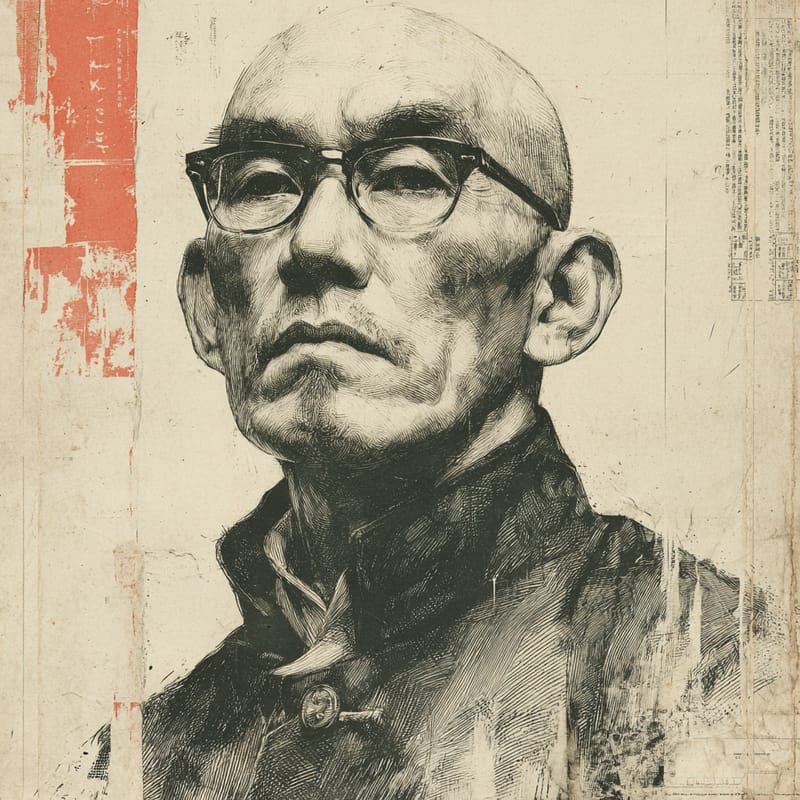
Chiang Ching-kuo
The Taiwan miracle
Market boom under a one-party state.
Traditional Conservative CapitalistOne of 729 ideologies · enter the Conservative Capitalist hall →- Role
- President
- Era
- 1910–1988
- Region
- Taiwan
- Social band
- Traditional
- Placement
- +88 · +34 · −55
§ Where Chiang Ching-kuo stands
3 axesChiang ran an export-driven capitalist economy guided by a developmental state. His Ten Major Construction Projects of the 1970s built a north–south freeway, a new international airport, ports, a steel mill and nuclear power, and the Hsinchu Science Park opened in 1980 to seed a high-technology industry. Private small and medium firms drove exports, while the state kept control of banks and heavy industry.
Chiang governed a one-party state under martial law for most of his career, directing the security services during the White Terror of the 1950s and presiding over the crackdown after the 1979 Kaohsiung Incident. In his last years he changed course decisively, tolerating the opposition Democratic Progressive Party founded in 1986 and lifting martial law in July 1987, which tempers his authoritarian record.
Chiang was a Confucian-minded conservative who prized frugality, discipline and loyalty to a Chinese nationalist state. He kept his father's anti-communist ideology and the goal of reuniting China under the Three Principles of the People, and Mandarin-only policies continued to restrict Taiwanese languages in schools and broadcasting. His late reforms, such as allowing visits to relatives on the mainland in 1987, loosened rather than overturned that order.
How close are you to Chiang Ching-kuo?
Three statements, one per axis. Answer them and we’ll drop you on the compass next to them.
§ The story
HistoricalChiang Ching-kuo (1910–1988) was the leader of the Republic of China on Taiwan from the 1970s until his death, as premier from 1972 and president from 1978. The eldest son of Chiang Kai-shek, he went to study in Moscow in 1925 and spent twelve years in the Soviet Union, working in a Urals factory and marrying Faina Vakhreva, whom he met there, before returning to China in 1937. After the Nationalists retreated to Taiwan in 1949 he oversaw the security and political-warfare apparatus, then served as defence minister and premier.
Chiang presided over Taiwan's economic miracle, launching the Ten Major Construction Projects and the Hsinchu Science Park and promoting native Taiwanese such as Lee Teng-hui within the Kuomintang. For most of his career he was also a pillar of the White Terror and the martial-law state, and repression continued under his presidency, including the military trials that followed the 1979 Kaohsiung Incident. In his final years he tolerated the founding of the opposition Democratic Progressive Party, lifted martial law in 1987 after 38 years and ended the ban on new newspapers, opening the way to democracy.
Notable for
- 01Taiwan's economic miracle
- 02Ten Major Construction Projects
- 03Lifted martial law
Key works & moments
- 1925–37Studies and works in the Soviet Union, unable to leave for much of that time.
- 1972Becomes premier of the Republic of China.
- 1974–79The Ten Major Construction Projects build freeways, ports, a steel mill and nuclear plants.
- 1978Elected president by the National Assembly.
- 1986Tolerates the founding of the opposition Democratic Progressive Party rather than suppressing it.
- 1987Lifts martial law after 38 years and permits family visits to mainland China.
§ Minds closest to Chiang Ching-kuo
All minds →

§ Also in the Conservative Capitalist hall
Enter the hall →§ Common questions
4 answersWhat was Chiang Ching-kuo's political ideology?
Chiang was an anti-communist developmental nationalist who became a late reformer: on the 99ideologies three-axis compass, a Traditional Conservative Capitalist. Economically he sat far to the market side (+88), building an export-led capitalist economy on state-built infrastructure. On governance he was authoritarian (+34) for most of his career, before lifting martial law in 1987, and socially he was traditional (−55), committed to Confucian discipline and Chinese nationalism.
Was Chiang Ching-kuo left-wing or right-wing?
Right-wing in the Cold War sense. Chiang led the anti-communist Kuomintang, built a capitalist economy and suppressed leftist and Taiwanese independence dissent alike. His Soviet years, when he publicly denounced his father after the 1927 purge of communists, gave him organisational habits from the Leninist left, and he cared about rural welfare and clean government. But his politics in Taiwan were conservative and nationalist.
Did Chiang Ching-kuo democratise Taiwan?
He began the process, though he did not complete it. In 1986 Chiang allowed the illegal Democratic Progressive Party to operate rather than crush it, in July 1987 he ended 38 years of martial law, and before his death in January 1988 he permitted visits to the mainland and lifted the ban on new newspapers. He also chose the Taiwanese-born Lee Teng-hui as vice-president, and Lee carried reform through to full elections for the National Assembly and Legislative Yuan in 1991–92 and the first direct presidential election in 1996.
Which minds are closest to Chiang Ching-kuo?
On the 99ideologies three-axis compass, the minds closest to Chiang Ching-kuo are Guizot (Doctrinaire archetype) (99% alike), Mahathir Mohamad (98% alike) and The Chicago-School technocrat (archetype) (97% alike). The furthest is Emma Goldman (0% alike).