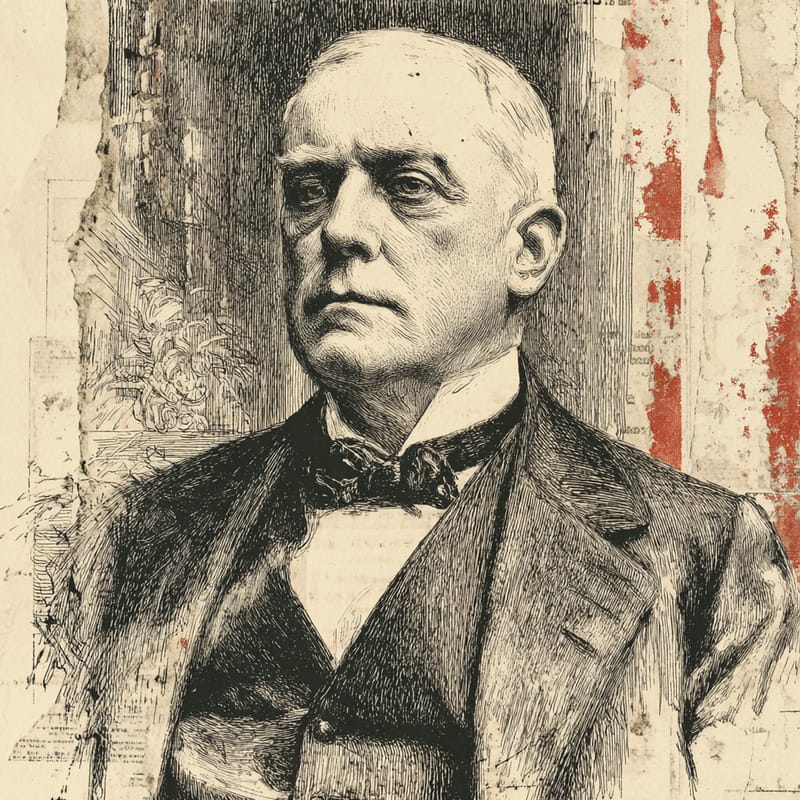
William McKinley
The gold standard
Tariffs, trusts, and empire.
Traditional Conservative CapitalistOne of 729 ideologies · enter the Conservative Capitalist hall →- Role
- President
- Era
- 1843–1901
- Region
- United States
- Social band
- Traditional
- Placement
- +88 · +24 · −44
§ Where William McKinley stands
3 axesMcKinley was the leading protectionist of his age and a defender of sound money for business. His 1890 tariff raised average duties to historic highs, the 1897 Dingley Tariff pushed rates up again, and the Gold Standard Act of 1900 put the dollar formally on gold, defeating the inflationary free-silver movement. He opposed heavy regulation of big business, though in his final speech he embraced reciprocal trade treaties.
McKinley strengthened the presidency in foreign affairs while leaving domestic power largely to Congress and business. He led the country into war with Spain in 1898, annexed Hawaii the same year, sent troops to fight the Philippine independence movement from 1899 and joined the international force against the Boxer uprising in China in 1900, a record many historians see as the start of the modern presidency.
A devout Methodist and Union veteran, McKinley embodied the respectable, churchgoing Protestant establishment of the late nineteenth century. He promoted reconciliation between North and South, and his 1898 proclamation of 'benevolent assimilation' cast American rule in the Philippines as a civilising mission. He did little to challenge the spread of segregation and the disenfranchisement of Black voters in the South.
How close are you to William McKinley?
Three statements, one per axis. Answer them and we’ll drop you on the compass next to them.
§ The story
HistoricalWilliam McKinley (1843–1901) was the 25th president of the United States, serving from 1897 until his assassination in 1901. An Ohioan, he enlisted as a private in the Civil War and left as a brevet major, then practised law in Canton and served in Congress for most of the period from 1877 to 1891, where as chairman of the Ways and Means Committee he wrote the high McKinley Tariff of 1890. After two terms as governor of Ohio, he won the 1896 Republican nomination with the backing of the industrialist Mark Hanna.
McKinley defeated William Jennings Bryan's free-silver crusade in 1896 and again in 1900, cementing a Republican coalition of business, industrial workers and the Northern middle class that dominated national politics for a generation. His presidency brought the Dingley Tariff, the Gold Standard Act and the 1898 war with Spain, which gave the United States Puerto Rico, Guam and the Philippines, where a long war against Filipino independence forces followed. He was shot by the anarchist Leon Czolgosz in Buffalo in September 1901, and Theodore Roosevelt succeeded him.
Notable for
- 01Gold Standard Act
- 02High protective tariffs
- 03Spanish–American War expansion
Key works & moments
- 1890Steers the McKinley Tariff through Congress, raising duties to record levels.
- 1896Defeats William Jennings Bryan after a 'front porch' campaign centred on sound money.
- 1897Signs the Dingley Tariff, another steeply protective measure.
- 1898Wins the Spanish–American War, acquiring Puerto Rico, Guam and the Philippines, and annexes Hawaii.
- 1900Signs the Gold Standard Act and wins re-election with Theodore Roosevelt as running mate.
- 1901Shot by the anarchist Leon Czolgosz in Buffalo; dies eight days later.
In their own words
“Isolation is no longer possible or desirable.”
§ Minds closest to William McKinley
All minds →

§ Also in the Conservative Capitalist hall
Enter the hall →§ Common questions
4 answersWhat was William McKinley's political ideology?
McKinley was a Gilded Age Republican conservative: on the 99ideologies three-axis compass, a Traditional Conservative Capitalist. Economically he sat far to the market side (+88), backing big business, the gold standard and the high protective tariffs he saw as the basis of industrial prosperity. On governance he leaned towards a strong state abroad (+24), taking colonies after the war with Spain, and socially he was traditional (−44), a devout Methodist of the Protestant establishment.
Was William McKinley left-wing or right-wing?
Right-wing by the standards of his era. McKinley defended big business, sound money and protective tariffs against the agrarian populism of William Jennings Bryan, whose free-silver Democrats drew on indebted farmers and rural workers. His protectionism was not laissez-faire in the strict sense, since tariffs are state intervention, but he aimed it at helping private industry. His imperial expansion abroad also placed him with the nationalist right of his day.
Why did McKinley go to war with Spain?
Because of a crisis over Cuba that he failed to resolve by diplomacy. Spain's harsh campaign against Cuban rebels, including the herding of civilians into reconcentration camps, outraged American opinion, and on 15 February 1898 the battleship USS Maine exploded in Havana harbour, killing more than 250 sailors. Amid press and congressional pressure McKinley asked Congress for authority to intervene in April 1898. The war lasted under four months, ended Spanish rule in Cuba and gave the United States Puerto Rico, Guam and the Philippines.
Which minds are closest to William McKinley?
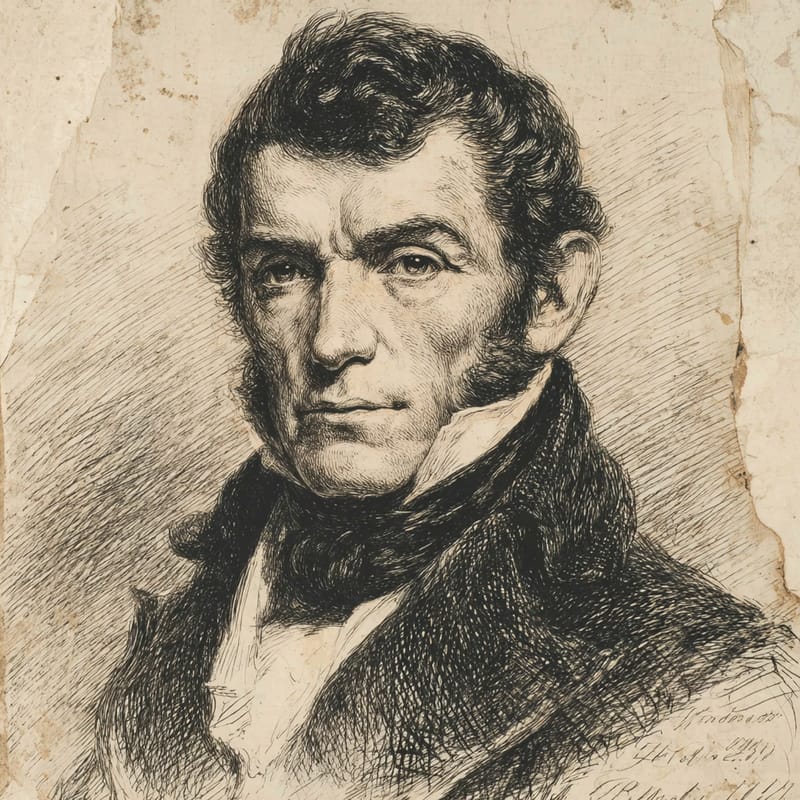
On the 99ideologies three-axis compass, the minds closest to William McKinley are Alexander Hamilton (97% alike), The Chicago-School technocrat (archetype) (97% alike) and Mahathir Mohamad (95% alike). The furthest is Emma Goldman (0% alike).