
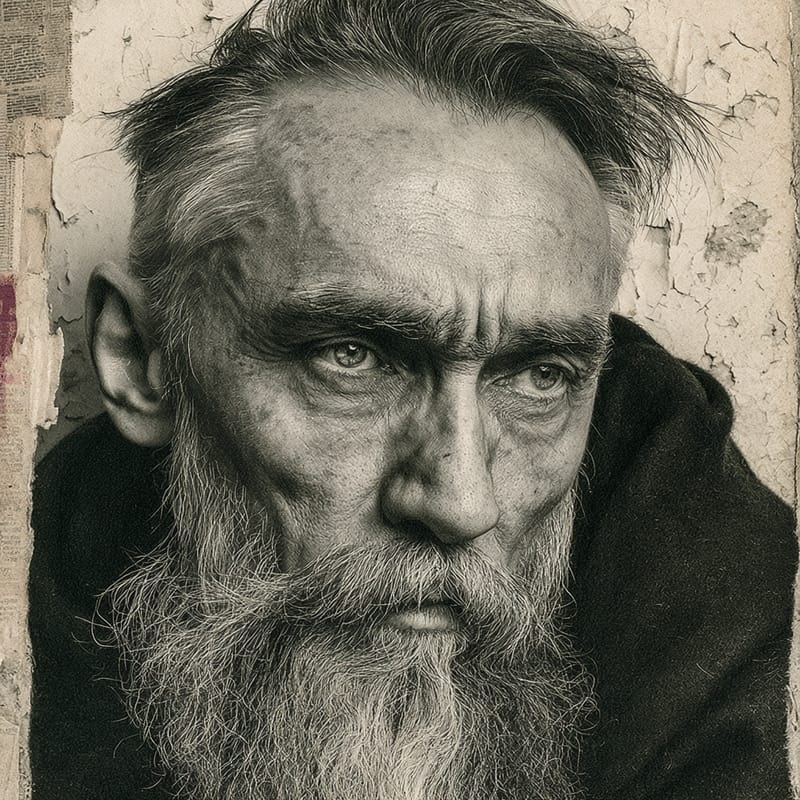
Hwang Jang-yop
Juche's systematiser
He wrote it — then he fled.
JuchistOne of 729 ideologies · enter the Juchist hall →- Role
- Theorist & defector
- Era
- 1923–2010
- Region
- North Korea
- Social band
- Centre (no modifier)
- Placement
- −72 · +88 · +10
§ Where Hwang Jang-yop stands
3 axesAs president of Kim Il-sung University from 1965 and then as a party theorist, Hwang spent decades systematising and teaching the ideology of a planned, state-owned economy built on Juche's principle of self-reliance. After defecting in 1997 he described the mass starvation of the 1990s as a failure of the regime, a critique that tempers but does not overturn his place on the left.
For decades Hwang served the system at its summit, chairing the Supreme People's Assembly's Standing Committee from 1972 to 1983 as Juche hardened into the official doctrine of an absolute leader. His 1997 defection and later writings denounced the Kim dynasty as a feudal dictatorship, but his record as a builder of its ideology keeps him firmly on the authoritarian side.
Hwang presented Juche as a humanist philosophy holding that man is the master of everything and decides everything, and in exile after 1997 he championed that humanism against what he saw as the leader cult's distortion of it. His thought blended revolutionary modernism with Korean nationalism, which leaves him only slightly on the progressive side of the social axis.
How close are you to Hwang Jang-yop?
Three statements, one per axis. Answer them and we’ll drop you on the compass next to them.
§ The story
HistoricalHwang Jang-yop (1923–2010) was North Korea's leading philosopher and one of its most senior officials before becoming the highest-ranking defector in the country's history. Born near Pyongyang under Japanese colonial rule, he studied in Tokyo and later at Moscow State University, then returned to teach philosophy. He became president of Kim Il-sung University in 1965, chaired the Standing Committee of the Supreme People's Assembly from 1972 to 1983 and later served as a secretary of the Workers' Party Central Committee.
Hwang is widely credited with turning Kim Il-sung's slogans of self-reliance into Juche as a systematic, man-centred philosophy. In February 1997 he walked into the South Korean embassy in Beijing with an aide and reached Seoul that April. There he wrote and spoke against the regime, arguing that Kim Jong-il had perverted Juche into a feudal cult while the population starved, and he lived under heavy protection; in 2010 South Korea arrested two North Korean agents accused of plotting to kill him. He died in Seoul that October.
Notable for
- 01Systematised Juche ideology
- 02Highest-ranking DPRK defector
- 03Later regime critic
Key works & moments
- Early 1950sStudies philosophy at Moscow State University before returning to teach in Pyongyang.
- 1965Becomes president of Kim Il-sung University, North Korea's leading university.
- 1970sShapes Juche into a formal man-centred philosophy, taught as the state's guiding doctrine.
- 1972–83Chairs the Standing Committee of the Supreme People's Assembly.
- 1997Defects at the South Korean embassy in Beijing in February, reaching Seoul in April.
- 2010Dies in Seoul in October; South Korea posthumously awards him a national order of merit.
§ Minds closest to Hwang Jang-yop
All minds →




§ Also in the Juchist hall
Enter the hall →The closest minds above are this hall’s whole roster.
§ Common questions
4 answersWhat was Hwang Jang-yop's political ideology?
Hwang was the chief theorist of Juche, North Korea's doctrine of self-reliance, who later turned against the regime it served: on the 99ideologies three-axis compass, a Juchist. Economically he sat well to the left (−72), as an architect of the ideology of a planned, self-reliant socialist economy. On governance he was strongly authoritarian (+88), reflecting decades at the top of a one-party state, and socially he leaned slightly progressive (+10) with his humanist reading of Juche.
Was Hwang Jang-yop left-wing or right-wing?
Left-wing by training and career. Hwang studied Marxist philosophy in Moscow and spent most of his life building the ideology of a communist one-party state. His defection to South Korea in 1997 and his campaigning against Pyongyang made him a hero to many South Korean conservatives, but he never abandoned the Juche philosophy itself, insisting that the Kim dynasty had distorted a humanist doctrine into a feudal leader cult.
Why did Hwang Jang-yop defect?
He said he defected to warn the world about the North's preparations for war and to expose how far the regime had betrayed its own ideals. By the mid-1990s famine was killing large numbers of North Koreans, and Hwang had concluded that Kim Jong-il had turned Juche into a feudal personality cult. Returning from a visit to Japan via Beijing in February 1997, he sought refuge at the South Korean embassy, triggering a diplomatic standoff of several weeks before China let him leave.
Which minds are closest to Hwang Jang-yop?
On the 99ideologies three-axis compass, the minds closest to Hwang Jang-yop are The Eternal Leader (archetype) (95% alike), Kim Il-sung (95% alike) and Kim Jong-il (94% alike). The furthest is Hans-Hermann Hoppe (0% alike).