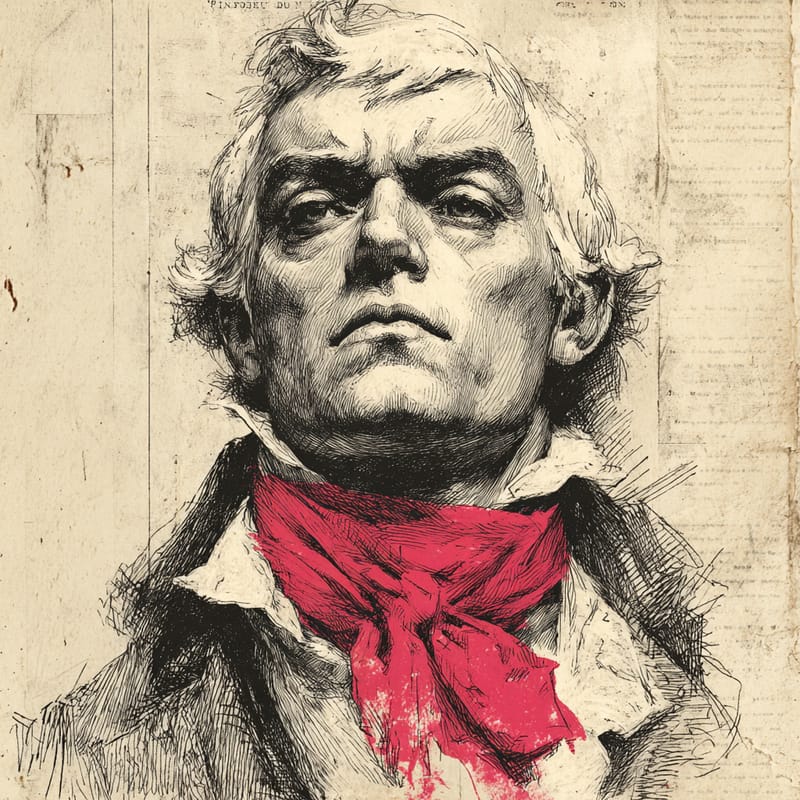
Revolutionary Vanguard (archetype)
The pure revolutionary
Total faith in the coming transformation.
Reformist PosadistOne of 729 ideologies · enter the Posadist hall →- Role
- Revolutionary cadre
- From
- Archetype
- Region
- —
- Social band
- Reformist
- Placement
- −90 · +32 · +55
§ Where Revolutionary Vanguard (archetype) stands
3 axesThe vanguard aims at the uncompromising abolition of private capital. The Communist Manifesto's call in 1848 for the abolition of bourgeois property is its starting point, Lenin's Bolsheviks nationalised banks and large industry after 1917, and Posadist and other Trotskyist cells demanded expropriation without compensation and planned economies under workers' control.
Its defining feature is the disciplined minority that leads the masses. Lenin's What Is to Be Done? (1902) argued that workers left to themselves reach only trade-union consciousness and need a party of professional revolutionaries under strict central discipline. The archetype's authority is moral and organisational rather than that of an established state, which keeps it short of outright dictatorship.
The vanguard is modernist and forward-rushing, confident that science, industry and revolution will sweep away religion, superstition and the old ruling classes. Yet its gaze is fixed on class rather than culture: the Bolsheviks liberalised divorce in 1917 and legalised abortion in 1920 while subordinating every cause to the party, which tempers the archetype's progressivism with a disciplined, collective puritanism.
How close are you to Revolutionary Vanguard (archetype)?
Three statements, one per axis. Answer them and we’ll drop you on the compass next to them.
§ The story
ArchetypeThe Revolutionary Vanguard is the archetype of the small, disciplined cell of true believers convinced that the decisive transformation is imminent and that history has chosen them to lead it. Its real lineage runs from Auguste Blanqui's insurrectionary secret societies in 1830s Paris and the Russian terrorists of Narodnaya Volya to Lenin's party of professional revolutionaries, set out in What Is to Be Done? (1902), Che Guevara's guerrilla foco and the many Trotskyist sects, Posadism among them, that awaited the final crisis.
The archetype recurs because revolutionary politics rewards certainty: a small group that believes the collapse of the old order is near can endure isolation, persecution and failure, and in 1917 one such party did seize power. It also reveals the dangers of that certainty, from conspiratorial secrecy and sectarian splits to contempt for the slow work of persuasion, and the Bolshevik case showed how a vanguard that wins can become the new apparatus of rule.
Notable for
- 01The true-believer cadre
- 02Absolute revolutionary optimism
- 03Vanguard archetype
Key works & moments
- 1839Auguste Blanqui's Society of the Seasons stages a failed armed rising in Paris.
- 1881Narodnaya Volya assassinates Tsar Alexander II in St Petersburg.
- 1902Lenin's What Is to Be Done? calls for a party of professional revolutionaries.
- 1917The Bolsheviks seize power in Petrograd in the October Revolution.
- 1962J. Posadas founds his own International, convinced the final struggle is near.
- 1967Che Guevara's guerrilla band is destroyed in Bolivia and he is executed.
§ Minds closest to Revolutionary Vanguard (archetype)
All minds →

§ Also in the Posadist hall
Enter the hall →§ Common questions
4 answersWhat is the Revolutionary Vanguard's political ideology?
The Revolutionary Vanguard is the true believer of revolutionary Marxism: on the 99ideologies three-axis compass, a Reformist Posadist. Economically the archetype sits at the collectivist extreme (−90), demanding the abolition of private capital. On governance it leans moderately authoritarian (+32), trusting a disciplined minority to lead the masses, though it holds no state power of its own. Socially it is moderately progressive (+55), modernist and secular but focused on class struggle rather than cultural liberation.
Is the Revolutionary Vanguard left-wing or right-wing?
Left-wing, at its revolutionary edge. The archetype seeks to overthrow capitalism and replace it with common ownership, which puts it on the far left economically, and its modernism places it on the progressive side. What distinguishes it from democratic socialists is method: it trusts a disciplined, self-selected minority to make the revolution rather than winning majorities through elections. Far-right movements have borrowed vanguard tactics, but this archetype belongs to the Marxist tradition.
What is a vanguard party?
A vanguard party is a revolutionary organisation of committed, disciplined activists that claims to lead the working class toward socialism. The idea was set out by Lenin in What Is to Be Done? (1902), which argued that workers on their own develop only trade-union consciousness and need professional revolutionaries to bring them socialist politics. The Bolsheviks built such a party and took power in 1917, and later communist parties adopted the model; critics argue that it concentrates power in a self-appointed elite.
Which minds are closest to Revolutionary Vanguard (archetype)?
On the 99ideologies three-axis compass, the minds closest to Revolutionary Vanguard (archetype) are J. Posadas (95% alike), Natalia Sedova (94% alike) and August Bebel (94% alike). The furthest is Hans-Hermann Hoppe (0% alike).