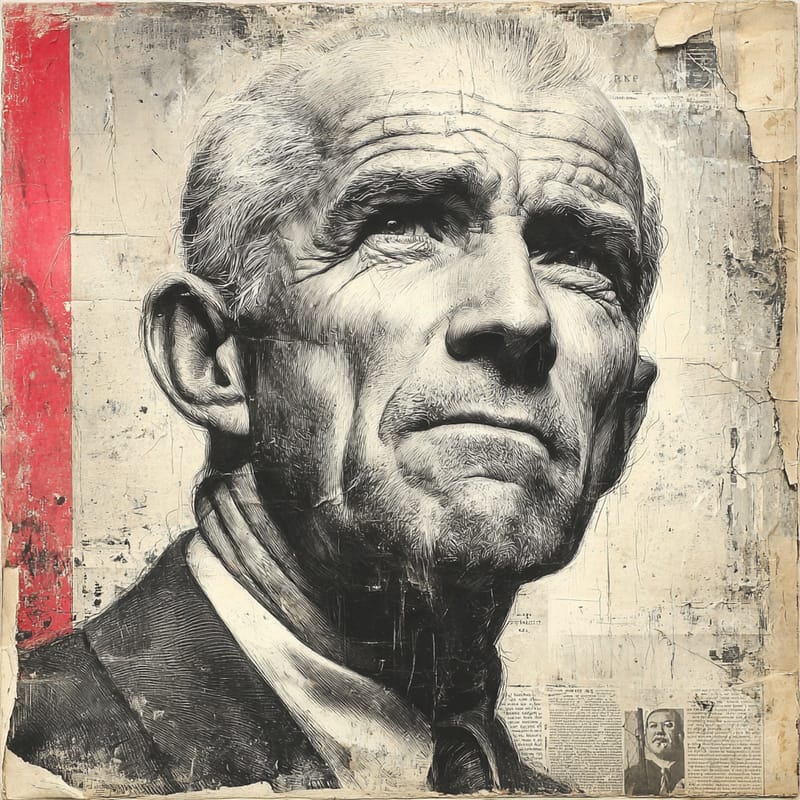
The Eternal Leader (archetype)
The all-providing father
The leader as nation incarnate.
JuchistOne of 729 ideologies · enter the Juchist hall →- Role
- Cult-state figurehead
- From
- Archetype
- Region
- —
- Social band
- Centre (no modifier)
- Placement
- −75 · +99 · +5
§ Where The Eternal Leader (archetype) stands
3 axesIn the Eternal Leader's state all provision flows symbolically from the leader. North Korean propaganda has long presented housing, rations and even children's sweets on the leader's birthday as personal gifts, while the economy itself remains state-owned and planned around Juche, the doctrine of self-reliance Kim Il-sung set out in a 1955 speech.
Power in this archetype is absolute, personal and hereditary. North Korea's Ten Principles of 1974 made loyalty to the leader the supreme rule of daily life, succession passed from Kim Il-sung to Kim Jong-il in 1994 and to Kim Jong-un in 2011, and dissent is punished as sacrilege against the nation itself.
The archetype reimagines the nation as one family under a father figure, a blend of revolutionary modernity and borrowed tradition. In North Korea the cult repurposes Confucian filial piety and ancestral rites, from the embalmed leaders in Pyongyang's Kumsusan Palace of the Sun to mass bows before their statues, while still claiming to have swept away the feudal past, which keeps it near the centre.
How close are you to The Eternal Leader (archetype)?
Three statements, one per axis. Answer them and we’ll drop you on the compass next to them.
§ The story
ArchetypeThe Eternal Leader is the archetype of the cult-state figurehead: a ruler presented not merely as head of government but as the father, protector and living embodiment of the nation, whose authority outlasts even death. Its purest case is North Korea, where Kim Il-sung was named Eternal President four years after his death and his son and grandson inherited power, but it also describes Stalin's cult in the late 1940s, Rafael Trujillo's Dominican Republic and Saparmurat Niyazov's Turkmenistan.
The archetype recurs because regimes without elections need another source of legitimacy, and a sacralised leader supplies one, turning obedience into gratitude and loyalty into family duty. It often borrows from older traditions, such as Confucian filial piety in Korea or religious iconography elsewhere. What it reveals is the problem Max Weber called the routinisation of charisma: a personal cult must either fade with its founder or be converted into a dynasty, a mausoleum and a state religion.
Notable for
- 01The sacralised leader
- 02Nation-as-family ideology
- 03Personality-cult archetype
Key works & moments
- 1936Rafael Trujillo renames the Dominican capital, Santo Domingo, Ciudad Trujillo.
- 1949Stalin's 70th birthday celebrations mark the peak of his personality cult.
- 1974North Korea's Ten Principles make loyalty to the leader the supreme rule of life.
- 1998North Korea's revised constitution names the late Kim Il-sung Eternal President.
- 2001Turkmenistan's Saparmurat Niyazov publishes the Ruhnama, made compulsory reading in schools.
- 2011Kim Jong-un inherits power, the third generation of the Kim dynasty.
§ Minds closest to The Eternal Leader (archetype)
All minds →
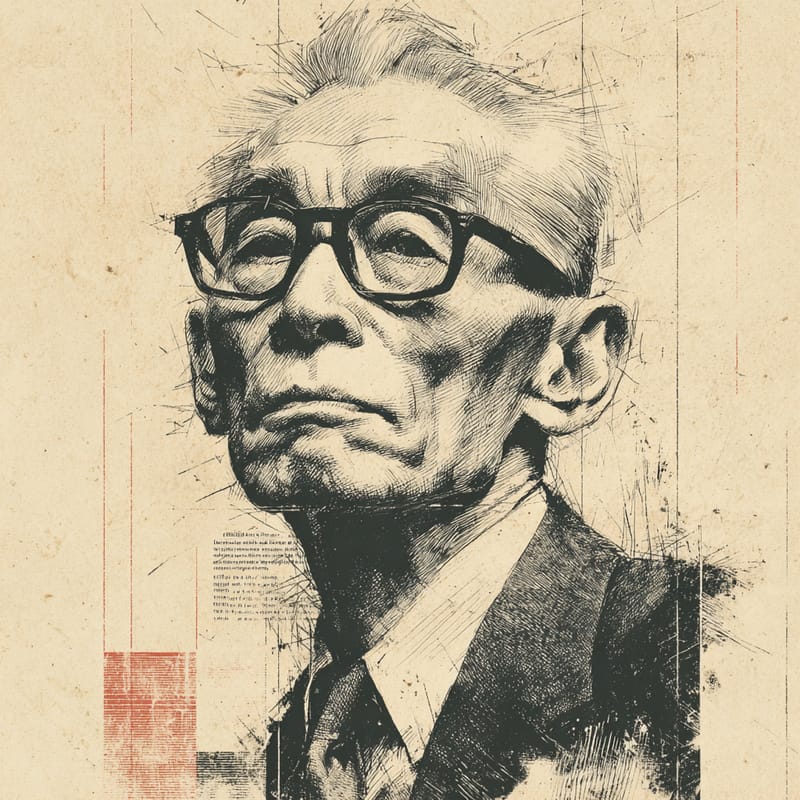
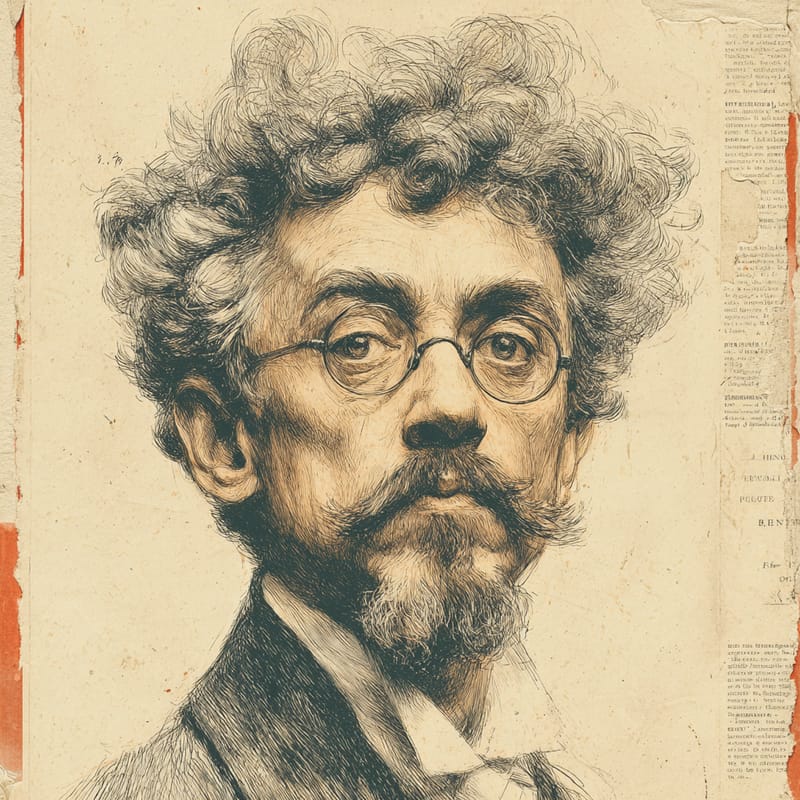
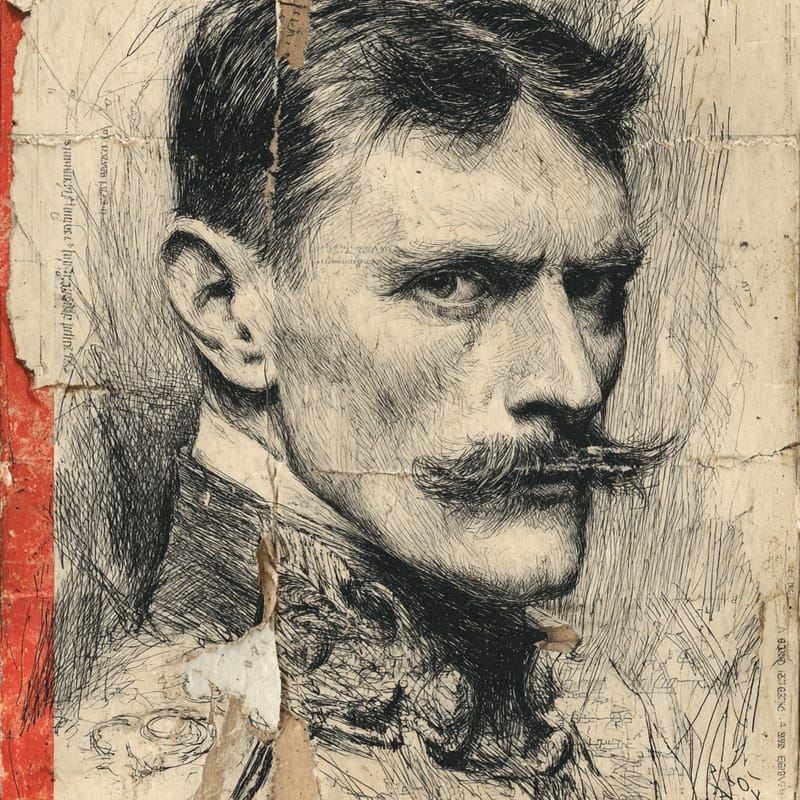

§ Also in the Juchist hall
Enter the hall →The closest minds above are this hall’s whole roster.
§ Common questions
4 answersWhat is the Eternal Leader's political ideology?
The Eternal Leader is the figurehead of Juche-style rule: on the 99ideologies three-axis compass, a Juchist. Economically the archetype sits well to the left (−75), presiding over a state-owned, self-reliant economy in which every benefit is credited to the leader. On governance it is at the authoritarian extreme (+99), with absolute, sacralised and hereditary power, and socially it sits near the centre (+5), blending revolutionary modernity with the borrowed tradition of the nation as one family.
Is the Eternal Leader left-wing or right-wing?
Neither cleanly. The archetype's best-known example, North Korea, emerged from communism and keeps a state-owned, planned economy, which places it on the left economically. But its hereditary succession, ethnic nationalism and quasi-religious devotion to a father-leader echo absolute monarchy more than Marxism, and leader cults of the same kind have flourished under right-wing dictators such as Trujillo. What defines the type is the concentration of power in one sacralised person, not a position on left and right.
Why do personality cults form around dictators?
Because they solve a dictator's legitimacy problem. Without free elections or an established hereditary tradition, a regime can claim authority by presenting its leader as uniquely wise, heroic and benevolent, and a monopoly over media, schooling and art lets it saturate daily life with that image. Cults also bind elites to the leader, since public devotion becomes a test of loyalty. Nikita Khrushchev's 1956 speech On the Cult of Personality and Its Consequences condemned Stalin's version, yet the model spread to China, North Korea, Romania and Turkmenistan.
Which minds are closest to The Eternal Leader (archetype)?
On the 99ideologies three-axis compass, the minds closest to The Eternal Leader (archetype) are Kim Il-sung (99% alike), Kim Jong-un (98% alike) and Kim Jong-il (98% alike). The furthest is Hans-Hermann Hoppe (0% alike).