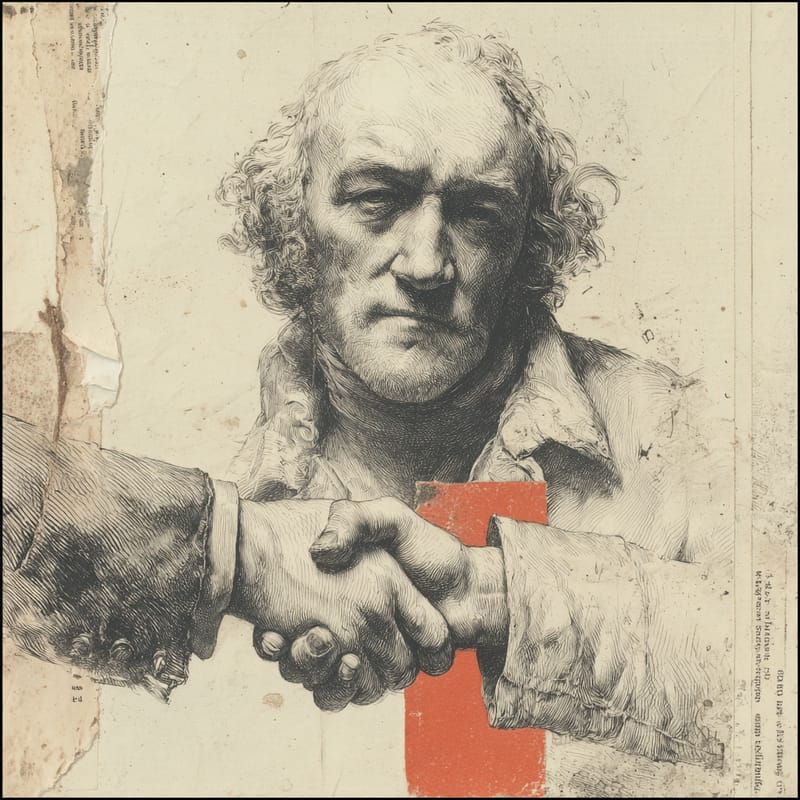
The Consenting Neighbour (archetype)
Every bond by agreement
No relation begun by force.
Heterodox VoluntaristOne of 729 ideologies · enter the Voluntarist hall →- Role
- Voluntary-society member
- From
- Archetype
- Region
- —
- Social band
- Heterodox
- Placement
- +70 · −78 · +30
§ Where The Consenting Neighbour (archetype) stands
3 axesThe Consenting Neighbour trades, hires, lends and gives, all by consent, within a market of private property and free contract. Its model is the mutual-aid economy David Beito described in From Mutual Aid to the Welfare State (2000), in which fraternal societies supplied sickness, burial and life insurance to working families without state compulsion.
Every association the neighbour belongs to is chosen, never imposed, including those that provide security and settle disputes. The archetype draws on Auberon Herbert's voluntaryism of the 1880s, which held that no one may be compelled even to fund protection, and on the Icelandic Commonwealth, where free men could transfer their allegiance from one chieftain to another.
The archetype is peaceful, cooperative and tolerant, treating persuasion and example as the only legitimate ways to change a neighbour's mind. Its outlook echoes The Voluntaryist, founded in 1982, which held that means must match ends, so a free society can only be built by voluntary, non-violent methods. It is moderately progressive in its tolerance rather than in any cultural programme.
How close are you to The Consenting Neighbour (archetype)?
Three statements, one per axis. Answer them and we’ll drop you on the compass next to them.
§ The story
ArchetypeThe Consenting Neighbour is the archetype of the voluntaryist ideal: an ordinary person whose every economic, social and civic bond, from work and trade to charity, insurance and security, is entered by agreement and can be left the same way. Its historical touchstones include the Icelandic Commonwealth of 930–1262, which settled disputes without a central executive, the friendly societies and fraternal lodges through which nineteenth- and early twentieth-century workers insured one another, and the voluntaryism popularised by Auberon Herbert in Victorian England.
The archetype recurs because it asks a simple question with radical implications: which parts of social life actually require force? Voluntaryists answer almost none, pointing to mutual-aid networks such as those the historian David Beito documented in From Mutual Aid to the Welfare State (2000). Critics reply that voluntary institutions leave gaps that only compulsion fills, and that consent is hollow without real alternatives. The figure reveals how much ordinary cooperation already happens without coercion, and how contested the remainder is.
Notable for
- 01The fully-consenting life
- 02Society by agreement
- 03Voluntaryist everyman
Key works & moments
- 930–1262The Icelandic Commonwealth settles disputes through assemblies and chieftains without a central executive.
- 1880sAuberon Herbert calls his philosophy voluntaryism, rejecting all compulsion, even compulsory taxation.
- 1900sFraternal lodges insure working Americans against sickness and death through voluntary membership.
- 1982Carl Watner, George H. Smith and Wendy McElroy launch The Voluntaryist newsletter.
- 2000David Beito's From Mutual Aid to the Welfare State documents voluntary social insurance.
§ Minds closest to The Consenting Neighbour (archetype)
All minds →


§ Also in the Voluntarist hall
Enter the hall →§ Common questions
4 answersWhat is the Consenting Neighbour's political ideology?
The Consenting Neighbour stands for voluntaryism, the view that every human relationship should rest on consent and none on force: on the 99ideologies three-axis compass, a Heterodox Voluntarist. Economically it sits firmly on the market side (+70), trading, hiring and giving only by agreement. On governance it is strongly anti-state (−78), belonging only to chosen associations, and socially it is moderately progressive (+30), peaceful, tolerant and committed to persuasion over compulsion.
Is the Consenting Neighbour left-wing or right-wing?
It is usually grouped with the libertarian right, because voluntaryism defends private property and free markets and rejects the welfare state. But its emphasis on mutual aid, cooperation and peaceful self-organisation overlaps with left-wing anarchist traditions, and its refusal of all compulsion, including state enforcement of conservative morality, sets it apart from conservatism. It is best seen as a strand of anarchism whose dividing line is force, not left versus right.
What is voluntaryism?
Voluntaryism is the philosophy that all human relations should be voluntary, so that no person or institution, including the state, may initiate force against another. The Victorian theorist Auberon Herbert popularised the name in the 1880s, and the modern movement, revived around The Voluntaryist newsletter in 1982, adds a strategic principle: because means shape ends, a free society cannot be reached through voting or violence, only through education, persuasion and the peaceful withdrawal of consent from the state.
Which minds are closest to The Consenting Neighbour (archetype)?
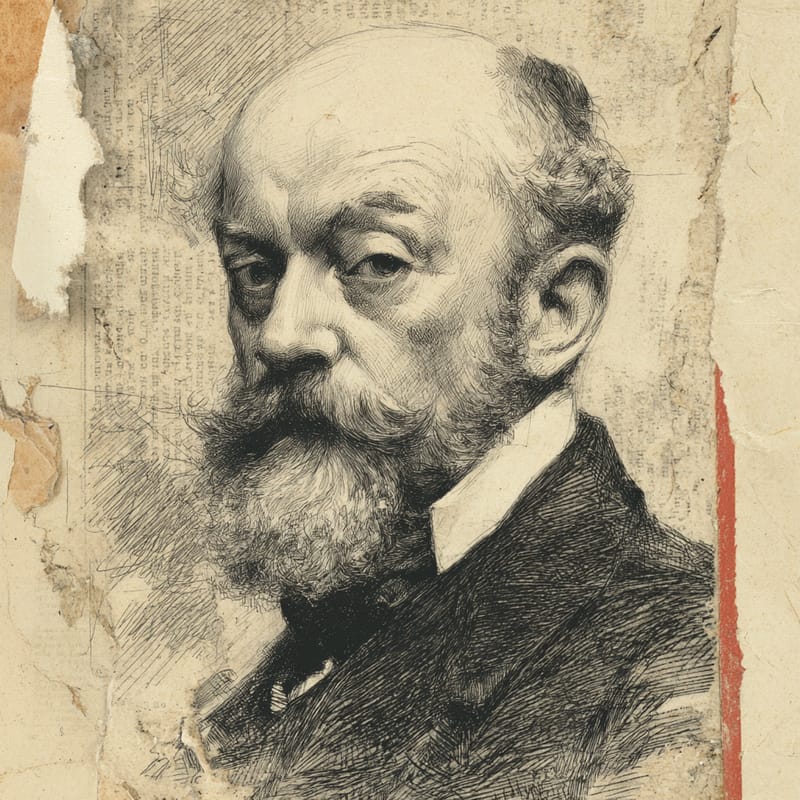
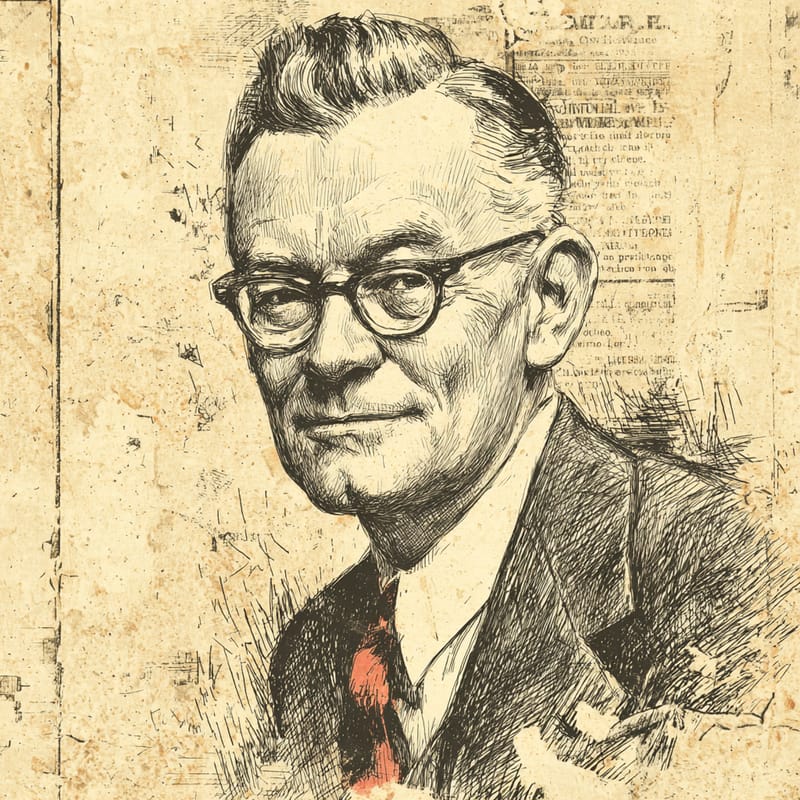
On the 99ideologies three-axis compass, the minds closest to The Consenting Neighbour (archetype) are Carl Watner (97% alike), George H. Smith (97% alike) and Étienne de La Boétie (97% alike). The furthest is Pol Pot (1% alike).