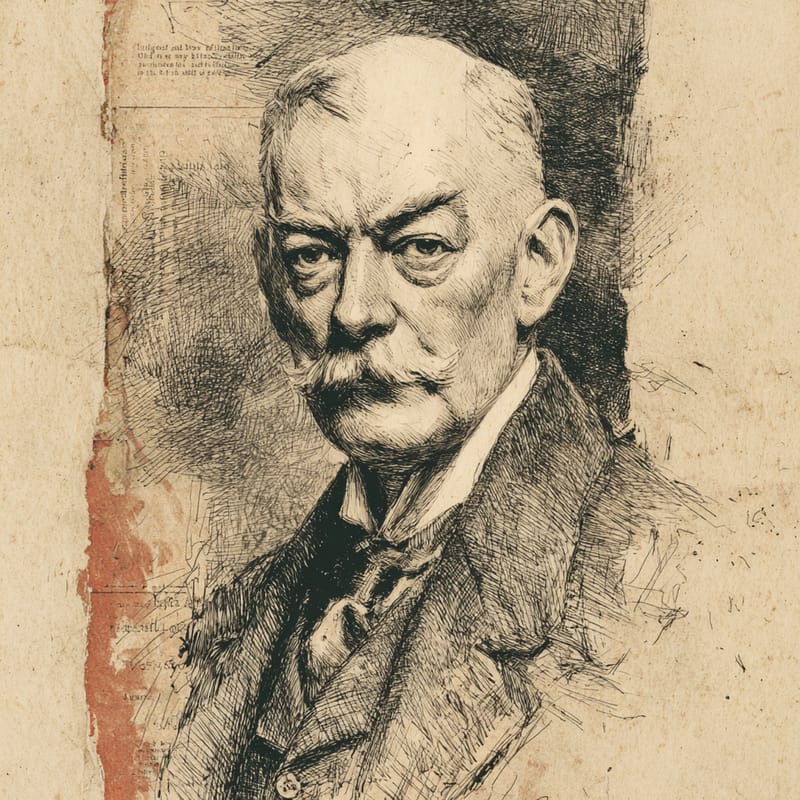
Stanley Baldwin
Safety first
The reassuring centre-right.
Rooted Civic ConservativeOne of 729 ideologies · enter the Civic Conservative hall →- Role
- Prime Minister
- Era
- 1867–1947
- Region
- United Kingdom
- Social band
- Rooted
- Placement
- +26 · +46 · −35
§ Where Stanley Baldwin stands
3 axesBaldwin was pro-business and protectionist, calling the 1923 election on tariffs, and after the General Strike his government passed the 1927 Trade Disputes Act outlawing sympathetic strikes. Yet his governments also created the Central Electricity Board and national grid in 1926, made the BBC a public corporation in 1927 and introduced contributory pensions for widows and the elderly in 1925, a moderate right position.
Baldwin embodied the calm, paternal authority of the interwar state and defended parliamentary government against extremes of left and right. His government used emergency powers to keep supplies moving during the General Strike of 1926, and the 1936 Public Order Act, passed after the Battle of Cable Street, banned political uniforms and let police restrict marches.
Baldwin cultivated a pastoral, Christian vision of England, declaring in a 1924 speech that to him England was the country and the country was England, and during the abdication crisis he insisted that the king could not marry a divorced American and remain on the throne. Yet his government's 1928 Equal Franchise Act gave women the vote at 21, a mark of pragmatic adaptation.
How close are you to Stanley Baldwin?
Three statements, one per axis. Answer them and we’ll drop you on the compass next to them.
§ The story
HistoricalStanley Baldwin (1867–1947) was Conservative prime minister three times, in 1923–24, 1924–29 and 1935–37, and the dominant figure of interwar British politics. The son of a Worcestershire ironmaster, he ran the family business before entering Parliament for Bewdley in 1908. As financial secretary to the Treasury he anonymously gave about a fifth of his fortune towards the war debt in 1919, and his speech at the Carlton Club in 1922 helped bring down Lloyd George's coalition, opening his path to the premiership.
Baldwin projected calm, decency and rural Englishness, presenting the Conservatives as a moderate national party able to absorb the rise of Labour. He faced down the 1926 General Strike, extended the vote to women on equal terms with men in 1928 and, as lord president in the National Government of 1931–35, helped hold coalition politics together. He steered the 1936 abdication of Edward VIII with broad approval, but after 1940 the polemic Guilty Men and other critics blamed him for leaving Britain unprepared for war with Hitler's Germany.
Notable for
- 01Dominated inter-war politics
- 02Handled the General Strike
- 03The abdication crisis
Key works & moments
- 1919Anonymously gives about a fifth of his fortune to help pay off the war debt.
- 1922His Carlton Club speech helps topple Lloyd George's coalition; he becomes chancellor of the exchequer.
- 1923Becomes prime minister, then loses his majority in an election fought on tariffs.
- 1926Faces down the nine-day General Strike called in support of the coal miners.
- 1928Equal Franchise Act gives women the vote on the same terms as men.
- 1936Steers the abdication crisis that ends with Edward VIII giving up the throne.
In their own words
“I think it is well also for the man in the street to realise that there is no power on earth that can protect him from being bombed. Whatever people may tell him, the bomber will always get through.”
“What the proprietorship of these papers is aiming at is power, and power without responsibility – the prerogative of the harlot throughout the ages.”
§ Minds closest to Stanley Baldwin
All minds →

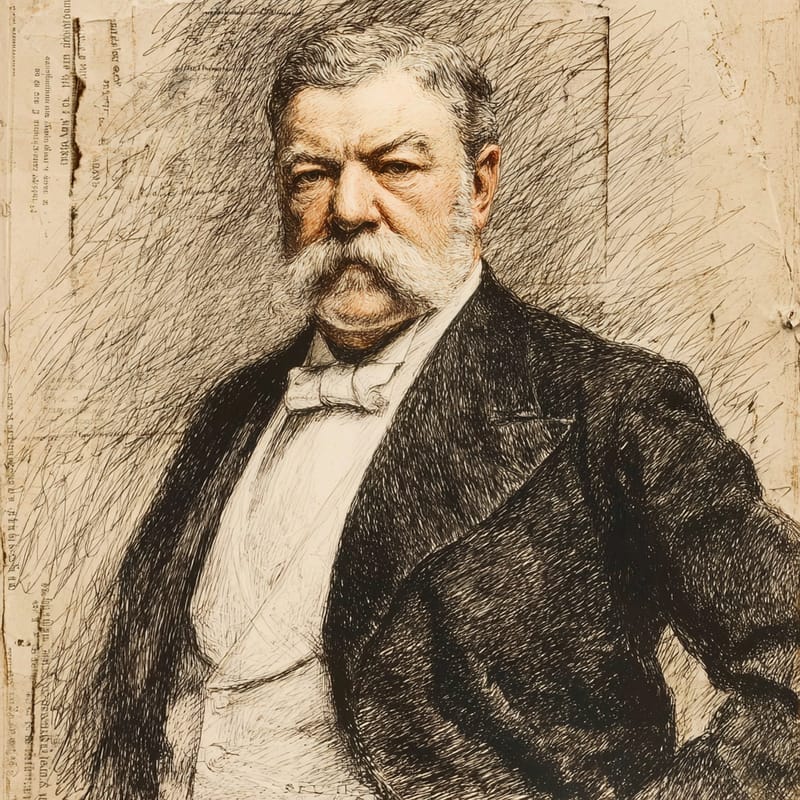
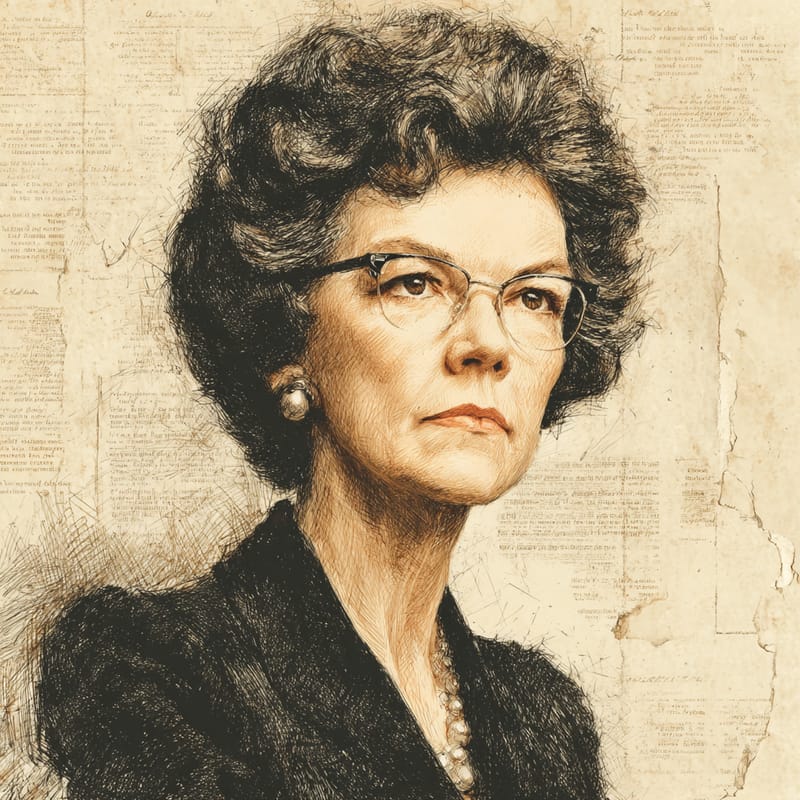

§ Also in the Civic Conservative hall
Enter the hall →The closest minds above are this hall’s whole roster.
§ Common questions
4 answersWhat was Stanley Baldwin's political ideology?
Stanley Baldwin was a moderate, paternalist Conservative: on the 99ideologies three-axis compass, a Rooted Civic Conservative. Economically he sat right of centre (+26), favouring business and tariffs while creating public bodies such as the national grid and introducing contributory pensions. On governance he leaned towards firm, paternal authority (+46), defending parliamentary order against the General Strike and the fascist and communist fringes, and socially he was clearly traditional (−35), devoted to a rural, Christian idea of England.
Was Stanley Baldwin left-wing or right-wing?
Right-wing, but deliberately moderate. Baldwin led the Conservative Party and defeated the 1926 General Strike, yet he presented himself as a conciliator who respected Labour and refused to wage class war; in 1925 he blocked a backbench bill attacking trade unions' political funds. His conciliatory style, protectionism and acceptance of social reform make him a classic One Nation figure of the centre-right rather than a free-market or hard-line conservative.
Did Stanley Baldwin fail to rearm Britain against Hitler?
Partly, according to most historians, though the charge was exaggerated at the time. In 1940 the polemic Guilty Men blamed him for neglecting defence, and in a 1936 Commons speech he admitted he had not sought an election mandate for rearmament earlier because he believed the public would have rejected it. Yet his governments began rearming from 1934, expanded the Royal Air Force and backed the development of radar and modern fighters, which proved vital in the Battle of Britain.
Which minds are closest to Stanley Baldwin?
On the 99ideologies three-axis compass, the minds closest to Stanley Baldwin are Alcide De Gasperi (99% alike), Lord Shaftesbury (97% alike) and Georges Pompidou (96% alike). The furthest is Emma Goldman (12% alike).