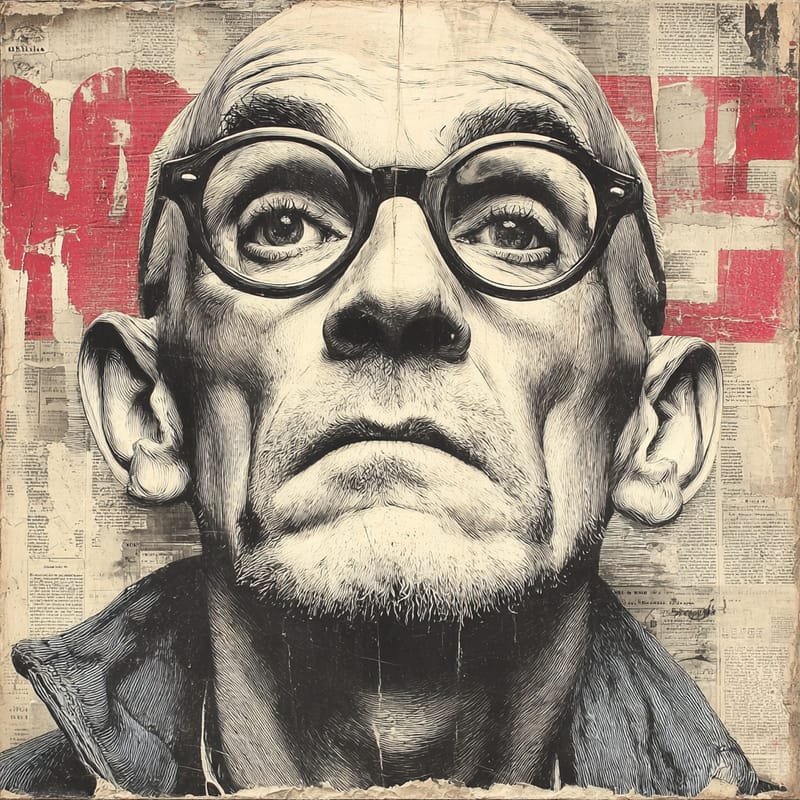
Stafford Cripps
Austerity and the plan
The planner's socialism.
State SocialistOne of 729 ideologies · enter the State Socialist hall →- Role
- Chancellor
- Era
- 1889–1952
- Region
- United Kingdom
- Social band
- Centre (no modifier)
- Placement
- −32 · +64 · 0
§ Where Stafford Cripps stands
3 axesCripps believed in planning the economy rather than leaving it to the market. From 1947 he took charge of the new Central Economic Planning Staff under Edwin Plowden, kept rationing and controls, and steered industry towards exports, while Attlee's government nationalised coal, the railways and, by 1951, steel. Yet he worked through private firms and voluntary wage restraint rather than abolishing capitalism.
Cripps was a directive, technocratic statist. His 1933 essay Can Socialism Come by Constitutional Methods? argued that a Labour government should take emergency powers to overcome resistance from finance and the House of Lords, and as a minister he ran the post-war economy through controls, allocation of materials and moral exhortation, though always within parliamentary democracy.
Cripps blended personal moral austerity with progressive causes. A committed Christian socialist who spoke often about faith in public life, he lived as an ascetic and urged sacrifice on the nation, yet he was a long-standing advocate of Indian self-government, joining traditional Christian morality to egalitarian reform in a way that leaves him at the social centre.
How close are you to Stafford Cripps?
Three statements, one per axis. Answer them and we’ll drop you on the compass next to them.
§ The story
HistoricalSir Richard Stafford Cripps (1889–1952) was a British Labour politician and Chancellor of the Exchequer. The son of the Conservative-turned-Labour peer Lord Parmoor and a nephew of Beatrice Webb, he trained as a chemist, became one of the highest-earning barristers in England, and entered politics as Solicitor General in Ramsay MacDonald's Labour government in 1930. Elected MP for Bristol East in 1931, he led Labour's radical left in the 1930s and was expelled from the party in 1939 for campaigning for a Popular Front.
During the Second World War Cripps served as ambassador to Moscow, Leader of the House of Commons and Minister of Aircraft Production, and led the 1942 mission offering India post-war dominion status. Readmitted to Labour in 1945, he became President of the Board of Trade and in 1947 Chancellor, imposing austerity, wage restraint and an export drive, and devaluing the pound in 1949. A devout Anglican, teetotal and vegetarian, he came to symbolise the self-denying post-war years. Illness forced his resignation in 1950, and he died in 1952.
Notable for
- 01Post-war central planning
- 02Directed exports and austerity
- 03Christian socialism
Key works & moments
- 1931Wins a Bristol East by-election after becoming Solicitor General in 1930.
- 1939Expelled from the Labour Party for campaigning for a Popular Front against fascism.
- 1940–42Serves as British ambassador to the Soviet Union.
- 1942Leads the Cripps Mission offering India dominion status after the war; Congress rejects it.
- 1947Becomes Chancellor of the Exchequer, launching austerity and an export drive.
- 1949Devalues the pound against the dollar from $4.03 to $2.80.
§ Minds closest to Stafford Cripps
All minds →

§ Also in the State Socialist hall
Enter the hall →The closest minds above are this hall’s whole roster.
§ Common questions
4 answersWhat was Stafford Cripps's political ideology?
Stafford Cripps was a Christian socialist and a champion of economic planning: on the 99ideologies three-axis compass, a State Socialist. Economically he sat moderately left (−32), favouring controls, planning and nationalisation while working through private industry. On governance he leaned authoritarian (+64), a directive technocrat who once urged emergency powers for a Labour government. Socially he sat at the centre (0), joining ascetic Christian morality to egalitarian reform.
Was Stafford Cripps left-wing or right-wing?
Left-wing. In the 1930s Cripps was the leading figure on Labour's left, founding the newspaper Tribune in 1937 and working with communists in the Unity Campaign, which helped cost him his party membership in 1939. As Chancellor he became associated with austerity and wage restraint, which disappointed some on the left, but his commitment to planning, public ownership and redistribution placed him firmly within British socialism.
Why was Stafford Cripps expelled from the Labour Party?
Because he defied the party leadership over alliances with other parties. In January 1939 Cripps circulated a memorandum urging a Popular Front of Labour, Liberals, communists and other opponents of the Chamberlain government's appeasement. Labour's National Executive ordered him to withdraw it; when he refused and took his campaign to the country, he was expelled. He sat as an independent through the war and was readmitted to the party in 1945.
Which minds are closest to Stafford Cripps?
On the 99ideologies three-axis compass, the minds closest to Stafford Cripps are Ferdinand Lassalle (97% alike), Walther Rathenau (97% alike) and The Ministry (archetype) (95% alike). The furthest is Hans-Hermann Hoppe (16% alike).