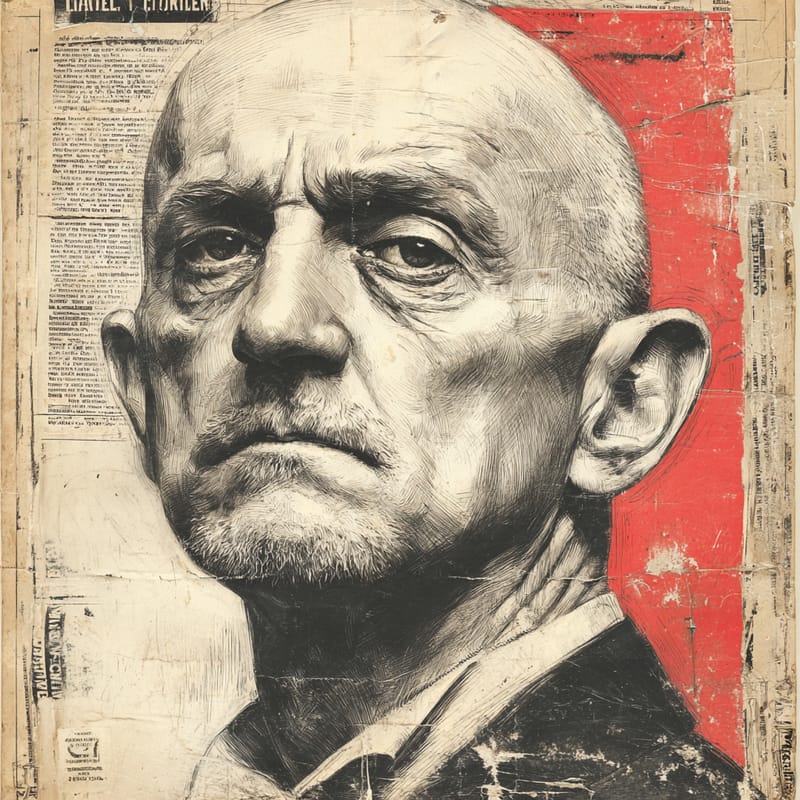
János Kádár
Goulash communism
Socialism with consumer goods.
State SocialistOne of 729 ideologies · enter the State Socialist hall →- Role
- General Secretary
- Era
- 1912–1989
- Region
- Hungary
- Social band
- Centre (no modifier)
- Placement
- −30 · +70 · −12
§ Where János Kádár stands
3 axesKádár kept state ownership of industry and collective farms but loosened central planning more than any other Soviet-bloc leader. The New Economic Mechanism of January 1968 let enterprises respond to prices and profits, household plots and the second economy flourished, and in 1982 Hungary legalised small private business partnerships and joined the IMF, making goulash communism the bloc's most market-tolerant economy.
Kádár's rule was founded on repression: after November 1956 his regime imprisoned thousands and hanged Imre Nagy after a secret trial in June 1958. A general amnesty in 1963 marked a shift to softer control, but the party's monopoly remained absolute, Hungarian troops joined the 1968 invasion of Czechoslovakia, and dissent was managed through censorship and surveillance.
Kádár's Hungary rested on a tacit bargain of material comfort in exchange for political quiet. Culture was policed through György Aczél's three Ts, the categories of supported, tolerated and banned work, and the regime discouraged both religious revival and political experiment, favouring a conformist, family-centred private life over mobilisation or radical social change.
How close are you to János Kádár?
Three statements, one per axis. Answer them and we’ll drop you on the compass next to them.
§ The story
HistoricalJános Kádár (1912–1989) led communist Hungary for more than three decades. Born in Fiume to a poor single mother, he trained as a mechanic, joined the illegal communist movement and was repeatedly jailed under the Horthy regime. As interior minister he helped prepare the 1949 show trial of László Rajk, then fell victim to the purges himself and was imprisoned and tortured from 1951 to 1954. During the revolution of October 1956 he became leader of the ruling party.
On 4 November 1956 Kádár was proclaimed head of a Soviet-backed government as the uprising was crushed, and his regime imprisoned thousands and executed hundreds, including the reformist former prime minister Imre Nagy in 1958. From the early 1960s, however, he pursued reconciliation, promising to leave alone those who did not oppose the regime, and the 1968 New Economic Mechanism brought consumer goods, small enterprise and relative freedom. Replaced as party leader in 1988, he died in July 1989 as Nagy was rehabilitated.
Notable for
- 01'Goulash communism'
- 02Liberalised the planned economy
- 03Ruled Hungary 1956–1988
Key works & moments
- 1949As interior minister, presses László Rajk to confess in the show trial that ends in his execution.
- 1956Heads a Soviet-backed government proclaimed on 4 November as the revolution is crushed.
- 1958Former prime minister Imre Nagy is executed after a secret trial.
- 1963A general amnesty frees most of those imprisoned after the 1956 revolution.
- 1968Launches the New Economic Mechanism; Hungarian troops join the invasion of Czechoslovakia.
- 1989Dies on 6 July, the day Hungary's Supreme Court rehabilitates Imre Nagy.
In their own words
“Whoever is not against us is with us.”
§ Minds closest to János Kádár
All minds →

§ Also in the State Socialist hall
Enter the hall →The closest minds above are this hall’s whole roster.
§ Common questions
4 answersWhat was János Kádár's political ideology?
János Kádár was a pragmatic Marxist-Leninist best known for goulash communism: on the 99ideologies three-axis compass, a State Socialist. Economically he sat moderately left (−30), keeping state ownership while admitting markets, private plots and small enterprise. On governance he was clearly authoritarian (+70), maintaining one-party rule after crushing the 1956 revolution. Socially he leaned slightly traditional (−12), trading consumer comfort for quiet conformity.
Was János Kádár left-wing or right-wing?
Left-wing. Kádár was a lifelong communist who ran a one-party socialist state allied to Moscow, and he never abandoned state ownership of industry or the party's monopoly on power. His economic reforms made Hungary the most consumer-friendly and market-tolerant country in the Eastern Bloc, which earned him a reputation in the West as a moderate, but these were adjustments within communism rather than a turn to the right.
What was goulash communism?
Goulash communism was the nickname for Kádár's Hungary from the 1960s to the 1980s, a system that combined one-party rule with a relatively comfortable standard of living. After the 1968 New Economic Mechanism, enterprises gained more autonomy, private household plots and side jobs flourished, and Hungarians enjoyed more consumer goods and foreign travel than most of the bloc. The implicit bargain was political quiet in exchange for material security, financed partly by mounting foreign debt.
Which minds are closest to János Kádár?
On the 99ideologies three-axis compass, the minds closest to János Kádár are The Ministry (archetype) (98% alike), Walther Rathenau (96% alike) and Walter Ulbricht (96% alike). The furthest is Hans-Hermann Hoppe (16% alike).