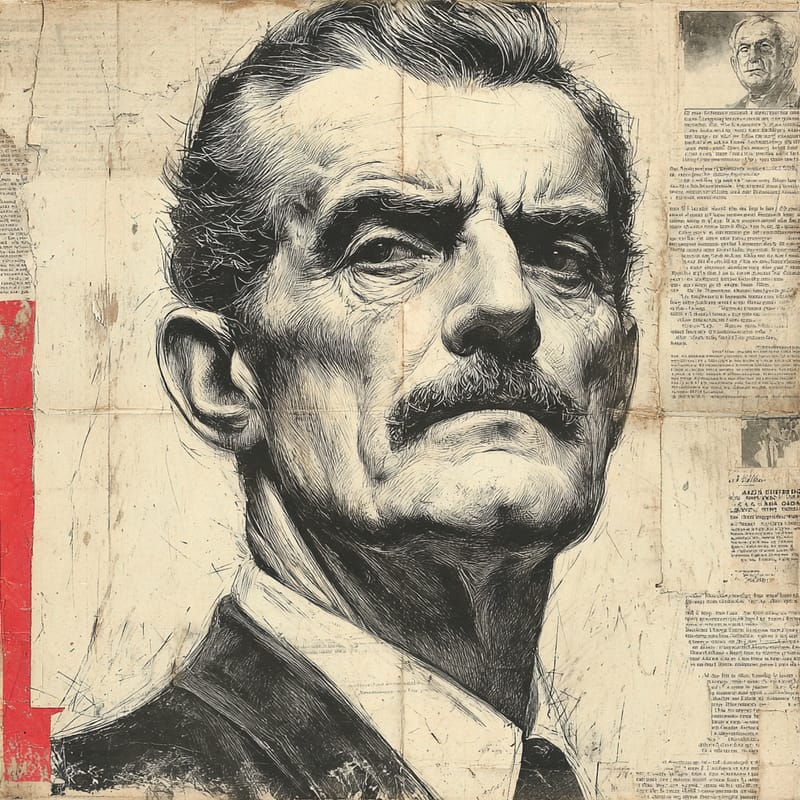
Hafez al-Assad
The iron grip
Ba'athism as a security state.
Rooted Ba'athistOne of 729 ideologies · enter the Ba'athist hall →- Role
- President
- Era
- 1930–2000
- Region
- Syria
- Social band
- Rooted
- Placement
- −48 · +82 · −18
§ Where Hafez al-Assad stands
3 axesAssad presided over a state-dominated economy with a large public sector inherited from the radical Ba'athists of the 1960s, but he loosened its grip. His Corrective Movement courted merchants with limited liberalisation, and Investment Law No. 10 of 1991 opened sectors to private and foreign capital, keeping Syria left of centre without full collectivism.
Assad perfected the Ba'athist security state. The 1973 constitution made the Ba'ath the leading party in state and society, emergency law remained in force throughout his rule, Law 49 of 1980 made membership of the Muslim Brotherhood a capital offence, and the assault on Hama in February 1982 showed the lengths to which he would go to crush opposition.
Assad enforced secular nationalism over Islamist and sectarian rivals, but he also courted religious legitimacy. After protests in 1973 he restored the constitutional requirement that the president be a Muslim, and he sought recognition of his Alawite community as part of Shia Islam, while building a regime anchored in family, clan and sect beneath its secular ideology.
How close are you to Hafez al-Assad?
Three statements, one per axis. Answer them and we’ll drop you on the compass next to them.
§ The story
HistoricalHafez al-Assad (1930–2000) ruled Syria from 1970 until his death. Born into a poor Alawite family in Qardaha, he joined the Ba'ath Party as a schoolboy in 1946, trained as an air force pilot and, while posted to Egypt during the union of 1958–61, helped form the secret Military Committee of Ba'athist officers. After the 1963 coup he rose to command the air force, became defence minister following the 1966 coup, and in November 1970 seized power from Salah Jadid in what he called the Corrective Movement.
Assad built one of the Middle East's most durable dictatorships, resting on the party, the army and overlapping intelligence services staffed heavily by loyal Alawites. He fought Israel in 1973, intervened in Lebanon's civil war from 1976, and sided with Iran against Iraq in the 1980s and with the US-led coalition in 1991. His forces crushed an Islamist uprising at Hama in 1982, killing thousands; estimates range from about 10,000 to 40,000. He groomed his son Bashar, who succeeded him in 2000.
Notable for
- 01Three decades of one-party rule
- 02Ba'athist security state
- 03Hama suppression
Key works & moments
- 1967As defence minister, loses the Golan Heights to Israel in the Six-Day War.
- 1970Seizes power in the Corrective Movement coup; confirmed as president by referendum in 1971.
- 1973Launches the October War with Egypt in an attempt to retake the Golan Heights.
- 1976Sends Syrian troops into Lebanon's civil war, beginning a presence that lasts until 2005.
- 1982Crushes the Muslim Brotherhood uprising in Hama; thousands of people are killed.
- 2000Dies in June; his son Bashar succeeds him after a hasty constitutional amendment.
§ Minds closest to Hafez al-Assad
All minds →

§ Also in the Ba'athist hall
Enter the hall →The closest minds above are this hall’s whole roster.
§ Common questions
4 answersWhat was Hafez al-Assad's political ideology?
Hafez al-Assad was a Ba'athist who turned the party's pan-Arab socialism into a personal security state: on the 99ideologies three-axis compass, a Rooted Ba'athist. Economically he sat left of centre (−48), keeping a large state sector while slowly admitting private capital. On governance he was strongly authoritarian (+82), ruling through the party, the army and the intelligence services. Socially he leaned traditional (−18), enforcing secularism while relying on clan, sect and religious legitimacy.
Was Hafez al-Assad left-wing or right-wing?
Nominally left-wing, in practice a pragmatic authoritarian. Assad led a party that called itself socialist, kept a state-dominated economy and stayed allied with the Soviet Union through the Cold War. But he took power as the relative moderate who reined in the radical Ba'athist left, courted merchants and religious elites, and joined the US-led coalition against Iraq in 1991. His politics were defined less by ideology than by regime survival.
What happened at Hama in 1982?
In February 1982 Assad's forces crushed an uprising by the Muslim Brotherhood in the city of Hama, the climax of an Islamist insurgency that had begun in the late 1970s. Troops and special units under his brother Rifaat besieged the city for almost a month, shelling whole districts and carrying out mass killings. Estimates of the dead range from about 10,000 to 40,000, most of them civilians. The massacre ended organised armed opposition to Assad for a generation.
Which minds are closest to Hafez al-Assad?
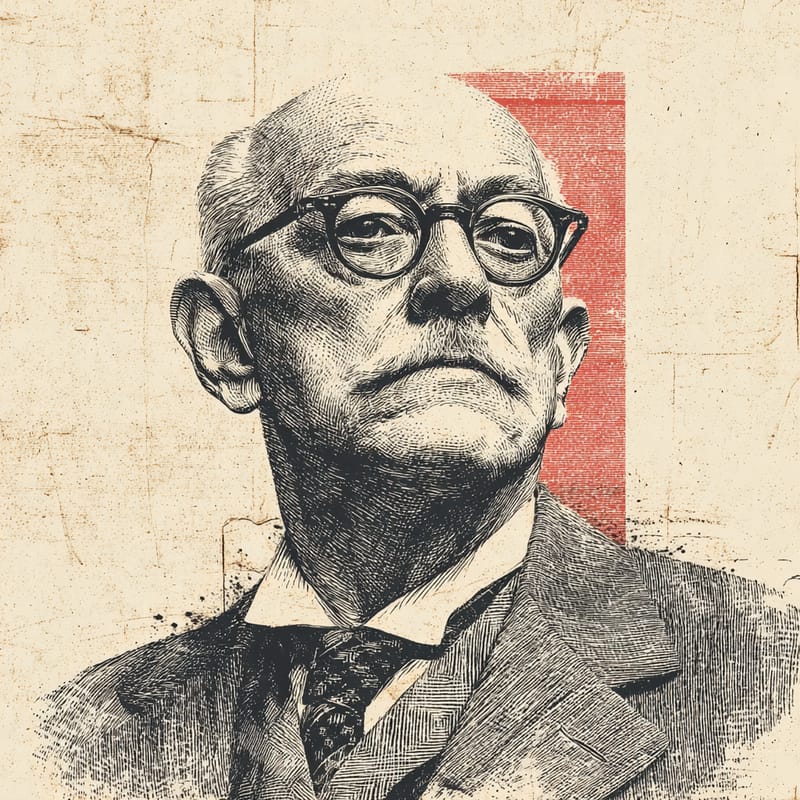
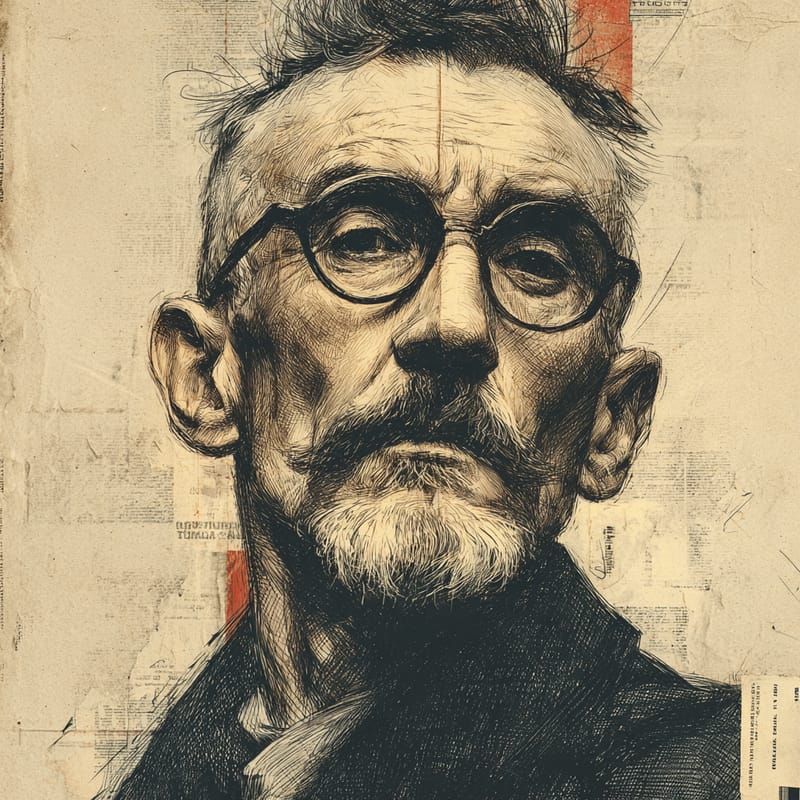
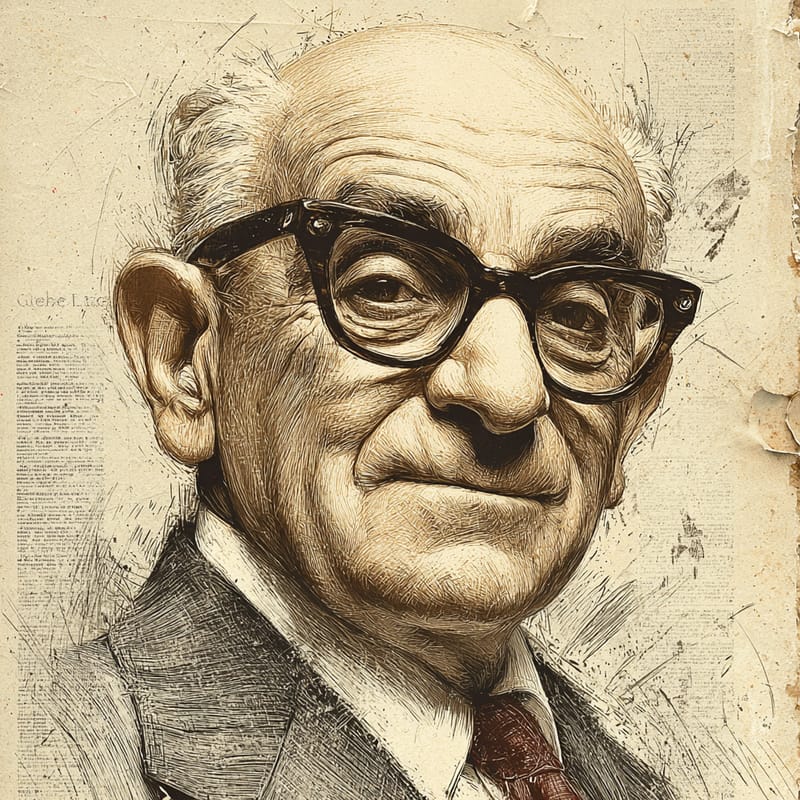
On the 99ideologies three-axis compass, the minds closest to Hafez al-Assad are Saddam Hussein (98% alike), Ahmed Hassan al-Bakr (96% alike) and Michel Aflaq (94% alike). The furthest is Murray Rothbard (8% alike).