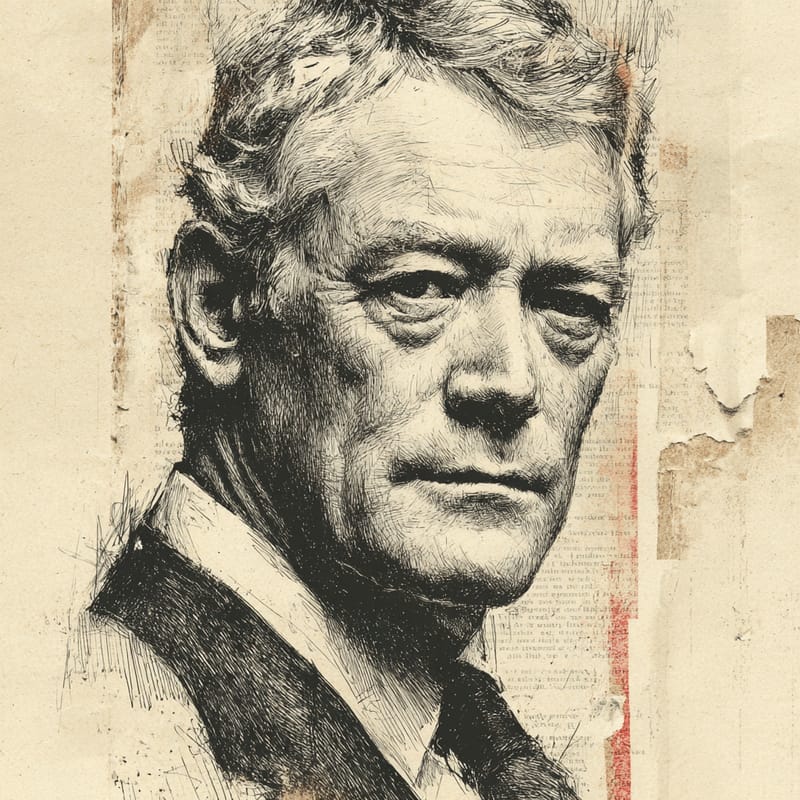
Paddy Ashdown
Built the Liberal Democrats
Civil liberty, reform, internationalism.
Reformist Liberal DemocratOne of 729 ideologies · enter the Liberal Democrat hall →- Role
- Liberal Democrat leader
- Era
- 1941–2018
- Region
- United Kingdom
- Social band
- Reformist
- Placement
- −22 · −26 · +44
§ Where Paddy Ashdown stands
3 axesAshdown accepted the market economy as Thatcher had remade it but argued for greater investment in public services, most famously in the pledge of the 1992 and 1997 manifestos to add a penny to the basic rate of income tax to fund education. He favoured partnership between the state and enterprise over nationalisation, which keeps him modestly left of centre.
Constitutional reform was Ashdown's central cause: the Cook–Maclennan agreement he brokered with Labour in March 1997 committed both parties to devolution for Scotland and Wales, incorporation of the European Convention on Human Rights and a referendum on the voting system, and the first two were enacted in 1998. As High Representative in Bosnia from 2002, however, he used the sweeping Bonn powers to dismiss elected officials.
Ashdown was a liberal internationalist who pressed for Western action to stop ethnic cleansing in Bosnia in the 1990s and campaigned for Hong Kong British passport holders to be given the right of abode in Britain before the 1997 handover. At home his party backed equal rights for gay people and an open, pro-European outlook, positions that place him clearly on the progressive side.
How close are you to Paddy Ashdown?
Three statements, one per axis. Answer them and we’ll drop you on the compass next to them.
§ The story
HistoricalJeremy John Durham Ashdown, known as Paddy (1941–2018), was the first leader of the Liberal Democrats, from 1988 to 1999. Born in New Delhi and brought up in Northern Ireland, he served as a Royal Marines officer, including in the Special Boat Service, learned Mandarin, and then worked as a diplomat at Britain's mission to the United Nations in Geneva before entering politics. He won Yeovil for the Liberals in 1983 and, after the merger of the Liberal Party and the SDP, was elected leader of the new party in July 1988.
Ashdown rebuilt a party that polled in single figures, raising its Commons strength to 46 seats in 1997, and pursued a secret partnership with Tony Blair that produced the 1997 Cook–Maclennan agreement on constitutional reform but not the coalition he had hoped for. He campaigned for intervention during the Bosnian war, testified at Slobodan Milošević's trial in 2002 and served as High Representative for Bosnia and Herzegovina from 2002 to 2006, where his use of sweeping powers to dismiss elected officials was both praised and criticised. He sat in the House of Lords from 2001.
Notable for
- 01Founding leader of the Lib Dems
- 02Constitutional-reform advocate
- 03Bosnia humanitarian campaigner
Key works & moments
- 1983Wins Yeovil for the Liberals at his second attempt.
- 1988Elected first leader of the merged Social and Liberal Democrats.
- 1995Ends his party's equidistance between Labour and the Conservatives.
- 1997Liberal Democrats win 46 seats; agrees a constitutional-reform pact with Labour.
- 1999Steps down as party leader after eleven years.
- 2002Becomes High Representative for Bosnia and Herzegovina; testifies against Slobodan Milošević.
§ Minds closest to Paddy Ashdown
All minds →

§ Also in the Liberal Democrat hall
Enter the hall →§ Common questions
4 answersWhat was Paddy Ashdown's political ideology?
Paddy Ashdown was a social liberal and liberal internationalist: on the 99ideologies three-axis compass, a Reformist Liberal Democrat. Economically he sits modestly left of centre (−22), accepting the market but pledging higher income tax to fund education. On governance he leaned towards liberty (−26) as a champion of devolution, human rights law and electoral reform, and socially he was progressive (+44), pro-European and committed to humanitarian intervention against atrocity.
Was Paddy Ashdown left-wing or right-wing?
Centre-left. Ashdown led a centrist party, but in 1995 he formally ended its policy of equidistance between Labour and the Conservatives and spent the following years working with Tony Blair on constitutional reform and a possible coalition. He accepted much of the Thatcher-era market economy while arguing for higher spending on education, and his social and foreign-policy views were liberal and internationalist. He belongs to the social-liberal centre-left rather than to the socialist left.
Did Paddy Ashdown want a coalition with Tony Blair?
Yes. His published diaries record years of secret talks with Blair from the mid-1990s about cooperation and even a coalition, which both men called the project. Labour's landslide in May 1997 removed Blair's need for partners, but the two parties set up a joint cabinet committee on constitutional reform, and the Jenkins Commission recommended a new voting system in 1998. When Blair did not hold the promised referendum on electoral reform, Ashdown's hopes faded, and he stood down in 1999.
Which minds are closest to Paddy Ashdown?
On the 99ideologies three-axis compass, the minds closest to Paddy Ashdown are Frank Church (99% alike), Earl Warren (98% alike) and Charles Kennedy (98% alike). The furthest is Adam Sutler (15% alike).