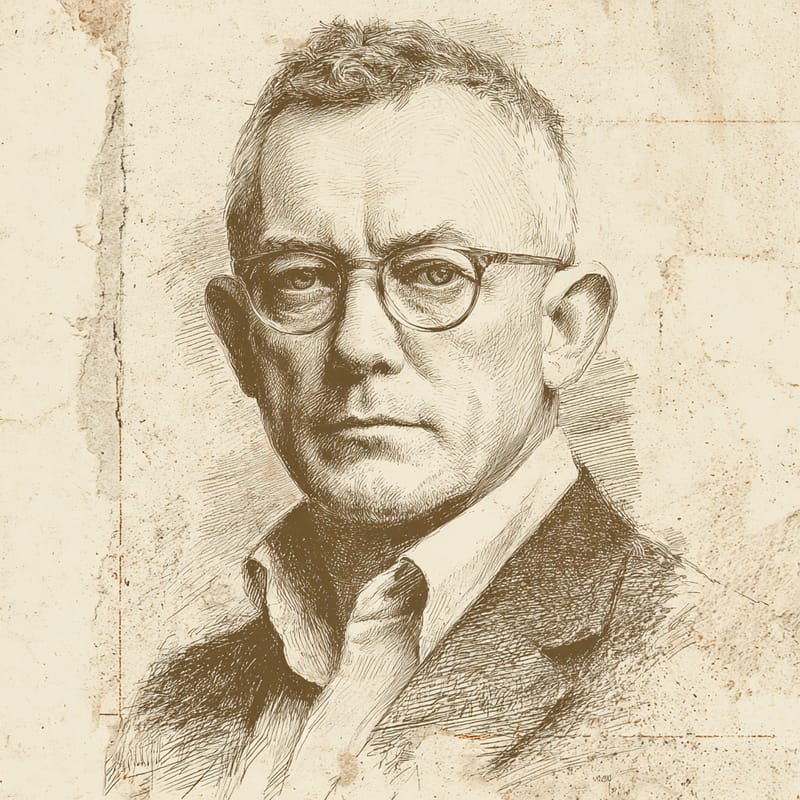
Mikhail Khodorkovsky
Yukos
The oligarch who challenged the throne.
Rooted OligarchistOne of 729 ideologies · enter the Oligarchist hall →- Role
- Oligarch
- Era
- b. 1963
- Region
- Russia
- Social band
- Rooted
- Placement
- +80 · +66 · −18
§ Where Mikhail Khodorkovsky stands
3 axesKhodorkovsky is a product and champion of Russian capitalism. He built his fortune in the banking boom of the early 1990s and through the 1995 loans-for-shares scheme, under which banks lent to the government against shares in state companies and then acquired them at auctions they largely ran. At Yukos he cut costs, adopted Western accounting and in 2003 pursued a merger with Sibneft and talks with American oil majors.
His governance placement reflects the oligarchic power of the 1990s, when a handful of financiers, Khodorkovsky among them, bankrolled Boris Yeltsin's 1996 re-election campaign and expected influence in return. By 2003 he was funding parties from the liberal Yabloko to the Communists and lobbying deputies on oil taxation, a political reach widely seen as the reason the Kremlin moved against him.
Khodorkovsky's social views are moderate rather than radical. From prison he published The Crisis of Liberalism in Russia in 2004, an essay rebuking Russian liberals for ignoring the poor majority and national interests during the 1990s. His later programme stresses the rule of law, federalism and a parliamentary republic rather than cultural causes.
How close are you to Mikhail Khodorkovsky?
Three statements, one per axis. Answer them and we’ll drop you on the compass next to them.
§ The story
HistoricalMikhail Borisovich Khodorkovsky (born 1963) is a Russian businessman and opposition figure who was once the country's richest man. A Komsomol activist and chemical-engineering graduate in Moscow, he used the openings of Gorbachev's reforms to build the Menatep group, including one of Russia's first private banks, and in the 1995 loans-for-shares auctions his group acquired the oil company Yukos. By 2003 he had made Yukos Russia's largest oil producer, adopting Western accounting standards and courting foreign investors.
Khodorkovsky's funding of opposition parties and public criticism of corruption brought him into conflict with Vladimir Putin. Arrested in October 2003, he was convicted of fraud and tax evasion in 2005 and, at a second trial, of embezzlement and money laundering in 2010; Yukos was bankrupted and its main assets passed to the state company Rosneft. Amnesty International named him a prisoner of conscience. Pardoned in December 2013, he left Russia and from exile in London has campaigned against the Kremlin through the Open Russia movement.
Notable for
- 01Built Yukos oil
- 02Russia's richest man
- 03Imprisoned after challenging the Kremlin
Key works & moments
- 1995His Menatep group acquires the oil company Yukos in the loans-for-shares auctions.
- 1996Joins the business leaders bankrolling Boris Yeltsin's re-election campaign.
- 2003Arrested aboard his jet at Novosibirsk airport on 25 October.
- 2005Convicted of fraud and tax evasion and sentenced to nine years, later reduced to eight.
- 2010Convicted at a second trial of embezzlement and money laundering, extending his imprisonment.
- 2013Pardoned by Putin in December and flies to Germany.
§ Minds closest to Mikhail Khodorkovsky
All minds →

§ Also in the Oligarchist hall
Enter the hall →§ Common questions
4 answersWhat is Mikhail Khodorkovsky's political ideology?
Khodorkovsky is a liberal capitalist whose career embodies the Russian oligarchy of the 1990s: on the 99ideologies three-axis compass, a Rooted Oligarchist. Economically he sits far toward the market (+80), having built Yukos through privatisation and defended private property against the state. His governance reading (+66) reflects the political power concentrated wealth bought in Yeltsin's Russia, and socially he is mildly traditional (−18), a pragmatic moderate who in 2004 urged Russian liberals to heed the poor and the national interest.
Is Mikhail Khodorkovsky left-wing or right-wing?
Mainly right of centre in economic terms and liberal in political terms. He defends private enterprise and was the archetypal beneficiary of Russia's 1990s privatisations, but since his imprisonment he has presented himself as a democratic opposition leader calling for the rule of law, a parliamentary republic and an end to Putin's system. In 2003 he funded parties across the spectrum, including the Communists, which suggests a pragmatist more than an ideologue.
Why was Mikhail Khodorkovsky jailed?
Formally, for fraud and tax evasion, the charges on which he was convicted in 2005, followed by embezzlement and money-laundering convictions in 2010. Western governments, Amnesty International and many independent observers regarded the prosecutions as political: they followed his funding of opposition parties and a televised clash with Putin over corruption in February 2003. The European Court of Human Rights found violations of his rights in detention and at trial, though it did not rule the prosecution politically motivated. He was pardoned in 2013.
Which minds are closest to Mikhail Khodorkovsky?
On the 99ideologies three-axis compass, the minds closest to Mikhail Khodorkovsky are Boris Berezovsky (95% alike), Cosimo de' Medici (95% alike) and Carlos Menem (93% alike). The furthest is Emma Goldman (0% alike).