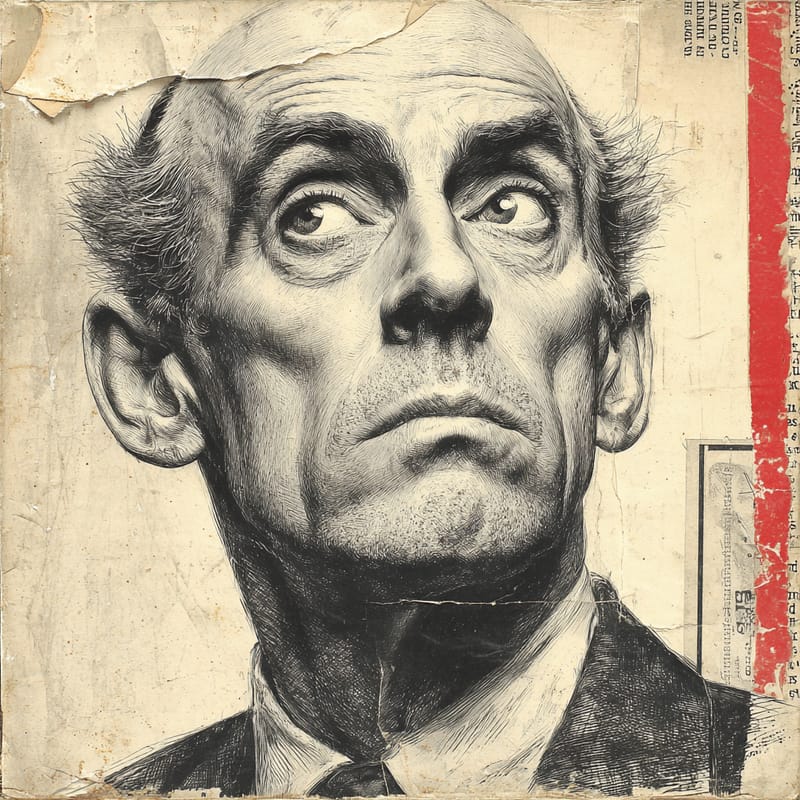
Boris Berezovsky
The kingmaker
Capital that bought the state.
Rooted OligarchistOne of 729 ideologies · enter the Oligarchist hall →- Role
- Oligarch
- Era
- 1946–2013
- Region
- Russia
- Social band
- Rooted
- Placement
- +78 · +66 · −30
§ Where Boris Berezovsky stands
3 axesBerezovsky was a pure product of Russia's chaotic transition to capitalism. LogoVAZ profited from reselling AvtoVAZ cars amid runaway inflation, and in 1995 he and Roman Abramovich gained control of Sibneft through a loans-for-shares auction for a fraction of its later value. He championed private ownership and treated wealth and political influence as two sides of the same asset.
Berezovsky embodied the capture of the state by private wealth. In a 1996 interview with the Financial Times he claimed that seven bankers controlled about half the Russian economy, he used ORT to campaign for Yeltsin and later for Putin, and he held security and diplomatic posts while running private businesses. His influence ended when Putin reasserted Kremlin control over national television in 2000–01.
Berezovsky's social politics were pragmatic rather than ideological. In 1999 he helped launch the Unity bloc, which campaigned on patriotism, order and the war in Chechnya, and promoted Putin as a strong-state successor. In exile he reinvented himself as a liberal opponent of the Kremlin, funding critical media and, by his own account, Ukraine's Orange Revolution of 2004.
How close are you to Boris Berezovsky?
Three statements, one per axis. Answer them and we’ll drop you on the compass next to them.
§ The story
HistoricalBoris Abramovich Berezovsky (1946–2013) was a Russian mathematician turned tycoon who became the most politically powerful of the 1990s oligarchs. A researcher at the Soviet Academy of Sciences' Institute of Control Sciences, he founded the car dealership LogoVAZ in 1989 to sell vehicles from the AvtoVAZ plant, then built an empire that included control of the main state television channel, ORT, a stake in the oil company Sibneft, acquired with Roman Abramovich, and influence over Aeroflot.
Berezovsky helped engineer Boris Yeltsin's re-election in 1996, served as deputy secretary of the Security Council and executive secretary of the Commonwealth of Independent States, and in 1999 backed the new Unity bloc and the rise of Vladimir Putin. He broke with Putin in 2000, left Russia, received political asylum in Britain in 2003 and was later convicted of fraud in absentia in Russia. After losing a High Court case against Abramovich in 2012, he was found dead at his home near Ascot in March 2013; the inquest returned an open verdict.
Notable for
- 011990s privatisation fortune
- 02Media-and-politics kingmaker
- 03Fell out with the Kremlin
Key works & moments
- 1989Founds LogoVAZ, a dealership selling cars from the AvtoVAZ plant.
- 1995Gains control of the ORT television channel and, with Roman Abramovich, the oil company Sibneft.
- 1996Helps organise the business coalition behind Yeltsin's re-election; becomes deputy secretary of the Security Council.
- 1999Helps launch the Unity bloc and backs Vladimir Putin's rise to power.
- 2003Granted political asylum in Britain after breaking with Putin.
- 2013Found dead at his Berkshire home on 23 March; the inquest records an open verdict.
§ Minds closest to Boris Berezovsky
All minds →

§ Also in the Oligarchist hall
Enter the hall →§ Common questions
4 answersWhat was Boris Berezovsky's political ideology?
Berezovsky was less an ideologue than a political entrepreneur of Russia's oligarchic era: on the 99ideologies three-axis compass, a Rooted Oligarchist. Economically he sat far toward the market (+78), having built a fortune from privatisation and private media. His governance reading (+66) reflects his use of wealth and television to decide who held power, and socially he was mildly traditional (−30), a pragmatic power broker who backed a patriotic, strong-state agenda in 1999 before becoming a liberal opponent in exile.
Was Boris Berezovsky left-wing or right-wing?
He fitted neither camp consistently. Berezovsky was an unapologetic capitalist who worked to stop the Communists returning to power in 1996 and helped install Vladimir Putin as a strong-state successor in 1999. After falling out with Putin he presented himself as a liberal democrat and funded opposition media and movements from London. The common thread was not ideology but his conviction that the rich should shape politics, which is why he is remembered as the archetypal Russian oligarch.
Why did Boris Berezovsky fall out with Vladimir Putin?
Because Putin set out to end the political power of the oligarchs, and Berezovsky refused to accept it. In 2000 the new president curbed the regional governors and moved to control national television, and ORT's critical coverage of the Kursk submarine disaster that August angered the Kremlin. Under pressure, Berezovsky gave up his ORT stake and left Russia. From exile he campaigned against Putin, saying in 2007 that he was working to overthrow him, while Russian prosecutors pursued fraud charges.
Which minds are closest to Boris Berezovsky?
On the 99ideologies three-axis compass, the minds closest to Boris Berezovsky are Cosimo de' Medici (99% alike), The Cabal (archetype) (97% alike) and Marcus Licinius Crassus (95% alike). The furthest is Emma Goldman (0% alike).