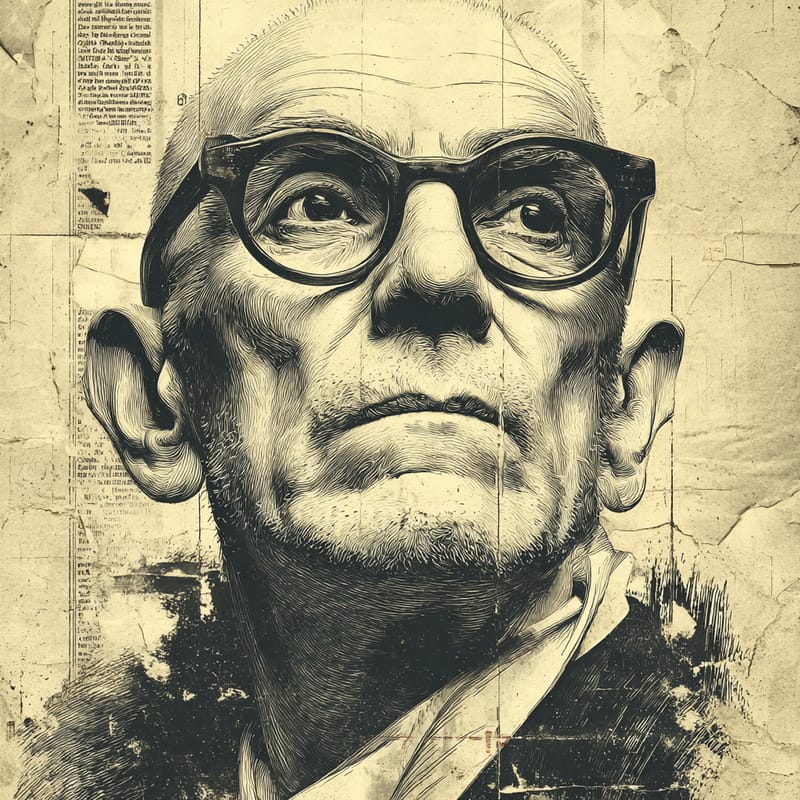
Leo Strauss
The ancients against the moderns
Virtue, the regime, and the great books.
Traditional Neo-Conservative (Neocon)One of 729 ideologies · enter the Neo-Conservative (Neocon) hall →- Role
- Philosopher
- Era
- 1899–1973
- Region
- Germany / US
- Social band
- Traditional
- Placement
- +22 · +28 · −50
§ Where Leo Strauss stands
3 axesStrauss wrote almost nothing on economic policy. His chapter on Locke in Natural Right and History (1953) treated modern liberalism's emancipation of acquisitiveness critically, yet he accepted America's commercial, private-property republic as far preferable to communism, which accounts for a modest market lean rather than any enthusiasm for capitalism.
Strauss defended constitutional democracy as the best regime practicable in modern times, yet argued in On Tyranny (1948) and Natural Right and History (1953) that politics needs standards higher than popular will and benefits from wise statesmanship. A 1933 letter to Karl Löwith voicing sympathy for authoritarian principles of the right, published decades later, fuels debate over his politics.
Strauss is among the most traditional political thinkers of the twentieth century. Natural Right and History (1953) argued that historicism and relativism lead to nihilism and attacked Max Weber's separation of facts and values, and his 1959 address 'What Is Liberal Education?' defended education in the great books as a counterweight to mass culture.
How close are you to Leo Strauss?
Three statements, one per axis. Answer them and we’ll drop you on the compass next to them.
§ The story
HistoricalLeo Strauss (1899–1973) was a German-born American political philosopher. Raised in an Orthodox Jewish family in Kirchhain, Hesse, he earned his doctorate at Hamburg under Ernst Cassirer, heard Edmund Husserl and Martin Heidegger in Freiburg and worked at Berlin's Academy for the Science of Judaism, publishing Spinoza's Critique of Religion in 1930. A fellowship took him to Paris and England in 1932, and the Nazi seizure of power kept him in exile. After teaching at the New School in New York from 1938, he taught at the University of Chicago from 1949 to 1969.
Strauss argued that modern thought, from Machiavelli and Hobbes to historicism and positivist social science, had cut politics loose from any standard of right, leaving the West exposed to relativism and nihilism. He urged a return to Plato and Aristotle and taught a method of close reading, set out in Persecution and the Art of Writing (1952), which held that philosophers facing persecution often hid their true teachings between the lines. His students and admirers, including Allan Bloom and Harvey Mansfield, formed an influential Straussian school, and after the Iraq War critics claimed, contentiously, that he had inspired its neoconservative architects.
Notable for
- 01'Natural Right and History'
- 02Revived classical political philosophy
- 03Mentored the 'Straussians'
Key works & moments
- 1930Publishes Spinoza's Critique of Religion in Berlin.
- 1938Joins the New School for Social Research in New York after emigrating.
- 1948Publishes On Tyranny, later the subject of a famous debate with Alexandre Kojève.
- 1949Joins the University of Chicago, where he teaches for two decades.
- 1953Publishes Natural Right and History, based on his 1949 Walgreen Lectures.
- 1958Thoughts on Machiavelli presents Machiavelli as a teacher of evil.
In their own words
“The contemporary rejection of natural right leads to nihilism—nay, it is identical with nihilism.”
§ Minds closest to Leo Strauss
All minds →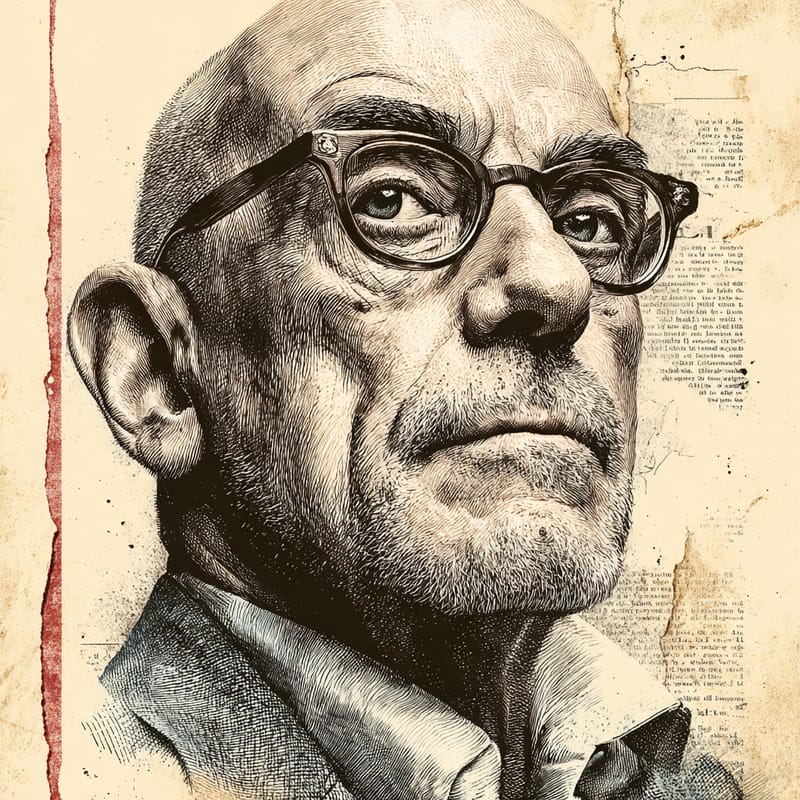

§ Also in the Neo-Conservative (Neocon) hall
Enter the hall →§ Common questions
4 answersWhat was Leo Strauss's political ideology?
Leo Strauss was a conservative political philosopher who sought to revive classical natural right against modern relativism: on the 99ideologies three-axis compass, a Traditional Neo-Conservative (Neocon). Economically he sat modestly right of centre (+22), accepting America's commercial republic while distrusting modern acquisitiveness. On governance he favoured a constitutional order guided by higher moral standards and wise statesmanship (+28), and socially he was firmly traditional (−50), defending classical virtue, liberal education and the West's philosophical heritage against nihilism.
Was Leo Strauss left-wing or right-wing?
Right of centre, though he was a philosopher rather than a partisan. Strauss defended liberal democracy against communism and fascism, but his critique of modernity, relativism and progressive social science placed him among conservatives, and many of his students became prominent conservative scholars. He rarely commented on day-to-day politics, and a 1933 letter expressing sympathy for authoritarian principles of the right complicates any simple account of his views.
Was Leo Strauss the father of the neoconservatives?
Only indirectly, and the claim is disputed. After the 2003 Iraq War, journalists linked Strauss to neoconservative officials, some of whom had studied with him or with his students. But Strauss died in 1973, wrote little on foreign policy and warned against utopian political projects. Scholars of his work generally argue that his influence on neoconservatism came through his students' defence of liberal education, natural right and moral judgement rather than through any policy doctrine.
Which minds are closest to Leo Strauss?
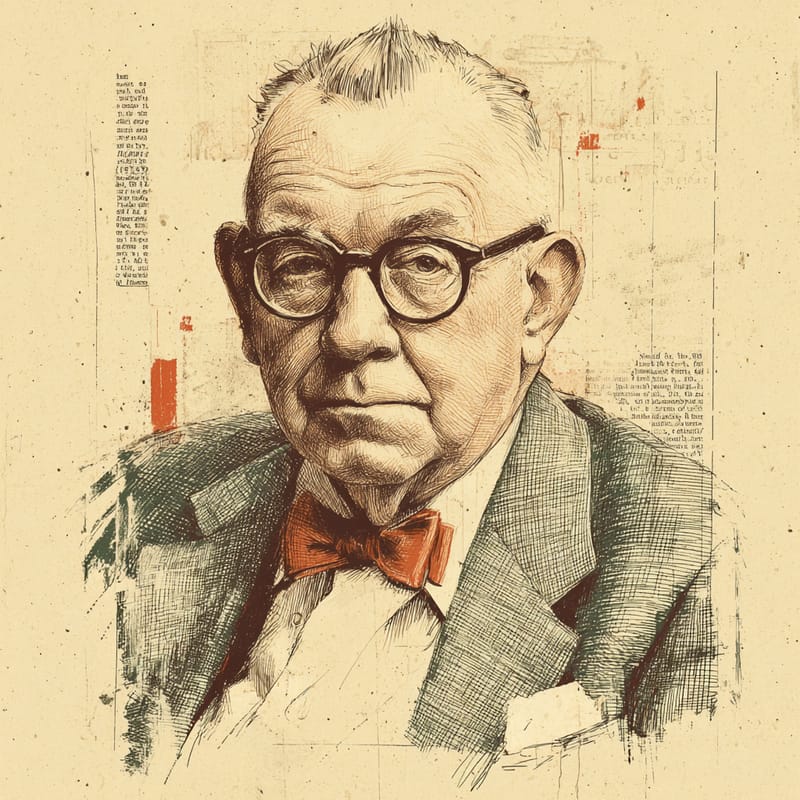
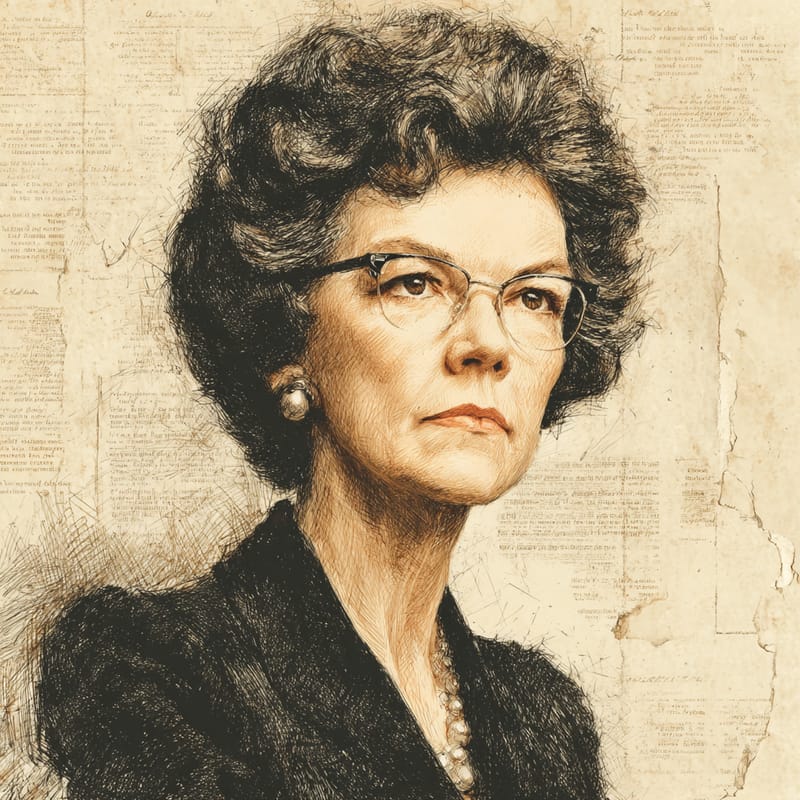
On the 99ideologies three-axis compass, the minds closest to Leo Strauss are Norman Podhoretz (98% alike), Irving Kristol (96% alike) and Jeane Kirkpatrick (96% alike). The furthest is Emma Goldman (14% alike).