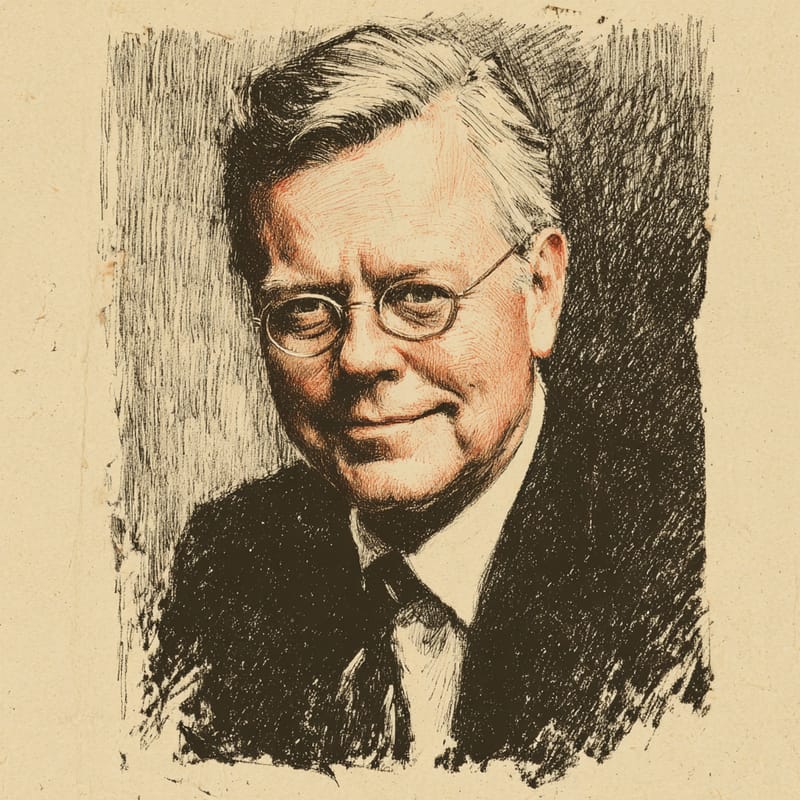
Bill Kristol
The Weekly Standard
Second-generation neoconservatism.
Rooted Neo-Conservative (Neocon)One of 729 ideologies · enter the Neo-Conservative (Neocon) hall →- Role
- Editor & commentator
- Era
- b. 1952
- Region
- United States
- Social band
- Rooted
- Placement
- +28 · +28 · −35
§ Where Bill Kristol stands
3 axesKristol is a market conservative who treats economic policy largely as political strategy. His 1993 memo urged Republicans to kill Bill Clinton's health-care plan rather than amend it, and he backed the tax cuts of the George W. Bush years. Yet the 'national greatness' conservatism he promoted with David Brooks in 1997 rejected anti-government libertarianism in favour of an energetic federal government.
Kristol is a leading advocate of assertive American power. With Robert Kagan he called in a 1996 Foreign Affairs essay for 'benevolent global hegemony', and the Project for the New American Century he co-founded in 1997 pressed for higher defence spending and the removal of Saddam Hussein, goals pursued in the 2003 invasion of Iraq that he championed.
Kristol's conservatism has a moral and cultural edge. He served as chief of staff to William Bennett, the Reagan administration's champion of character education, and to Vice President Dan Quayle during the family-values campaign of 1992, and The Weekly Standard gave a platform to religious and cultural conservatives. From 2016 his hostility to Donald Trump's nationalist populism set him apart from much of the right.
How close are you to Bill Kristol?
Three statements, one per axis. Answer them and we’ll drop you on the compass next to them.
§ The story
LivingWilliam Kristol (b. 1952) is an American political strategist, editor and commentator, the son of the neoconservative writers Irving Kristol and Gertrude Himmelfarb. After a Harvard doctorate in government he taught at the University of Pennsylvania and Harvard's Kennedy School, then served as chief of staff to Education Secretary William Bennett and, from 1989 to 1993, to Vice President Dan Quayle. In 1995 he co-founded The Weekly Standard, backed by Rupert Murdoch's News Corporation, and edited it for two decades.
Kristol carried neoconservatism into the post-Cold War era. His 1993 memo urging Republicans to defeat Bill Clinton's health-care plan outright shaped the party's strategy, and in 1997 he co-founded the Project for the New American Century, whose 1998 letter urged Clinton to remove Saddam Hussein; he became one of the most prominent advocates of the 2003 Iraq War. He championed Sarah Palin's selection as John McCain's running mate in 2008, but from 2016 he was a leading conservative opponent of Donald Trump, a break that took him out of the Republican mainstream.
Notable for
- 01Founded 'The Weekly Standard'
- 02'National greatness' conservatism
- 03Iraq War advocacy
Key works & moments
- 1989Becomes chief of staff to Vice President Dan Quayle.
- 1993Memo urges Republicans to defeat Bill Clinton's health-care plan outright.
- 1995Co-founds The Weekly Standard with Fred Barnes and John Podhoretz.
- 1997Co-founds the Project for the New American Century with Robert Kagan.
- 2003Champions the US-led invasion of Iraq.
- 2016Tries to recruit an independent conservative candidate to run against Donald Trump.
§ Minds closest to Bill Kristol
All minds →

§ Also in the Neo-Conservative (Neocon) hall
Enter the hall →§ Common questions
4 answersWhat is Bill Kristol's political ideology?
Bill Kristol is a second-generation neoconservative and a leading voice of assertive American internationalism since the 1990s: on the 99ideologies three-axis compass, a Rooted Neo-Conservative (Neocon). Economically he sits right of centre (+28), favouring markets and tax cuts but not libertarian small government. On governance he backs strong state power, especially abroad (+28), from 'benevolent global hegemony' to the Iraq War, and socially he leans traditional (−35), rooted in the moral conservatism of the Reagan and Quayle years.
Is Bill Kristol left-wing or right-wing?
Right-wing by record, though his break with Donald Trump scrambled his alliances. For three decades Kristol was a central strategist of the Republican right, opposing Clinton's health plan, promoting tax cuts and championing the Iraq War. From 2016 he became one of Trump's fiercest conservative critics and backed Joe Biden in 2020, which led many on the right to call him a defector, but his views on foreign policy and markets remain those of a conservative.
What is national greatness conservatism?
It is the strand of conservatism that Kristol and David Brooks promoted in 1997, arguing that the right should stop simply attacking government and instead summon Americans to great national projects and an ambitious role in the world, in the spirit of Theodore Roosevelt. It rejected libertarian hostility to the state while keeping a conservative emphasis on character and patriotism, and it informed John McCain's 2000 presidential campaign, which Kristol backed. Critics on the right saw it as big-government conservatism.
Which minds are closest to Bill Kristol?
On the 99ideologies three-axis compass, the minds closest to Bill Kristol are Paul Wolfowitz (98% alike), Jack Ryan (98% alike) and Charles Krauthammer (98% alike). The furthest is Emma Goldman (16% alike).