
Kofi Annan
The world's diplomat
Multilateral centrism on the global stage.
CentristOne of 729 ideologies · enter the Centrist hall →- Role
- UN Secretary-General
- Era
- 1938–2018
- Region
- Ghana
- Social band
- Centre (no modifier)
- Placement
- −4 · +2 · +8
§ Where Kofi Annan stands
3 axesAnnan backed open markets and private investment as engines of development, launching the UN Global Compact with business in 2000, but paired them with redistributive goals: the Millennium Development Goals set a target of halving extreme poverty, and he campaigned for debt relief and more aid. That blend of market development and social targets puts him just left of centre.
A consummate institutionalist, Annan worked through consensus, international law and the authority of the UN Charter, telling the BBC in 2004 that the US-led invasion of Iraq had been illegal from the Charter's standpoint. He championed the Responsibility to Protect, adopted at the 2005 World Summit, which conditions sovereignty on protecting civilians, a balanced position near the centre of the governance axis.
Annan was a moderate progressive on rights and development. He made human rights central to the UN's mission, replaced the discredited Commission on Human Rights with the Human Rights Council in 2006, and spoke out on HIV/AIDS and gender equality, while his diplomatic caution and respect for national sovereignty kept him from more radical positions.
How close are you to Kofi Annan?
Three statements, one per axis. Answer them and we’ll drop you on the compass next to them.
§ The story
HistoricalKofi Atta Annan (1938–2018) was a Ghanaian diplomat who served as the seventh secretary-general of the United Nations from 1997 to 2006. Born in Kumasi in what was then the Gold Coast, he studied economics at Macalester College in Minnesota and in Geneva, and later management at the Massachusetts Institute of Technology. He joined the World Health Organization in 1962 and spent almost his entire career in the UN system, becoming head of peacekeeping in 1993 and then the first secretary-general from sub-Saharan Africa and the first chosen from the organisation's own staff.
Annan's tenure produced the Millennium Development Goals, the Global Fund to Fight AIDS, Tuberculosis and Malaria, the Responsibility to Protect doctrine endorsed in 2005 and the Human Rights Council, and he and the UN jointly received the Nobel Peace Prize in 2001. His record was shadowed by the UN's failure to prevent the 1994 Rwandan genocide and the 1995 Srebrenica massacre while he ran peacekeeping, and by the Oil-for-Food scandal, in which an inquiry found serious management failures but no evidence that he had acted corruptly. He later mediated in Kenya in 2008 and Syria in 2012.
Notable for
- 01UN Secretary-General
- 02Nobel Peace Prize, 2001
- 03Millennium Development Goals
Key works & moments
- 1993Becomes head of UN peacekeeping, overseeing missions in Somalia, Rwanda and Bosnia.
- 1997Takes office as UN secretary-general, the first from sub-Saharan Africa.
- 2000World leaders adopt the Millennium Declaration, from which the Millennium Development Goals are drawn.
- 2001Shares the Nobel Peace Prize with the United Nations.
- 2005World leaders endorse the Responsibility to Protect at the UN World Summit.
- 2012Serves as UN–Arab League envoy for Syria, resigning after his peace plan fails.
§ Minds closest to Kofi Annan
All minds →


§ Also in the Centrist hall
Enter the hall →§ Common questions
4 answersWhat was Kofi Annan's political ideology?
Kofi Annan was a liberal internationalist: on the 99ideologies three-axis compass, a Centrist. Economically he sat just left of centre (−4), backing market-led development alongside poverty-reduction targets and aid. On governance he was at the centre (+2), a consensus-building institutionalist who defended the UN Charter while promoting the Responsibility to Protect, and socially he was mildly progressive (+8), placing human rights, health and gender equality at the heart of the UN's work.
Was Kofi Annan left-wing or right-wing?
Neither; he was a centrist multilateralist. Annan courted business through the Global Compact and accepted market economics, which disappointed some on the left, while his insistence on international law, development aid and human rights, and his criticism of the Iraq War, frustrated many on the right, especially in Washington. His politics were those of the post-Cold War liberal international order rather than any national left-right tradition.
Did Kofi Annan say the Iraq War was illegal?
Yes. In a BBC interview in September 2004, Annan said the US-led invasion of Iraq in 2003 had not been in conformity with the UN Charter and that, from the Charter's point of view, it was illegal, because the Security Council had not authorised it. The remark angered the American and British governments, which argued that earlier resolutions provided legal authority, and it contributed to tense relations between Annan and the Bush administration during his second term.
Which minds are closest to Kofi Annan?
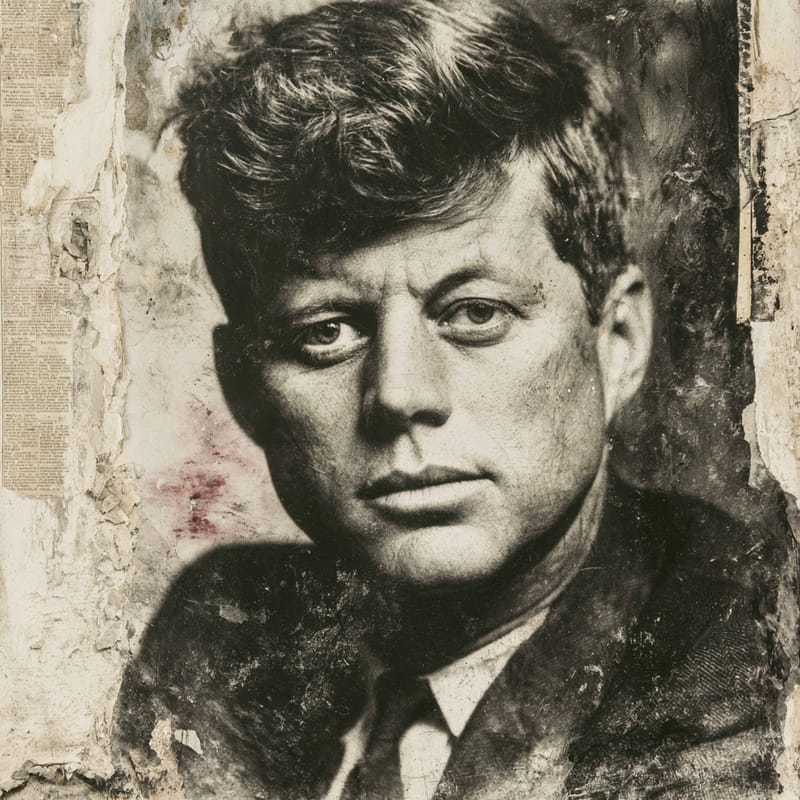
On the 99ideologies three-axis compass, the minds closest to Kofi Annan are Olaf Scholz (98% alike), John F. Kennedy (96% alike) and Jacques Delors (96% alike). The furthest is Adam Sutler (34% alike).