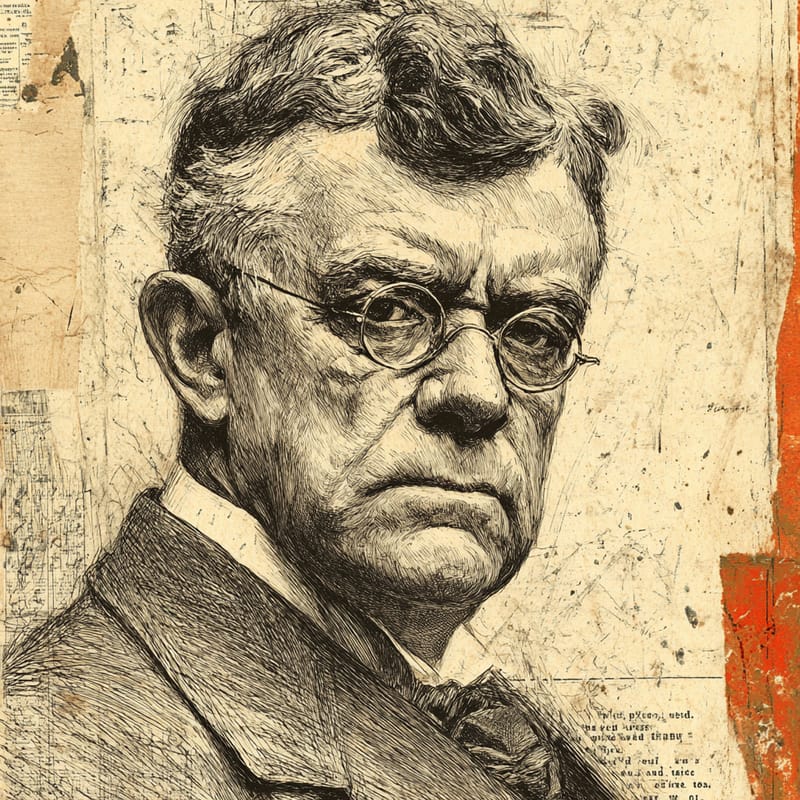
Jim Hacker
The weathervane politician
Centrism as the art of survival.
CentristOne of 729 ideologies · enter the Centrist hall →- Role
- Minister/PM (satire)
- From
- Yes Minister
- Region
- United Kingdom
- Social band
- Centre (no modifier)
- Placement
- +6 · +6 · −2
§ Where Jim Hacker stands
3 axesHacker has no fixed economic doctrine. In Yes Minister he champions economy drives and cuts in bureaucracy when they make good headlines, then retreats when they threaten jobs or votes, and in Yes, Prime Minister he flirts with bold reforms before settling for whatever the Treasury and the polls will bear. The result hovers just right of centre.
Hacker is an institutional centrist by necessity rather than conviction. He arrives in Open Government, the first episode in 1980, promising transparency, and spends the series learning how Whitehall controls information, appointments and agendas. He never challenges the system's foundations, only tries to survive and occasionally outwit it, which leaves him slightly on the side of established authority.
On social questions Hacker follows public opinion wherever it lands, adopting whichever position promises good publicity and dropping it when it does not. His instincts are those of a conventional, cautious politician anxious not to offend traditional voters, which places him fractionally on the traditional side of the centre.
How close are you to Jim Hacker?
Three statements, one per axis. Answer them and we’ll drop you on the compass next to them.
§ The story
FictionJames Hacker is the central character of the BBC sitcoms Yes Minister (1980–84) and Yes, Prime Minister (1986–88), written by Antony Jay and Jonathan Lynn and played by Paul Eddington. A well-meaning but vain politician who arrives in office promising open government, he becomes Minister for Administrative Affairs in the first series and, after an unexpected leadership contest in the 1984 Christmas special Party Games, prime minister. His every plan is managed, diverted or smothered by his permanent secretary, Sir Humphrey Appleby, while his private secretary Bernard Woolley is caught between them.
Hacker represents the democratic politician as weathervane: he wants to do good but wants even more to be re-elected, so his principles bend to headlines, polls and the civil service's agenda. His party is never named, which let the series satirise the system rather than any side, and its picture of self-interested officials has often been read as a primer in public choice theory. Margaret Thatcher declared it her favourite programme, and Yes Minister remains a reference point in debates about who really governs Britain.
Notable for
- 01Hero of 'Yes Minister'
- 02Triangulating everyman politician
- 03Battles with Sir Humphrey
Key works & moments
- 1980Yes Minister premieres on BBC Two with the episode Open Government.
- Series 1Hacker takes over the Department of Administrative Affairs and is quickly outmanoeuvred by Sir Humphrey.
- 1984Margaret Thatcher, a declared fan, performs a short sketch with Paul Eddington and Nigel Hawthorne.
- 1984In the Christmas special Party Games, Hacker unexpectedly becomes prime minister.
- 1986Yes, Prime Minister opens with The Grand Design, Hacker's plan to cancel Trident.
§ Minds closest to Jim Hacker
All minds →




§ Also in the Centrist hall
Enter the hall →§ Common questions
4 answersWhat is Jim Hacker's political ideology?
Jim Hacker has no settled ideology beyond political survival: on the 99ideologies three-axis compass, a Centrist. Economically he sits just right of centre (+6), favouring cuts and efficiency drives when they are popular. On governance he leans slightly toward established authority (+6), working within a Whitehall machine he never seriously challenges, and socially he is fractionally traditional (−2), following public opinion and avoiding anything that might cost votes.
Is Jim Hacker left-wing or right-wing?
Deliberately neither. The writers never named Hacker's party, so that the satire would target the machinery of government rather than any political side, and his positions shift with headlines, polls and Sir Humphrey's manoeuvres. His instincts are those of a moderate, slightly cautious politician of the centre who wants to be liked and re-elected more than he wants to pursue any programme of his own.
Was Yes Minister realistic about how British government works?
Many insiders said it was uncomfortably close to the truth. The writers drew on confidential accounts from former advisers and officials, and politicians of several parties praised its accuracy; Margaret Thatcher called it her favourite programme. Scholars have noted that its portrait of officials who expand budgets and protect their departments echoes public choice theory. It exaggerates for comedy, but its picture of ministers dependent on permanent officials remains a common reference in debates about Whitehall.
Which minds are closest to Jim Hacker?
On the 99ideologies three-axis compass, the minds closest to Jim Hacker are Mario Draghi (99% alike), Mark Rutte (97% alike) and John F. Kennedy (97% alike). The furthest is Emma Goldman (34% alike).