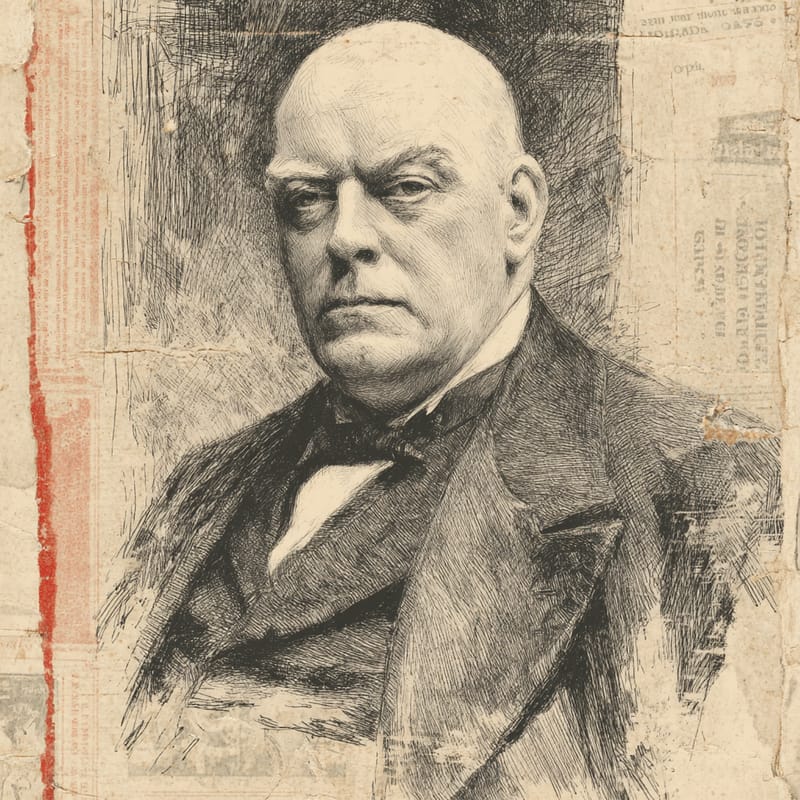
Hilaire Belloc
The servile state
Against both monopoly and collectivism.
Traditional DistributistOne of 729 ideologies · enter the Distributist hall →- Role
- Writer & MP
- Era
- 1870–1953
- Region
- France / UK
- Social band
- Traditional
- Placement
- −26 · +50 · −58
§ Where Hilaire Belloc stands
3 axesBelloc held that freedom depends on owning property. The Servile State (1912) argued that capitalism, by concentrating ownership in few hands, was unstable, and that reforms such as the 1911 National Insurance Act were creating a class secured by the state but compelled to work. Rejecting socialist collectivism too, he proposed in An Essay on the Restoration of Property (1936) measures such as differential taxation to favour small owners against large.
Belloc wanted a restored order of guilds, families and a strong Catholic culture rather than open, party-based liberal democracy. The Party System (1911), written with Cecil Chesterton, attacked parliament as a collusive arrangement between the two front benches, and in the interwar years he admired Mussolini's Italy and sided with Franco's Nationalists in the Spanish Civil War, while still fearing the bureaucratic power of the modern state.
Belloc was a militant Catholic traditionalist who saw the faith as the soul of European civilisation, the claim at the centre of Europe and the Faith (1920). He defended rural life, wine, song and inherited custom against puritanism and industrial modernity, and his history writing, from his lives of Danton and Robespierre to The Great Heresies (1938), cast the Reformation as a catastrophe.
How close are you to Hilaire Belloc?
Three statements, one per axis. Answer them and we’ll drop you on the compass next to them.
§ The story
HistoricalJoseph Hilaire Pierre René Belloc (1870–1953) was a French-born British writer, historian and politician. Son of a French father and an English mother, he grew up largely in England, served in the French artillery, took a first in history at Balliol College, Oxford, and became a British subject in 1902. A hugely prolific author of verse, travel writing, history and polemic, from The Path to Rome (1902) to Cautionary Tales for Children (1907), he sat as Liberal MP for Salford South from 1906 to 1910.
Disillusioned with parliament, Belloc attacked the party system, and the weekly he founded in 1911, the Eye-Witness, later the New Witness under Cecil Chesterton, pursued the Marconi share scandal of 1912–13. His book The Servile State (1912) argued that capitalism and state welfare together were reducing the propertyless to a legally dependent class, and with G. K. Chesterton he became a founder of distributism. A combative Catholic apologist, he admired Mussolini, and his writings, including The Jews (1922), are widely criticised as antisemitic. His comic verse remains widely read.
Notable for
- 01'The Servile State'
- 02Co-founded distributism
- 03Catholic political writing
Key works & moments
- 1902Becomes a British subject and publishes The Path to Rome, an account of his pilgrimage on foot.
- 1906Elected Liberal MP for Salford South in the Liberal landslide, serving until 1910.
- 1911With Cecil Chesterton, publishes The Party System; founds the weekly Eye-Witness.
- 1912Publishes The Servile State, the founding critique of distributism.
- 1920Publishes Europe and the Faith, identifying European civilisation with Catholicism.
- 1936Publishes An Essay on the Restoration of Property.
In their own words
“The Faith is Europe. And Europe is the Faith.”
§ Minds closest to Hilaire Belloc
All minds →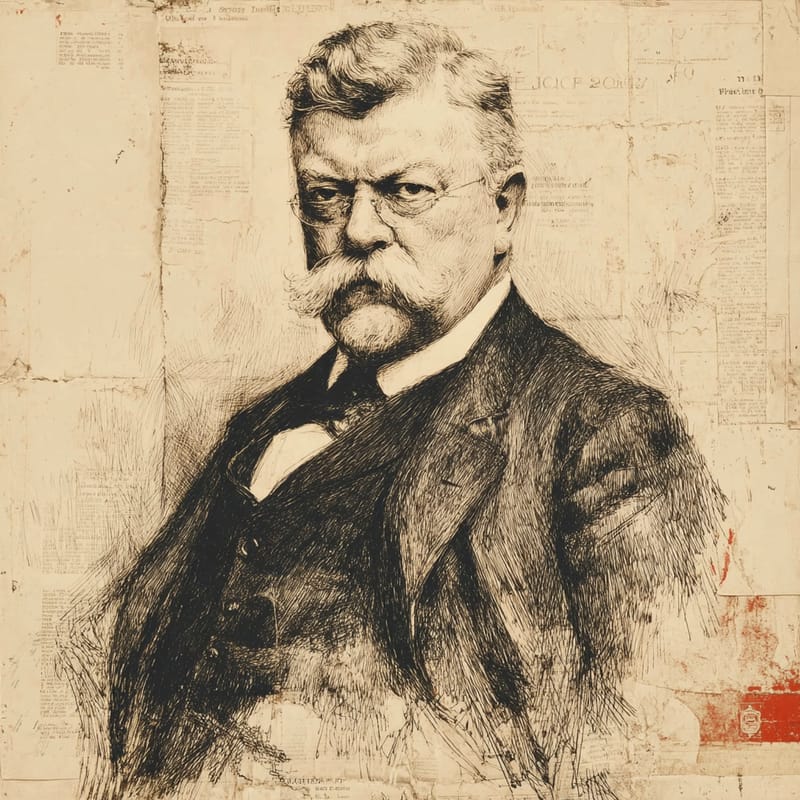


§ Also in the Distributist hall
Enter the hall →§ Common questions
4 answersWhat was Hilaire Belloc's political ideology?
Hilaire Belloc was a Catholic distributist who held that liberty requires property spread across many owners: on the 99ideologies three-axis compass, a Traditional Distributist. Economically he sat left of centre (−26), attacking concentrated capitalism and state collectivism alike in favour of small ownership. On governance he leaned toward authority (+50), distrusting parliamentary parties and admiring Mussolini, and socially he was strongly traditional (−58), a militant Catholic who saw the faith as the foundation of European civilisation.
Was Hilaire Belloc left-wing or right-wing?
He began on the left as a Liberal MP elected in the 1906 landslide, but his mature politics belong to the traditionalist right. Belloc's hostility to plutocracy, monopolies and wage dependence echoed radical critiques of capitalism, yet he rejected socialism as a route to servility, championed the Catholic Church and inherited custom, admired Mussolini and expressed antisemitic views. His distributism is best seen as a third way that drew critics from both sides.
What did Belloc mean by the servile state?
He meant a society in which the propertyless majority is legally obliged to work for the property-owning few in exchange for guaranteed security. In The Servile State (1912), Belloc argued that capitalism was unstable and that, rather than giving way to socialism, it would be stabilised by welfare and labour laws, such as the 1911 National Insurance Act, that fixed workers in a dependent status. The only escape, he said, was to restore widely distributed property, the thesis that became the foundation of distributism.
Which minds are closest to Hilaire Belloc?
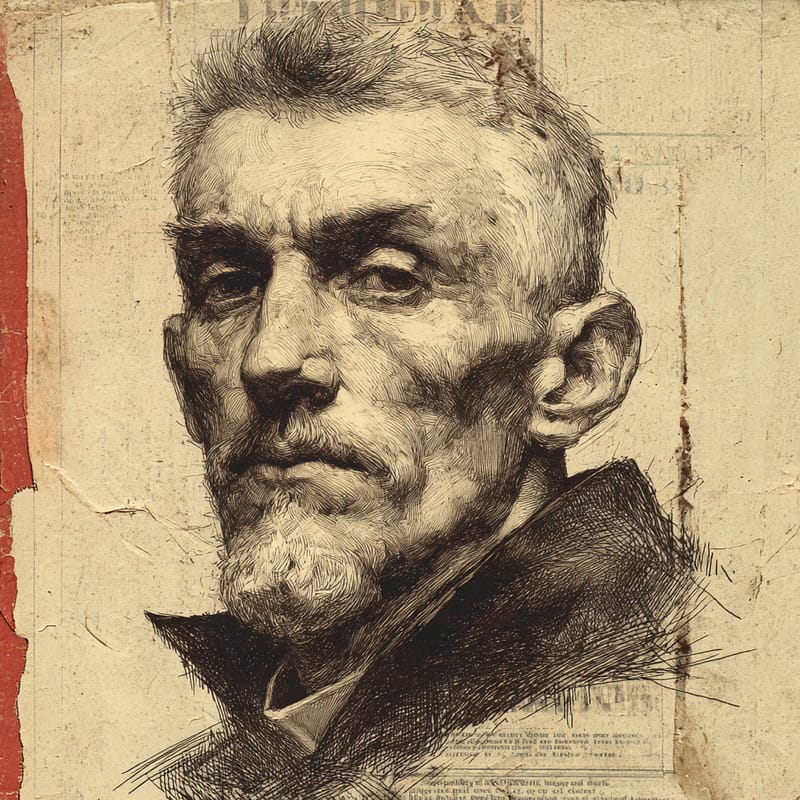
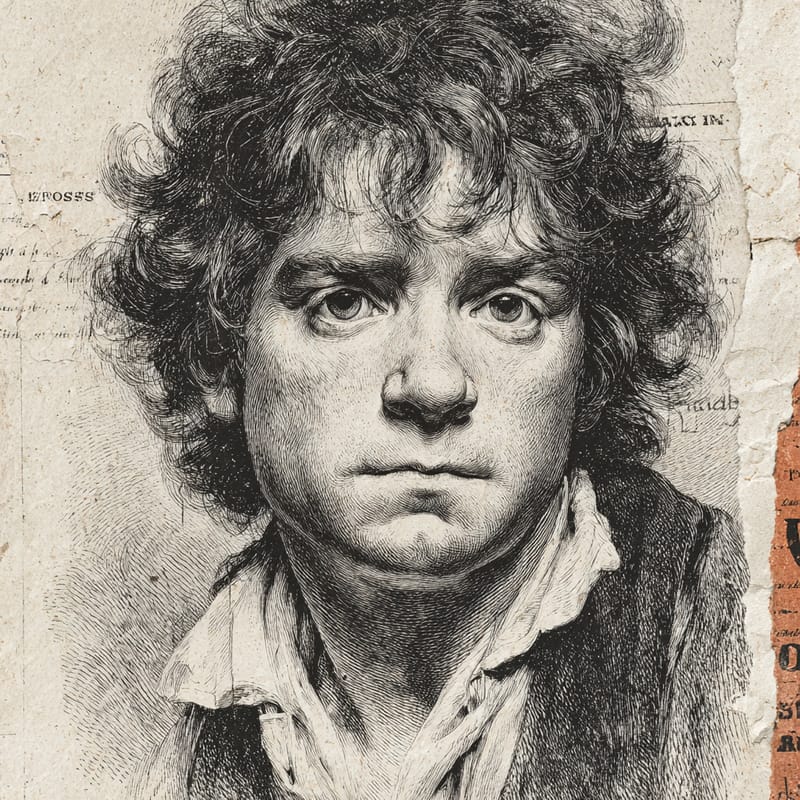
On the 99ideologies three-axis compass, the minds closest to Hilaire Belloc are G. K. Chesterton (98% alike), Vincent McNabb (98% alike) and Samwise Gamgee (96% alike). The furthest is Emma Goldman (15% alike).