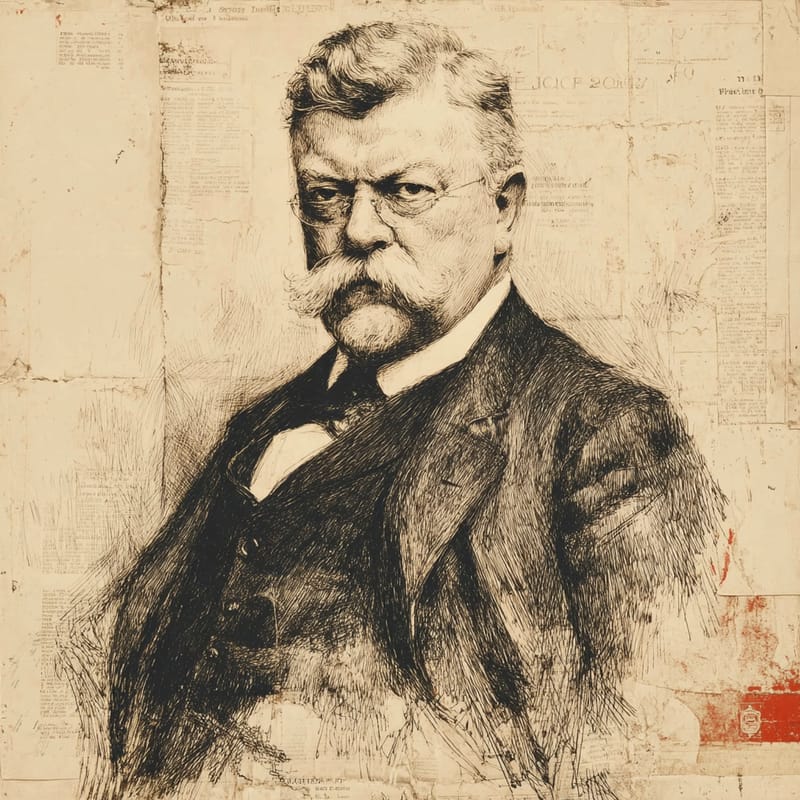
G. K. Chesterton
Three acres and a cow
Property for the many, not the few.
Traditional DistributistOne of 729 ideologies · enter the Distributist hall →- Role
- Writer
- Era
- 1874–1936
- Region
- United Kingdom
- Social band
- Traditional
- Placement
- −22 · +48 · −60
§ Where G. K. Chesterton stands
3 axesChesterton's complaint against capitalism was that it left too few people owning capital: land, shops and workshops should be spread among as many families as possible. The Outline of Sanity (1926) proposed protecting small shops and farms against monopolies and chain stores and helping families back onto the land, setting distributism against both big business and the state collectivism of his friendly rival George Bernard Shaw.
Chesterton distrusted both the centralised state and the plutocrats he believed controlled it, but his ideal was a settled moral order of families, parishes and inherited institutions rather than liberal individualism. Orthodoxy (1908) described tradition as democracy extended to the dead, and he defended the family as the basic unit of society, opposing the Mental Deficiency Act of 1913 in Eugenics and Other Evils (1922).
Chesterton defended tradition, the family and Christian orthodoxy against the scepticism and progressive fashions of his day. His conversion to Catholicism in 1922 deepened that stance, and Orthodoxy (1908) and The Everlasting Man (1925) argued that Christianity had preserved the sanity and freedom of Western civilisation. He opposed divorce in The Superstition of Divorce (1920) and opposed birth control, while celebrating the ordinary man's pleasures of beer, festivity and home.
How close are you to G. K. Chesterton?
Three statements, one per axis. Answer them and we’ll drop you on the compass next to them.
§ The story
HistoricalGilbert Keith Chesterton (1874–1936) was an English journalist, novelist, poet and Christian apologist, one of the most widely read writers of his age. Born in Kensington and trained at the Slade School of Art, he made his name in Fleet Street as a prolific essayist and debater, writing a weekly column for the Illustrated London News from 1905 until his death. His books ranged from the novels The Napoleon of Notting Hill (1904) and The Man Who Was Thursday (1908) to the Father Brown detective stories and the apologetic classic Orthodoxy (1908).
Politically Chesterton began as a radical Liberal who opposed the Boer War, and became a critic of both plutocratic capitalism and Fabian socialism. With Hilaire Belloc he developed distributism, setting it out in The Outline of Sanity (1926), editing G.K.'s Weekly from 1925 and presiding over the Distributist League from 1926. Received into the Catholic Church in 1922, he campaigned against the eugenics movement and influenced C. S. Lewis, whose return to Christianity owed much to The Everlasting Man (1925). Critics point to antisemitic passages in his journalism, though he denounced Hitler's persecution of the Jews in the 1930s.
Notable for
- 01Co-founded distributism
- 02'The Outline of Sanity'
- 03Prolific Catholic essayist
Key works & moments
- 1904Publishes The Napoleon of Notting Hill, a fable of fierce local patriotism.
- 1908Publishes Orthodoxy, his defence of Christian belief and tradition.
- 1910Publishes What's Wrong with the World, an early statement of his social philosophy.
- 1922Received into the Catholic Church; publishes Eugenics and Other Evils.
- 1925Launches G.K.'s Weekly and publishes The Everlasting Man.
- 1926Becomes president of the new Distributist League; publishes The Outline of Sanity.
In their own words
“Tradition means giving votes to the most obscure of all classes, our ancestors. It is the democracy of the dead.”
“The Christian ideal has not been tried and found wanting. It has been found difficult; and left untried.”
§ Minds closest to G. K. Chesterton
All minds →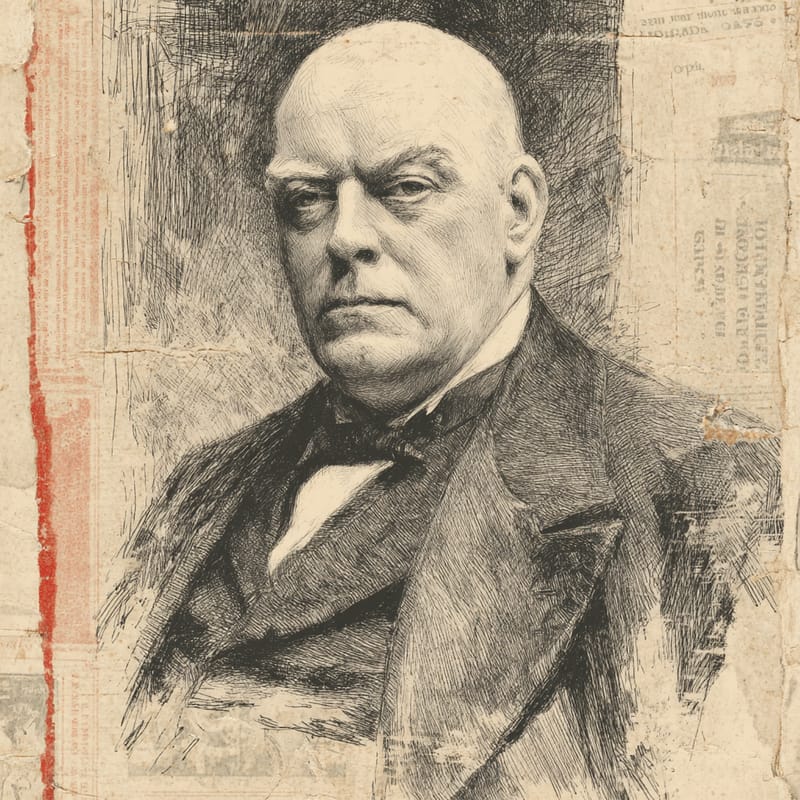


§ Also in the Distributist hall
Enter the hall →§ Common questions
4 answersWhat was G. K. Chesterton's political ideology?
G. K. Chesterton was a distributist and Catholic traditionalist who wanted property spread among ordinary families rather than concentrated in big business or the state: on the 99ideologies three-axis compass, a Traditional Distributist. Economically he sat left of centre (−22), attacking plutocracy and monopoly while defending small private ownership. On governance he leaned toward order (+48), rooting authority in family, Church and custom, and socially he was strongly traditional (−60), defending Christian orthodoxy against modern scepticism.
Was G. K. Chesterton left-wing or right-wing?
Neither consistently, which is why both sides quote him. He began as a radical Liberal, opposed the Boer War and imperialism, attacked plutocrats and championed the poor, positions that read as left-wing. But he rejected socialism, defended private property, the family and the Catholic Church, and opposed divorce and birth control, which places him with traditionalist conservatives. His distributism is usually described as a third way between capitalism and socialism.
What is Chesterton's fence?
Chesterton's fence is the principle that a reformer should not remove an existing institution until its purpose is understood. It comes from his 1929 book The Thing, where he imagines a reformer who finds a fence or gate across a road and wants it cleared away; the wiser reformer replies that he will not allow it until the other has gone away and found out why it was put there. The parable has become a staple of conservative and libertarian arguments for caution about change.
Which minds are closest to G. K. Chesterton?
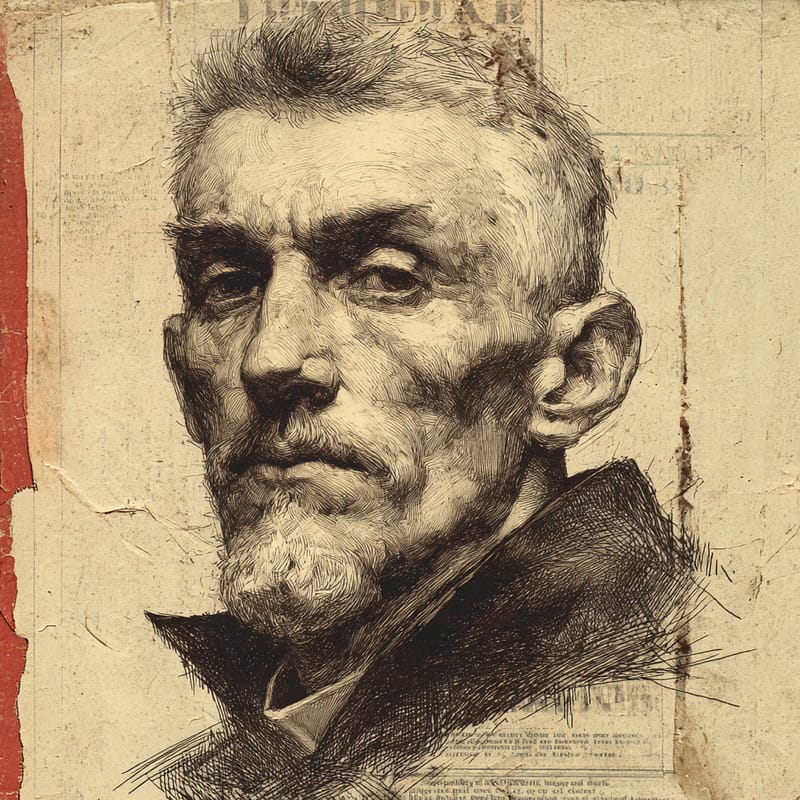
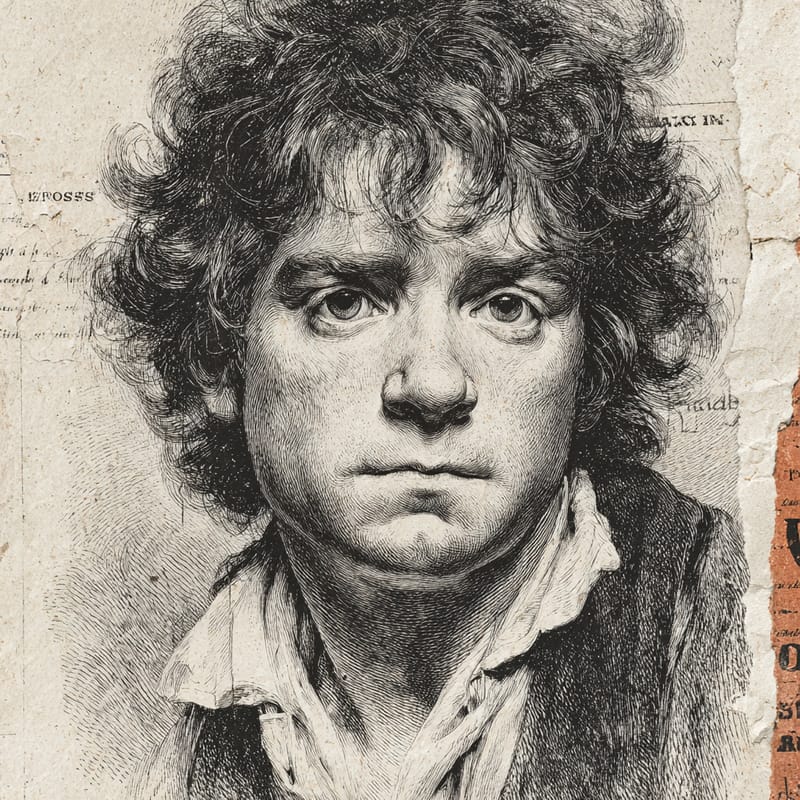
On the 99ideologies three-axis compass, the minds closest to G. K. Chesterton are Hilaire Belloc (98% alike), Vincent McNabb (97% alike) and Samwise Gamgee (97% alike). The furthest is Emma Goldman (14% alike).