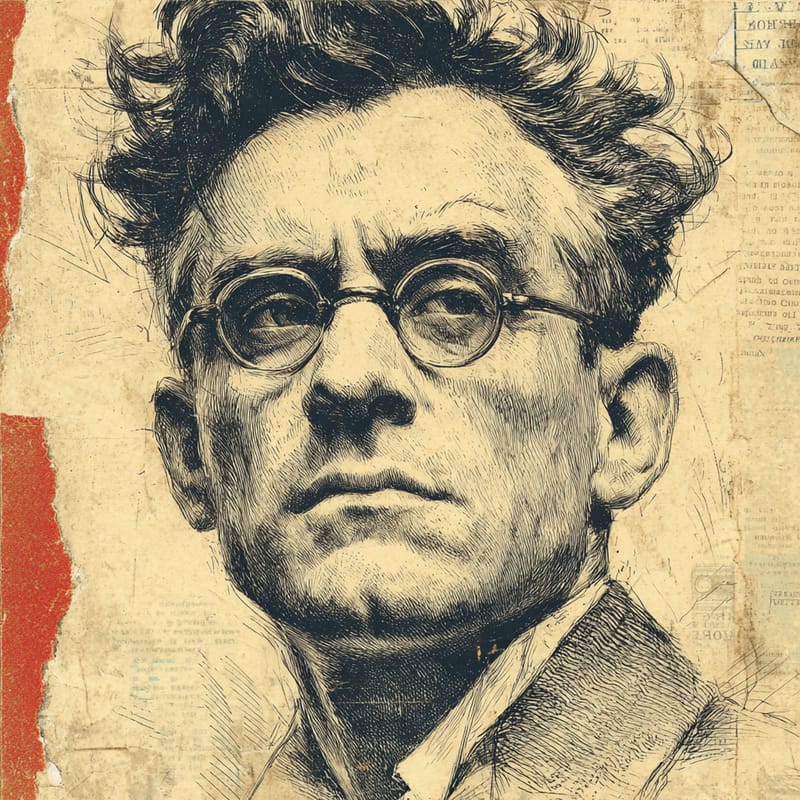
Diego Abad de Santillán
After the revolution
Planning a stateless economy.
Reformist Anarcho-SyndicalistOne of 729 ideologies · enter the Anarcho-Syndicalist hall →- Role
- Theorist & organiser
- Era
- 1897–1983
- Region
- Spain / Argentina
- Social band
- Reformist
- Placement
- −82 · −90 · +55
§ Where Diego Abad de Santillán stands
3 axesAbad de Santillán stood firmly on the left but wanted socialism to work at industrial scale. El organismo económico de la revolución (1936) rejected self-sufficient village communism in favour of a federated economy: factory councils linked through industrial unions and local, regional and federal economic councils that would coordinate production without capitalists or a state.
He opposed the state in principle and wanted economic coordination to run through union federations rather than ministries. Yet in 1936 he served on the Central Committee of Anti-Fascist Militias and then in the Catalan government, compromises he later weighed in Por qué perdimos la guerra (1940), which blamed Soviet influence and Republican centralism for the defeat.
Abad de Santillán's progressivism was secular and internationalist rather than centred on personal liberation. Working between Spain, Argentina and Germany, he edited La Protesta in the 1920s, wrote the history La FORA: ideología y trayectoria (1933) and treated workers' education and culture as part of the revolution itself.
How close are you to Diego Abad de Santillán?
Three statements, one per axis. Answer them and we’ll drop you on the compass next to them.
§ The story
HistoricalDiego Abad de Santillán (1897–1983) was the pen name of Sinesio Baudilio García Fernández, born in the province of León in Spain, who grew up partly in Argentina. After studies in Madrid he returned to Buenos Aires, where in the 1920s he became a leading figure of the anarchist FORA and an editor of the daily La Protesta, and he spent time in Berlin among German syndicalists. After the 1930 military coup brought repression in Argentina, he moved to Spain and became one of the FAI's chief intellectuals.
In July 1936 he sat on the Central Committee of Anti-Fascist Militias of Catalonia, and in December he became economy councillor in the Catalan government, making him both an architect and a critic of anarchist participation in power. His book El organismo económico de la revolución (1936), translated as After the Revolution, set out how a modern economy could run on federated worker control. After Franco's victory he returned to Argentina, wrote Por qué perdimos la guerra (1940) and edited reference works, before coming home to Spain after the dictatorship ended.
Notable for
- 01'After the Revolution'
- 02CNT-FAI economic theorist
- 03Catalan revolution participant
Key works & moments
- 1920sEdits the Buenos Aires anarchist daily La Protesta, voice of the FORA.
- 1933Publishes La FORA, a history of Argentina's anarchist labour federation.
- 1936Publishes El organismo económico de la revolución, translated in 1937 as After the Revolution.
- July 1936Joins the Central Committee of Anti-Fascist Militias of Catalonia after the military rising.
- Dec 1936Becomes economy councillor in the Catalan Generalitat, serving into spring 1937.
- 1940Publishes Por qué perdimos la guerra (Why We Lost the War) in Buenos Aires.
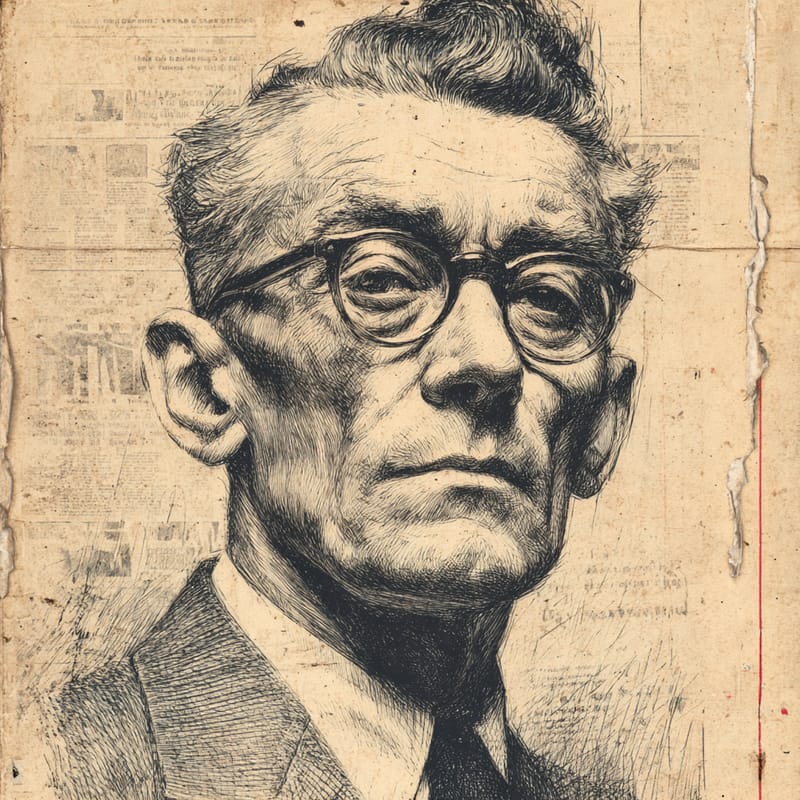
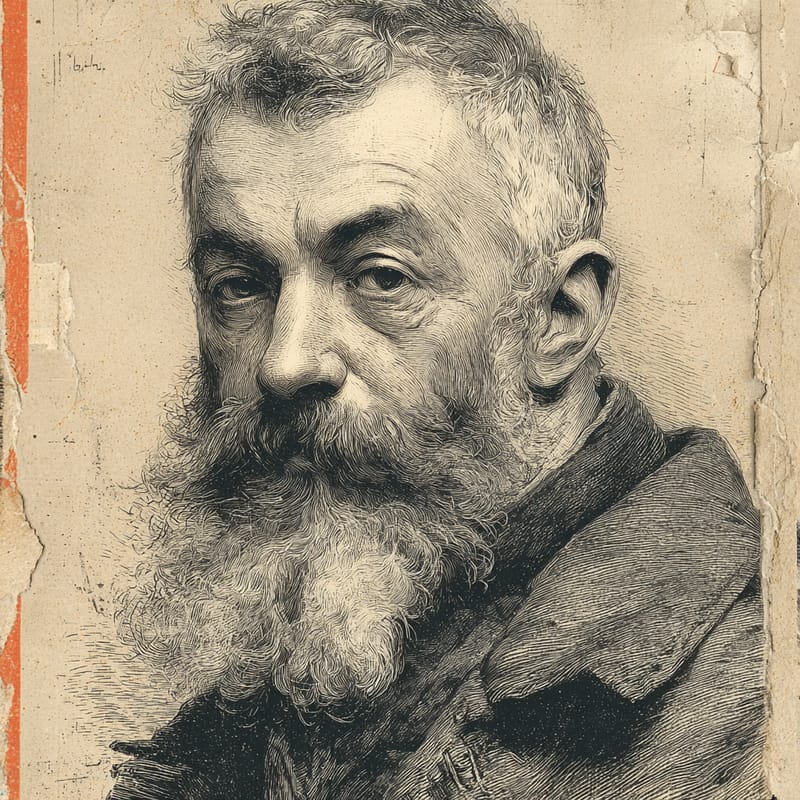
§ Minds closest to Diego Abad de Santillán
All minds →


§ Also in the Anarcho-Syndicalist hall
Enter the hall →§ Common questions
4 answersWhat was Diego Abad de Santillán's political ideology?
Diego Abad de Santillán was an anarcho-syndicalist economist and organiser: on the 99ideologies three-axis compass, a Reformist Anarcho-Syndicalist. Economically he sat firmly on the left (−82), designing a federated, worker-run economy with no capitalists. On governance he was strongly libertarian (−90), seeking coordination through union federations rather than a state, and socially he was moderately progressive (+55), a secular internationalist who worked across Spain, Argentina and Germany.
Was Diego Abad de Santillán left-wing or right-wing?
Left-wing. He devoted his life to the anarchist labour movements of Argentina and Spain, helped lead revolutionary Catalonia in 1936 and wrote a blueprint for an economy without private owners or a state. Within the left he was a pragmatist: he accepted wartime collaboration with Republican institutions and argued that anarchists needed serious economic planning, which made him a target of purists. He was firmly hostile to Soviet-style communism, which he blamed in part for the Republic's defeat.
What did Diego Abad de Santillán argue in After the Revolution?
He argued that a modern economy is too interdependent to run as a patchwork of self-sufficient communes. In El organismo económico de la revolución (1936), translated as After the Revolution in 1937, he proposed factory councils federated by industry and region, topped by a federal economic council that would gather statistics and coordinate production and distribution. The state and capitalists would disappear, but coordination would not. The book became one of the most detailed anarchist answers to how a stateless industrial society could work.
Which minds are closest to Diego Abad de Santillán?
On the 99ideologies three-axis compass, the minds closest to Diego Abad de Santillán are Alexander Schapiro (99% alike), Christian Cornelissen (98% alike) and Pierre Monatte (98% alike). The furthest is Adam Sutler (0% alike).