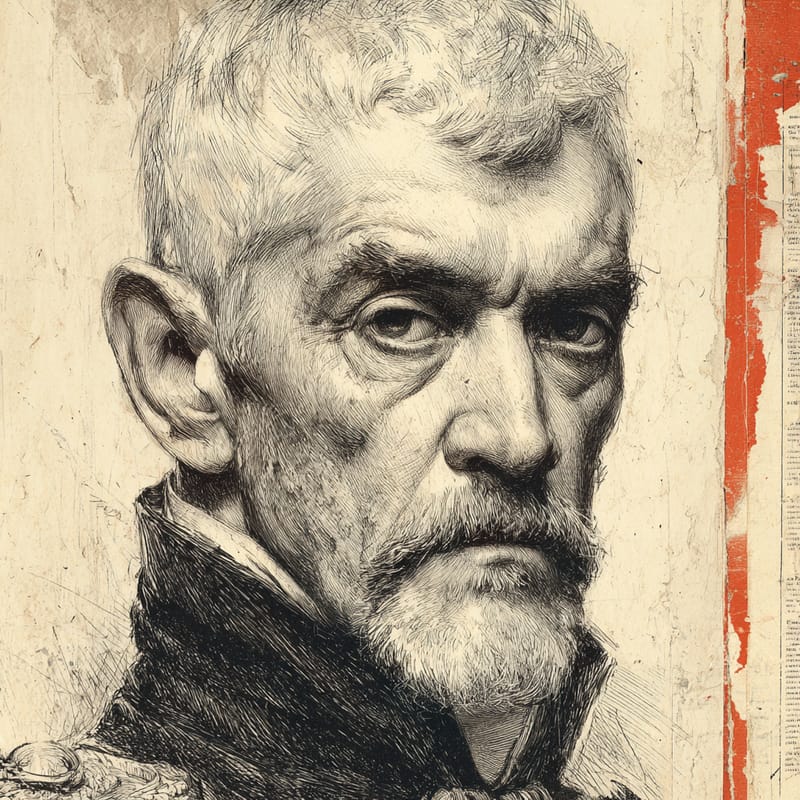
Camilo Alonso Vega
The regime's enforcer
Order kept by the iron hand.
Reactionary FrancoistOne of 729 ideologies · enter the Francoist hall →- Role
- Minister & general
- Era
- 1889–1971
- Region
- Spain
- Social band
- Reactionary
- Placement
- +46 · +94 · −80
§ Where Camilo Alonso Vega stands
3 axesA soldier rather than an economist, Alonso Vega sat in the cabinets that swapped autarky for the 1959 Stabilisation Plan and the Development Plans of the 1960s, opening Spain to foreign investment and tourism. His task was to guarantee the labour peace that growth depended on: free unions and strikes stayed illegal, and his police cracked down on stoppages such as the Asturian miners' strike of 1962.
Few men did more to police the dictatorship. As head of the Civil Guard from 1943 he led the campaign that destroyed the anti-Franco guerrillas, a counter-insurgency marked by summary killings of fighters and their rural helpers. As interior minister he oversaw the 1959 Public Order Law, the states of exception declared in the northern mining provinces in 1962 and the nationwide state of exception of January 1969.
Alonso Vega served the regime's National Catholic and centralist creed, which treated Catholic morality and a unitary Spain as beyond debate. In 1960 his police broke up a concert at Barcelona's Palau de la Música after the audience sang a Catalan song struck from the programme, and the young Catalanist Jordi Pujol was sentenced to seven years by a military court.
How close are you to Camilo Alonso Vega?
Three statements, one per axis. Answer them and we’ll drop you on the compass next to them.
§ The story
HistoricalCamilo Alonso Vega (1889–1971) was a Spanish army officer and one of Francisco Franco's oldest and most trusted companions. Born in Ferrol, Franco's home town, he entered the Toledo Infantry Academy alongside him in 1907 and, like him, made his career in the colonial war in Morocco. He fought for the Nationalists in the Civil War, then led the Civil Guard, Spain's militarised rural police, from 1943, and served as minister of the interior, or Gobernación, from 1957 to 1969.
Alonso Vega was the security backbone of the regime in its middle decades. His Civil Guard broke the anti-Franco guerrillas who held out in the mountains into the early 1950s, and as interior minister he commanded the police forces that met the strikes and student protests of the 1960s with mass arrests and states of exception. Regarded as a hardliner wary of political liberalisation, he left office in the cabinet reshuffle of October 1969 and died in 1971.
Notable for
- 01Directed the Civil Guard
- 02Franco-era interior minister
- 03Enforced the dictatorship
Key works & moments
- 1907Enters the Toledo Infantry Academy alongside his boyhood friend from Ferrol, Francisco Franco.
- 1943Becomes director-general of the Civil Guard, leading the campaign against the anti-Franco guerrillas.
- 1957Appointed minister of the interior (Gobernación), a post he holds until 1969.
- 1959A new Public Order Law gives his ministry sweeping powers to fine, detain and declare states of exception.
- 1962Oversees the crackdown on the Asturian miners' strikes, with states of exception in the north.
- 1969Enforces a nationwide state of exception in January; leaves the cabinet in October's reshuffle.
§ Minds closest to Camilo Alonso Vega
All minds →

§ Also in the Francoist hall
Enter the hall →The closest minds above are this hall’s whole roster.
§ Common questions
4 answersWhat was Camilo Alonso Vega's political ideology?
Camilo Alonso Vega was a Francoist hardliner: on the 99ideologies three-axis compass, a Reactionary Francoist. Economically he sat right of centre (+46), serving governments that opened Spain's market economy while keeping labour under tight control. On governance he was near the authoritarian maximum (+94) as head of the Civil Guard and then interior minister, and socially he was strongly traditionalist (−80), enforcing the regime's National Catholic and centralist order.
Was Camilo Alonso Vega left-wing or right-wing?
Right-wing. Alonso Vega was a career soldier from Franco's own circle who fought for the Nationalists in the Civil War and spent the following three decades policing the dictatorship. He suppressed the left-wing guerrillas of the 1940s, the communist-influenced strikes of the 1960s and regional nationalist movements, and he was regarded as an opponent of political liberalisation. Although the economy modernised under the governments he served, his role was to preserve an authoritarian, Catholic and conservative order.
What role did the Civil Guard play under Franco?
It was one of the regime's main instruments of control. Founded in 1844 as a militarised rural police force, the Civil Guard patrolled the countryside, guarded property and hunted the anti-Franco guerrillas who fought on in the mountains after 1939. Under Alonso Vega's command from 1943 it broke the guerrilla movement by the early 1950s, using harsh methods that included summary killings and reprisals against villagers suspected of helping the fighters. For many rural Spaniards it embodied the dictatorship's everyday power.
Which minds are closest to Camilo Alonso Vega?
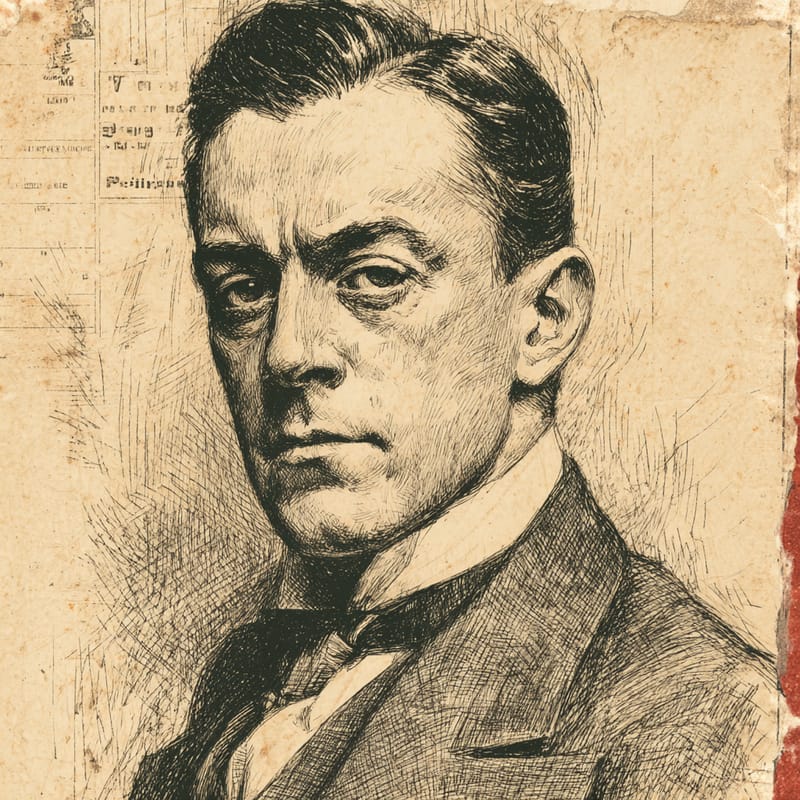
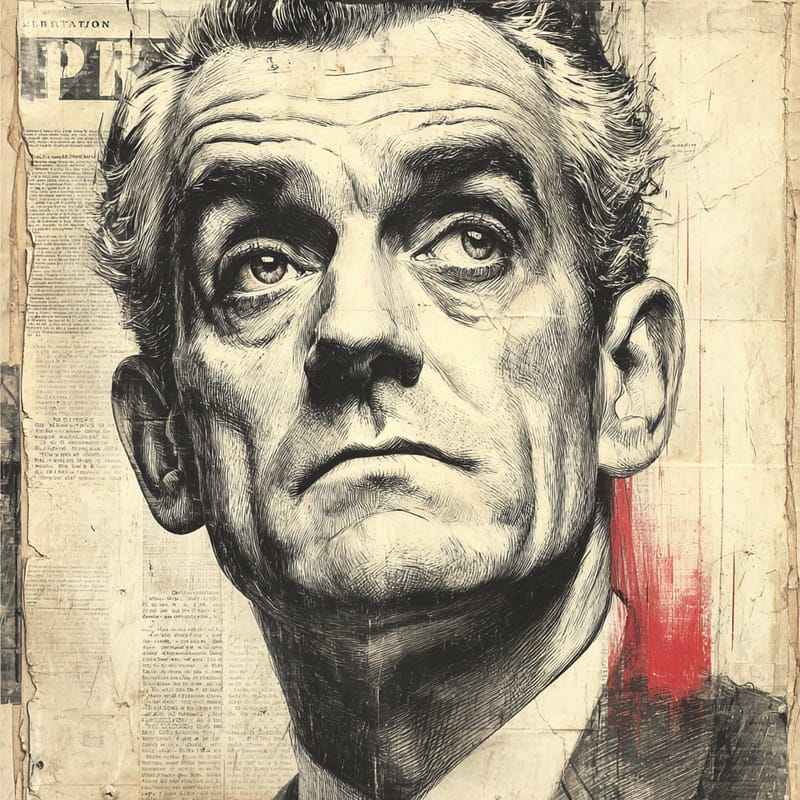
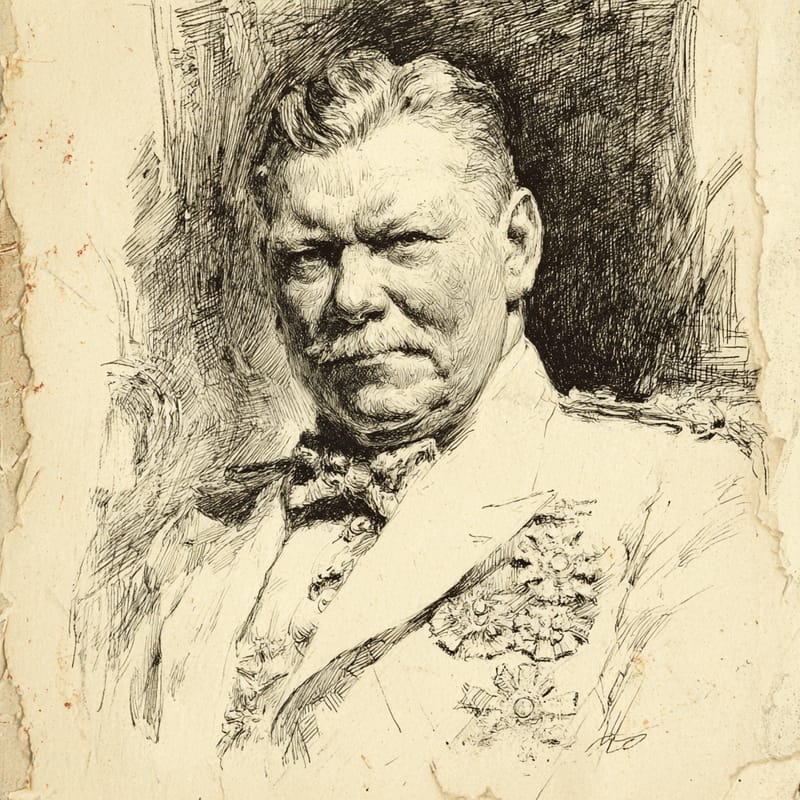
On the 99ideologies three-axis compass, the minds closest to Camilo Alonso Vega are Gonzalo Queipo de Llano (99% alike), Luis Carrero Blanco (99% alike) and Francisco Franco (98% alike). The furthest is Emma Goldman (0% alike).