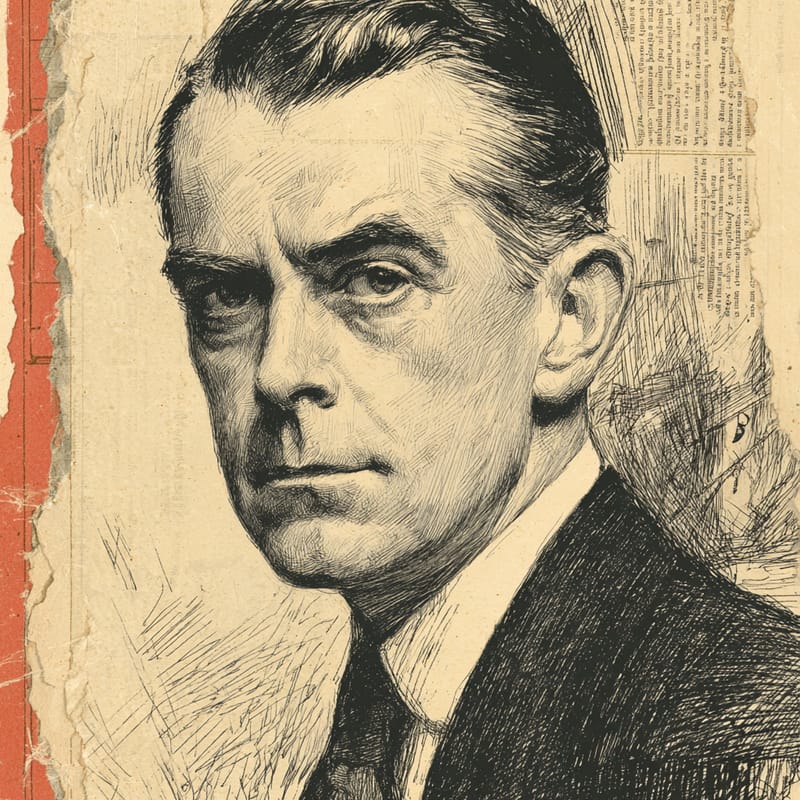
Albert Speer
The technocrat
Architecture, armaments, and evasion.
Reactionary NaziOne of 729 ideologies · enter the Nazi hall →- Role
- Armaments Minister
- Era
- 1905–1981
- Region
- Germany
- Social band
- Reactionary
- Placement
- +32 · +90 · −65
§ Where Albert Speer stands
3 axesSpeer ran the war economy through what he called industrial self-responsibility, handing production targets to committees and rings of private industrialists rather than to state officials, while the Central Planning board created in 1942 allocated raw materials. That reliance on private firms, steered by state command and fed with slave labour, is why he sits right of centre rather than at the market pole.
Speer belonged to Hitler's inner circle and wielded sweeping powers inside a dictatorship, drawing labour from Fritz Sauckel's deportations across occupied Europe and from Himmler's camps, including the underground V-2 factory at Mittelbau-Dora that he visited in December 1943. In March 1945 he obstructed Hitler's scorched-earth Nero Decree, but this late defiance came only when the war was already lost.
Speer's neoclassical designs, from the searchlight 'cathedral of light' at the Nuremberg rallies to the domed Great Hall planned for Berlin, glorified nation and leader in stone. From 1939 his Berlin building office organised the eviction of Jewish tenants to rehouse Germans displaced by demolition, feeding the later deportations, although he was less a racial fanatic than an ambitious careerist.
How close are you to Albert Speer?
Three statements, one per axis. Answer them and we’ll drop you on the compass next to them.
§ The story
HistoricalBerthold Konrad Hermann Albert Speer (1905–1981) was Adolf Hitler's favourite architect and, from 1942, the minister who ran Nazi Germany's war production. Born in Mannheim into a family of architects, he trained under Heinrich Tessenow in Berlin and joined the Nazi Party in 1931. Commissions for party buildings and the Nuremberg rally grounds won him Hitler's friendship; in 1937 he became General Building Inspector for Berlin, planning a monumental new capital, and in 1939 he completed the New Reich Chancellery.
When Fritz Todt died in a plane crash in February 1942, Hitler made Speer minister of armaments, and weapons output rose sharply until 1944 on the backs of millions of forced labourers and concentration camp prisoners. At Nuremberg he accepted collective responsibility while denying knowledge of the Holocaust, and served his full 20-year sentence in Spandau. His bestselling memoirs built the myth of the apolitical 'good Nazi'; later research, including a 1971 letter made public in 2007 in which he admitted hearing Himmler announce the extermination of the Jews at Posen in 1943, dismantled it.
Notable for
- 01Nazi armaments production
- 02Monumental state architecture
- 03Disputed Nuremberg defence
Key works & moments
- 1931Joins the Nazi Party after hearing Hitler address students in Berlin.
- 1937Appointed General Building Inspector for Berlin, charged with rebuilding it as the monumental capital Germania.
- 1939Completes Hitler's monumental New Reich Chancellery in Berlin in January.
- 1942Succeeds Fritz Todt as minister for armaments and munitions in February.
- 1946Convicted at Nuremberg of war crimes and crimes against humanity; sentenced to 20 years.
- 1969Publishes his memoirs, a bestseller translated the following year as Inside the Third Reich.
§ Minds closest to Albert Speer
All minds →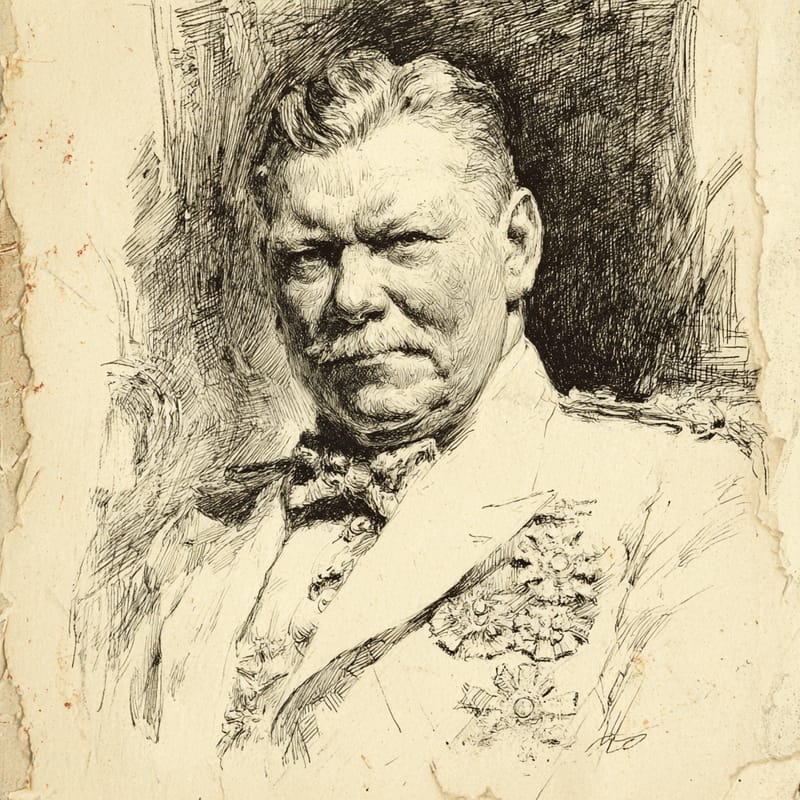

§ Also in the Nazi hall
Enter the hall →§ Common questions
4 answersWhat was Albert Speer's political ideology?
Albert Speer was a Nazi: on the 99ideologies three-axis compass, a Reactionary Nazi. Economically he sat right of centre (+32), running the war economy through private industrialists under state command. On governance he was near the authoritarian extreme (+90) as a member of Hitler's inner circle who mobilised forced labour on a vast scale, and socially he was strongly traditionalist (−65), designing monumental nationalist architecture and evicting Berlin's Jews from their homes. After the war he claimed to have been an apolitical technocrat.
Was Albert Speer left-wing or right-wing?
Right-wing, on the far right. Speer was a senior minister of the Nazi dictatorship, an ultranationalist and racist regime that destroyed parties, unions and parliament. His economic management favoured big private industry over state ownership, and his architecture celebrated nation and leader. After 1945 he presented himself as a technician who merely did his job, but high office in Hitler's government and the exploitation of millions of forced labourers place him firmly on the authoritarian right.
Did Albert Speer know about the Holocaust?
Almost certainly, despite decades of denial. Speer attended the October 1943 meeting at Posen at which Himmler spoke openly about exterminating the Jews, and a 1971 letter made public in 2007 shows he privately admitted being present. His ministry drew labour from concentration camps, he visited the Mittelbau-Dora tunnels, and his Berlin office evicted Jewish tenants. At Nuremberg, accepting general responsibility while denying specific knowledge helped spare him the gallows, a strategy that biographers such as Gitta Sereny later unpicked.
Which minds are closest to Albert Speer?
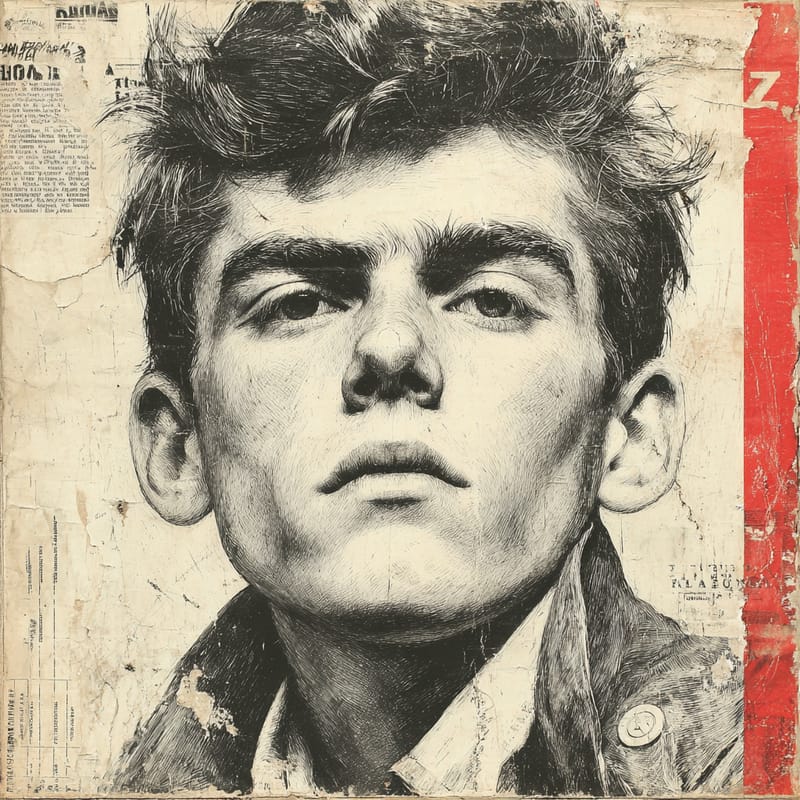
On the 99ideologies three-axis compass, the minds closest to Albert Speer are Hermann Göring (96% alike), Frederick Zoller (94% alike) and Hans Landa (94% alike). The furthest is Emma Goldman (0% alike).