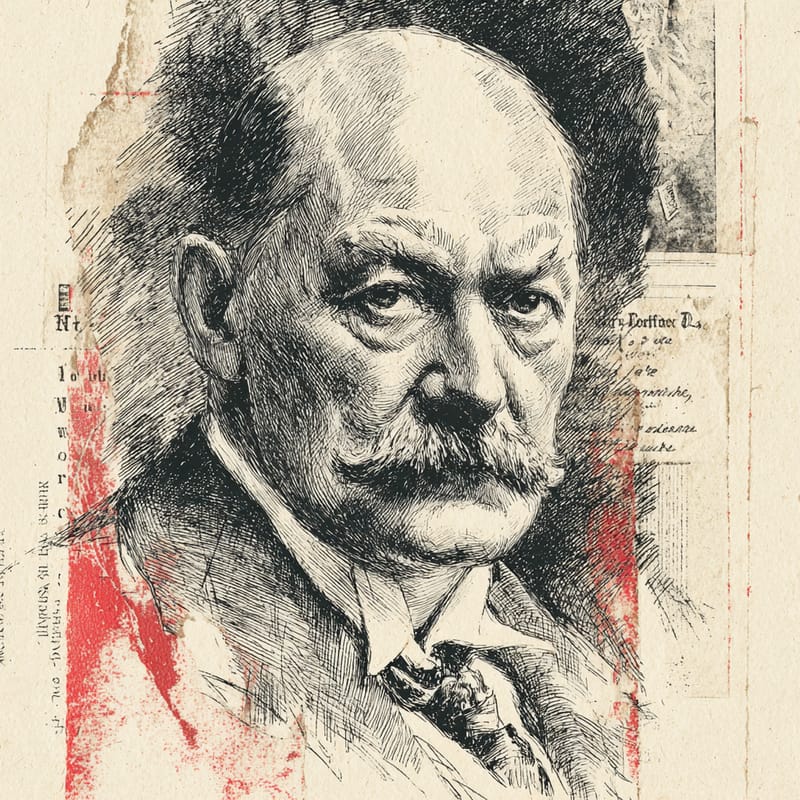
Julius Streicher
The hate-sheet publisher
Incitement as a vocation.
Restorationist NaziOne of 729 ideologies · enter the Nazi hall →- Role
- Propaganda publisher
- Era
- 1885–1946
- Region
- Germany
- Social band
- Restorationist
- Placement
- +18 · +90 · −88
§ Where Julius Streicher stands
3 axesStreicher had no economic programme beyond racial plunder. Der Stürmer cast Jews as usurers and swindlers exploiting German workers, and after the November 1938 pogrom his Franconian party apparatus pressured Jewish owners into signing over property far below its value, enriching his circle until a party inquiry exposed it. That private enrichment through expropriation, rather than any wish to socialise property, places him just right of centre.
As Gauleiter, Streicher ran Franconia as a personal fiefdom, and in 1933 he chaired the committee that organised the national boycott of Jewish businesses on 1 April. He used his paper to demand ever harsher persecution and to intimidate opponents; even within the party his violence and slanders became an embarrassment, and he was removed from his functions in 1940.
Streicher's antisemitism was extreme even by Nazi standards. Der Stürmer carried the slogan 'The Jews are our misfortune', revived the medieval blood libel in a special ritual-murder issue in 1934 and printed demands for the extermination of the Jews during the war. In August 1938 he had Nuremberg's main synagogue demolished, and his publishing house turned out antisemitic picture books for children.
How close are you to Julius Streicher?
Three statements, one per axis. Answer them and we’ll drop you on the compass next to them.
§ The story
HistoricalJulius Streicher (1885–1946) was the publisher of Der Stürmer, the Nazi movement's most notorious antisemitic newspaper, and the party's boss in Franconia. A primary school teacher in Nuremberg and a decorated veteran of the First World War, he led a small antisemitic party in the city before bringing his followers into the Nazi Party in 1922, a significant boost for Hitler's movement outside Munich. He marched in the 1923 Beer Hall Putsch, founded Der Stürmer that year and from the mid-1920s led the party in Franconia as Gauleiter.
Der Stürmer peddled pornographic caricatures, medieval ritual-murder libels and calls for the destruction of the Jews, and its publishing house produced antisemitic children's books such as Der Giftpilz (1938). Streicher's corruption and feuds led the party to strip him of his functions in 1940, but he kept publishing until 1945. Although he held no military or ministerial office, the Nuremberg tribunal convicted him of crimes against humanity for inciting murder while Jews were being exterminated, and he was hanged on 16 October 1946.
Notable for
- 01Published 'Der Stürmer'
- 02Convicted at Nuremberg for incitement
- 03Extreme antisemitic propaganda
Key works & moments
- 1922Brings his Nuremberg followers into the Nazi Party, extending Hitler's movement into Franconia.
- 1923Founds the antisemitic weekly Der Stürmer in Nuremberg and marches in the Beer Hall Putsch.
- 1933Directs the nationwide boycott of Jewish shops and businesses on 1 April.
- 1938Has Nuremberg's main synagogue demolished in August, three months before Kristallnacht.
- 1940Stripped of his party functions after a corruption inquiry, but keeps publishing Der Stürmer.
- 1946Convicted of crimes against humanity at Nuremberg and hanged on 16 October.
§ Minds closest to Julius Streicher
All minds →
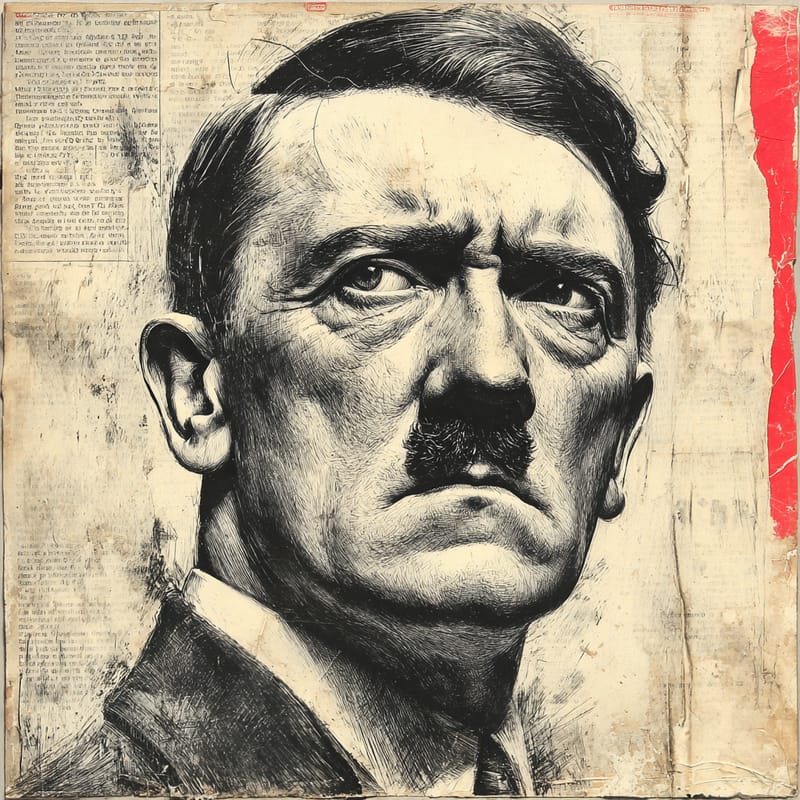


§ Also in the Nazi hall
Enter the hall →§ Common questions
4 answersWhat was Julius Streicher's political ideology?
Julius Streicher was a Nazi and the regime's most notorious antisemitic propagandist: on the 99ideologies three-axis compass, a Restorationist Nazi. Economically he sat just right of centre (+18), with no programme beyond seizing Jewish property. On governance he was strongly authoritarian (+90) as party boss of Franconia and organiser of the 1933 boycott, and socially he was near the reactionary extreme (−88), spreading medieval blood libels and calling for the destruction of the Jews.
Was Julius Streicher left-wing or right-wing?
Far right. Streicher came to Nazism from the völkisch antisemitic movement of post-1918 Bavaria, and his entire career was built on racial hatred rather than economic reform. Der Stürmer attacked 'Jewish' capitalism, but only to scapegoat Jews; Streicher never proposed common ownership and his circle profited from the expropriation of Jewish property. His ultranationalism, racism and loyalty to Hitler place him at the extreme authoritarian right.
Why was Julius Streicher executed at Nuremberg?
Because the tribunal found that his propaganda amounted to a crime against humanity. Streicher held no military command and no longer had party functions during most of the war, but the judges ruled that by inciting the murder and extermination of Jews in Der Stürmer at a time when they were being killed in the East, he was guilty of persecution on political and racial grounds. Acquitted of conspiracy, he was hanged in 1946. His case remains a key precedent for prosecuting incitement, cited by the Rwanda tribunal in 2003.
Which minds are closest to Julius Streicher?
On the 99ideologies three-axis compass, the minds closest to Julius Streicher are Heinrich Himmler (96% alike), Joseph Goebbels (96% alike) and Reinhard Heydrich (96% alike). The furthest is Emma Goldman (0% alike).