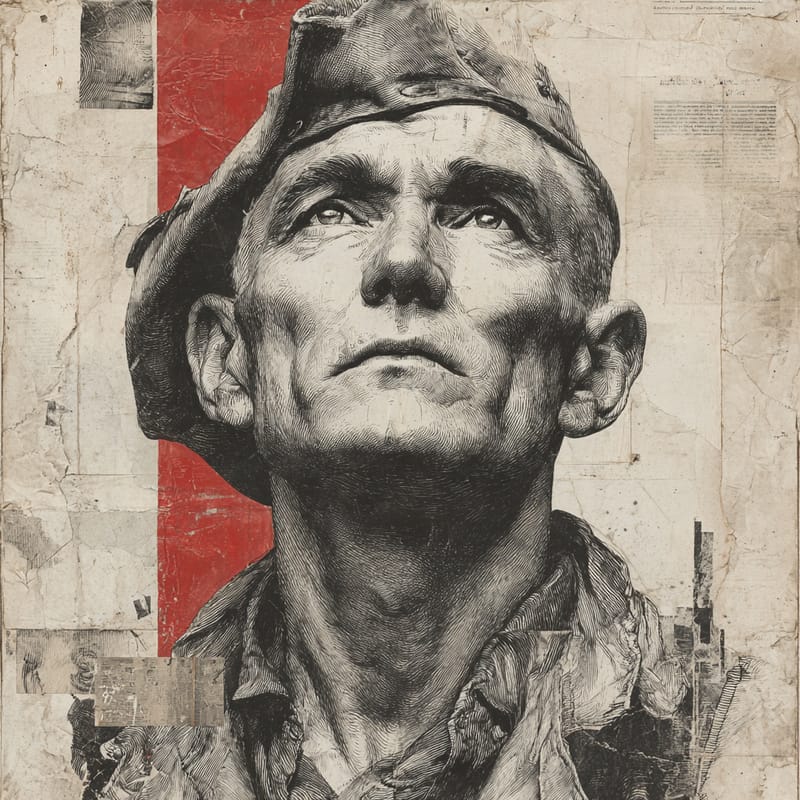
The Federation (illustrative)
Post-scarcity cooperation
Work for betterment, not profit.
Reformist Market SocialistOne of 729 ideologies · enter the Market Socialist hall →- Role
- Post-scarcity society (fiction)
- From
- Star Trek
- Region
- United Federation of Planets
- Social band
- Reformist
- Placement
- −72 · −6 · +60
§ Where The Federation (illustrative) stands
3 axesThe Federation's core economy is post-scarcity: replicators and abundant energy provide food and goods, and in Star Trek: First Contact (1996) Captain Picard tells a 21st-century woman that money does not exist in his century. Yet markets survive at the edges, from family vineyards and restaurants to trade in latinum with the Ferengi in Deep Space Nine (1993–99), which is why it reads as market socialism rather than full communism.
The Federation is a democratic union of self-governing member worlds, with an elected president based in Paris and a Federation Council, and its Prime Directive forbids interference in less developed societies. Its power rests on Starfleet, a disciplined military-exploratory hierarchy, and Deep Space Nine (1993–99) reveals Section 31, a secret agency operating beyond the law, which tempers its liberal ideals.
Socially the Federation is strongly progressive. Roddenberry's original series put a multiracial, multinational crew on the bridge, and its 1968 episode 'Plato's Stepchildren' featured one of the first interracial kisses on American television. The Vulcan ideal of infinite diversity in infinite combinations sums up its pluralism, and later series added openly gay characters, notably in Star Trek: Discovery (2017).
How close are you to The Federation (illustrative)?
Three statements, one per axis. Answer them and we’ll drop you on the compass next to them.
§ The story
FictionThe United Federation of Planets is the interstellar union at the centre of Star Trek, the franchise created by Gene Roddenberry, whose original television series ran on NBC from 1966 to 1969. Founded in the 22nd century by humans, Vulcans, Andorians and Tellarites, it grows to embrace many worlds under an elected president and a Federation Council, while its exploratory and defence service, Starfleet, carries its values across the galaxy under the Prime Directive of non-interference in less developed societies.
The Federation is fiction's best-known picture of a post-scarcity society: by the era of The Next Generation money has largely disappeared, replicators meet material needs and people work for self-improvement and service. It reflects the optimistic liberal internationalism of 1960s America and Roddenberry's secular humanism, and writers on the left and right have long debated whether it amounts to socialism. Later series, above all Deep Space Nine, darkened the picture with war, moral compromise and a rogue intelligence agency, Section 31.
Notable for
- 01Post-scarcity society (in-story)
- 02'We work to better ourselves'
- 03Cooperative-economy archetype
Key works & moments
- 1966Star Trek premieres on NBC, introducing the Federation through the starship Enterprise.
- 1968'Plato's Stepchildren' airs a kiss between Captain Kirk and Lieutenant Uhura.
- 1987Star Trek: The Next Generation depicts a Federation largely free of money and want.
- 1993–99Deep Space Nine tests Federation ideals through war, the Maquis rebellion and Section 31.
- 1996In Star Trek: First Contact, Picard explains that the 24th century has left money behind.
- 2005Star Trek: Enterprise's finale depicts the founding of the Federation.
In The Federation (illustrative)'s words
“The acquisition of wealth is no longer the driving force in our lives. We work to better ourselves and the rest of humanity.”
§ Minds closest to The Federation (illustrative)
All minds →





§ Also in the Market Socialist hall
Enter the hall →§ Common questions
4 answersWhat is the Star Trek Federation's political ideology?
The United Federation of Planets is a post-scarcity democratic federation: on the 99ideologies three-axis compass, a Reformist Market Socialist. Economically it sits well to the left (−72), with replicators and common provision replacing the profit motive while small markets survive. On governance it is close to the centre (−6), combining elected civilian government with a hierarchical Starfleet, and socially it is strongly progressive (+60), egalitarian, multicultural and committed to diversity.
Is the Star Trek Federation left-wing or right-wing?
Left of centre on most measures. The Federation has ended the pursuit of wealth as a driving force, meets everyone's material needs and celebrates equality and diversity, all ideals associated with the left. But it is also a liberal democracy with a strong military, respect for individual rights and private enterprise at its fringes, so readers on the right claim parts of it too. It is best read as a utopian, post-scarcity form of market socialism.
Is the Federation in Star Trek communist?
Not in the Soviet sense, though fans and critics often ask. The Federation has no money in its core economy and no class living off capital, which resembles Marx's vision of a classless society of abundance. But it has no ruling party, no twentieth-century command economy and no suppression of dissent, and the original series was made during the Cold War, with the Klingons often read as a stand-in for the Soviet Union. Its blend of abundance, democracy and residual markets is closer to democratic market socialism.
Which minds are closest to The Federation (illustrative)?
On the 99ideologies three-axis compass, the minds closest to The Federation (illustrative) are John Roemer (97% alike), David Schweickart (96% alike) and Herbert Marcuse (92% alike). The furthest is Adam Sutler (3% alike).