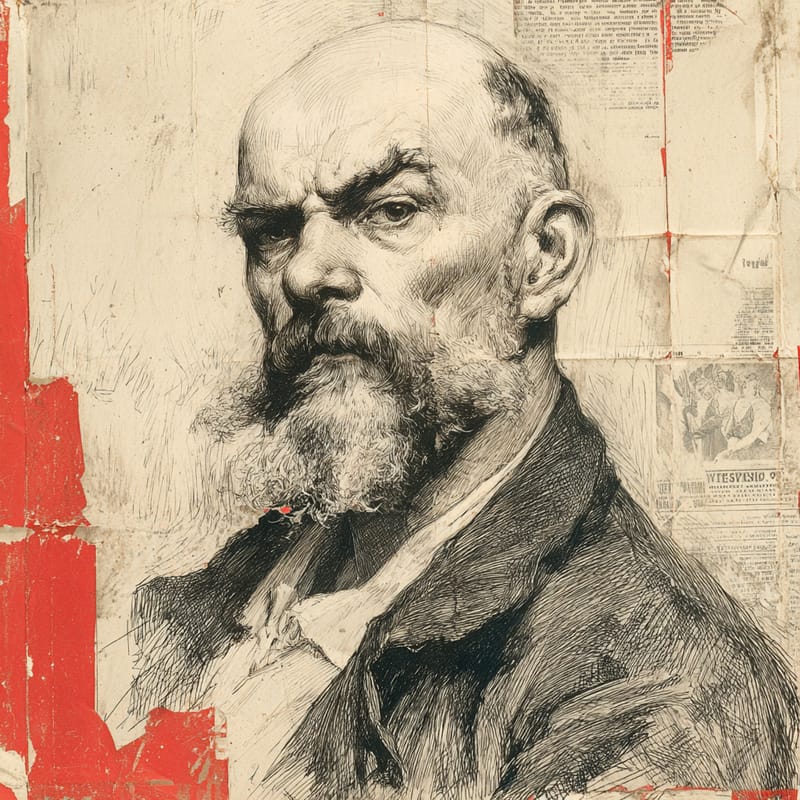
Tom Mann
The agitator
Carried syndicalism across the world.
Reformist SyndicalistOne of 729 ideologies · enter the Syndicalist hall →- Role
- Union leader
- Era
- 1856–1941
- Region
- United Kingdom
- Social band
- Reformist
- Placement
- −76 · −24 · +48
§ Where Tom Mann stands
3 axesMann wanted workers organised by industry to take control of production. His 1886 pamphlet on the eight-hour day began a lifetime of campaigning for shorter hours and higher pay, and from 1910 his paper The Industrial Syndicalist argued that sectional craft unions should merge into industrial unions able to displace private employers and run the industries themselves.
Mann's faith shifted from Parliament to direct action. After standing unsuccessfully for Parliament in the 1890s, he concluded that the strike, not the ballot box, was labour's real weapon, and his syndicalist league preached workers' control and the general strike. His later move into the Communist Party showed the limits of his anti-statism, but he remained above all a rank-and-file agitator.
An internationalist who organised workers on three continents, Mann carried the same message to London's docks, the mines of Broken Hill and Liverpool's transport unions. He championed the unskilled and casual labourers whom the older craft unions had ignored, and his 1912 conviction for urging soldiers not to fire on strikers made him a symbol of working-class solidarity.
How close are you to Tom Mann?
Three statements, one per axis. Answer them and we’ll drop you on the compass next to them.
§ The story
HistoricalTom Mann (1856–1941) was an English trade unionist and socialist agitator. Born near Coventry, he left school young, trained as an engineer and joined the Social Democratic Federation in 1885, campaigning for the eight-hour day. With John Burns and Ben Tillett he led the 1889 London Dock Strike, which won dockers sixpence an hour, and he became first president of the new dockers' union. He later served as secretary of the Independent Labour Party and in 1898 founded the Workers' Union for general labourers.
From 1901 to 1910 Mann agitated in Australia and New Zealand, then returned as Britain's leading syndicalist, founding the Industrial Syndicalist Education League in 1910 and chairing the strike committee of the 1911 Liverpool transport strike. In 1912 he was jailed for reprinting an appeal urging soldiers not to shoot strikers. He became general secretary of the Amalgamated Society of Engineers in 1919 and was a founding member of the Communist Party of Great Britain, remaining a celebrated agitator into his eighties.
Notable for
- 01Led the 1889 London Dock Strike
- 02Spread syndicalism internationally
- 03Lifelong labour agitator
Key works & moments
- 1886Publishes a pamphlet demanding a compulsory eight-hour working day.
- 1889Helps lead the London Dock Strike, which wins dockers sixpence an hour.
- 1898Founds the Workers' Union for general and unskilled labourers.
- 1910Back from Australasia, launches the Industrial Syndicalist Education League.
- 1911Chairs the strike committee of the Liverpool general transport strike.
- 1912Jailed for reprinting the Don't Shoot appeal urging soldiers not to fire on strikers.
§ Minds closest to Tom Mann
All minds →


§ Also in the Syndicalist hall
Enter the hall →§ Common questions
4 answersWhat was Tom Mann's political ideology?
Tom Mann was a socialist trade unionist who became Britain's leading syndicalist: on the 99ideologies three-axis compass, a Reformist Syndicalist. Economically he sat far to the left (−76), wanting industrial unions to take control of production. On governance he leaned libertarian (−24), preferring strikes and direct action to parliamentary politics, although he later joined the Communist Party. Socially he was progressive (+48), an internationalist who organised unskilled workers on three continents.
Was Tom Mann left-wing or right-wing?
Left-wing throughout a career of more than half a century. Mann moved from the Marxist Social Democratic Federation to the Independent Labour Party, then to syndicalism after 1910 and finally to the Communist Party of Great Britain, but every stage aimed at ending capitalism and putting workers in control of industry. What changed was his strategy: he lost faith in winning power through Parliament and came to see strikes and industrial unions as labour's real weapons.
What was the 1889 London Dock Strike?
It was a strike by tens of thousands of casual dockers in the Port of London in August and September 1889, led by Ben Tillett, John Burns and Tom Mann. The dockers demanded sixpence an hour, the dockers' tanner, and an end to the worst abuses of casual hiring. After about five weeks, helped by large donations from Australian unions, the employers conceded most demands. The victory sparked the New Unionism, the organisation of unskilled and general workers that transformed British labour.
Which minds are closest to Tom Mann?
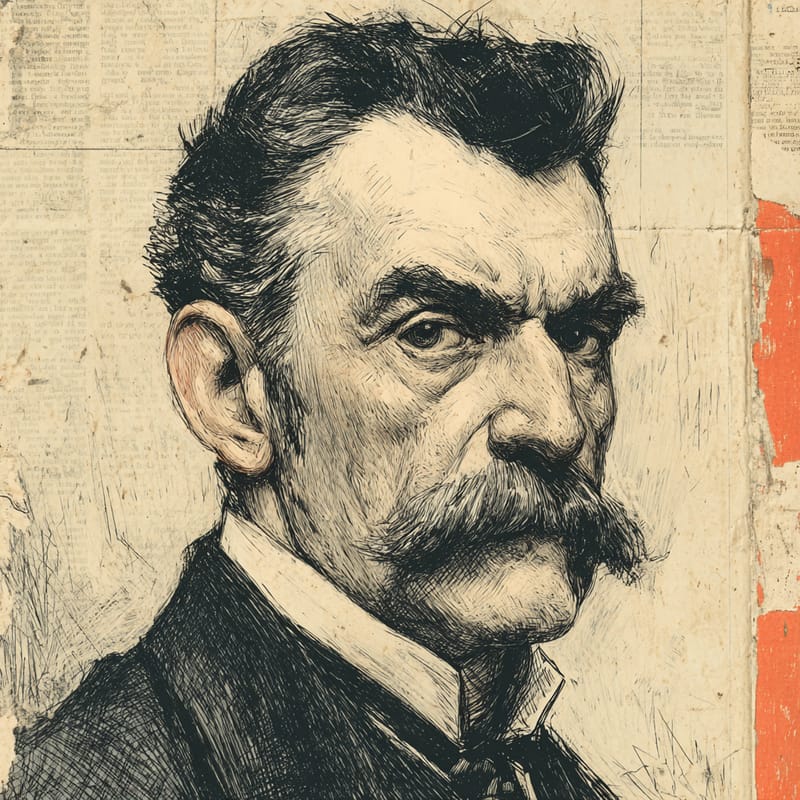
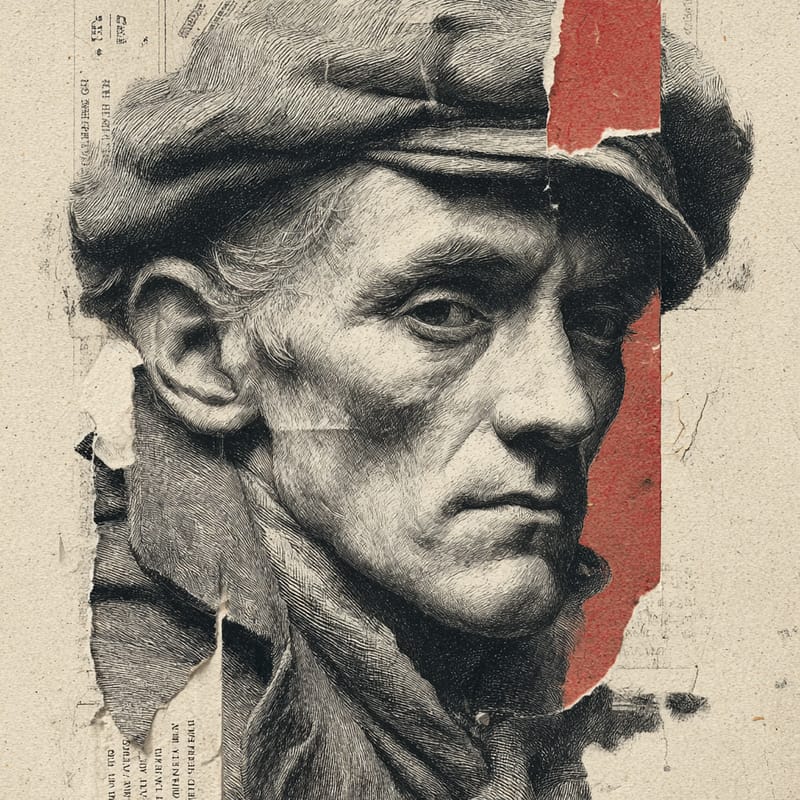
On the 99ideologies three-axis compass, the minds closest to Tom Mann are Big Bill Haywood (99% alike), Fernand Pelloutier (98% alike) and James Connolly (98% alike). The furthest is Adam Sutler (2% alike).