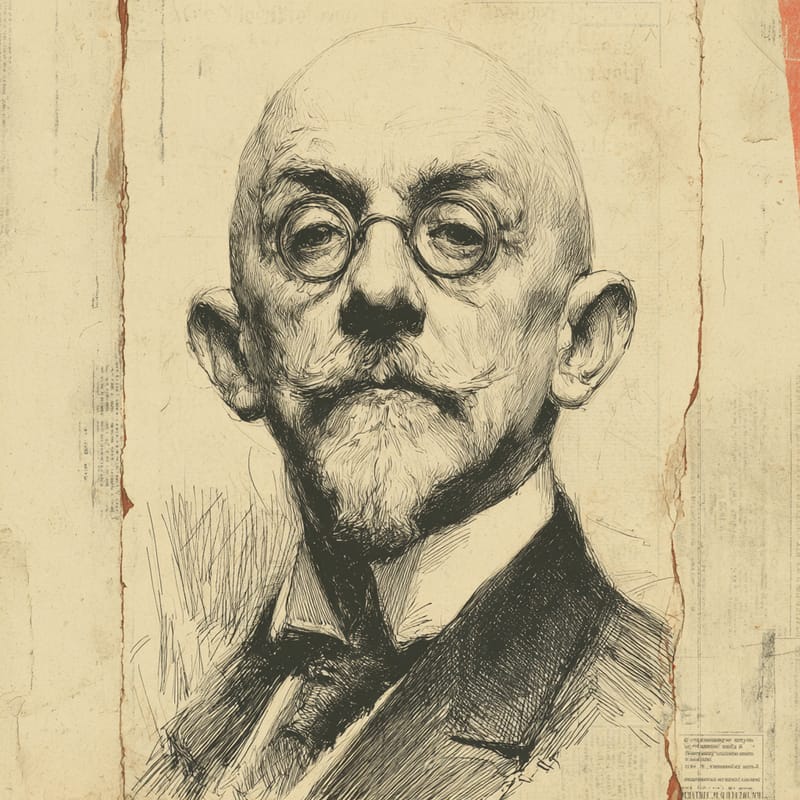
Oliveira Vianna
The corporatist theorist
Authority over liberal individualism.
Reactionary IntegralistOne of 729 ideologies · enter the Integralist hall →- Role
- Jurist & theorist
- Era
- 1883–1951
- Region
- Brazil
- Social band
- Reactionary
- Placement
- −2 · +74 · −66
§ Where Oliveira Vianna stands
3 axesOliveira Vianna sought neither free-market capitalism nor socialism but a corporatist organisation of labour and capital under state tutelage. As legal adviser to the Ministry of Labour from 1932 he helped design officially recognised single unions for each occupational category and labour courts to arbitrate disputes, a system that left property private while placing class relations under public law.
Oliveira Vianna argued that an authoritarian, centralised state suited Brazil better than liberal democracy. In O idealismo da Constituição (1927) he attacked the 1891 republic's liberal institutions as idealist imports, and he served the regime that culminated in Vargas's Estado Novo dictatorship of 1937–45, which closed congress and banned political parties.
Oliveira Vianna's social outlook was hierarchical and elitist. Populações meridionais do Brasil (1920) and Raça e assimilação (1932) drew on scientific racism to argue for the superiority of an Aryan elite and the gradual whitening of Brazil's mixed population through European immigration, views central to the reactionary cast of his thought and long since discredited.
How close are you to Oliveira Vianna?
Three statements, one per axis. Answer them and we’ll drop you on the compass next to them.
§ The story
HistoricalFrancisco José de Oliveira Vianna (1883–1951) was a Brazilian jurist, sociologist and historian. Born in Saquarema in Rio de Janeiro state, he trained in law, taught at the law faculty in Niterói and won fame with Populações meridionais do Brasil (1920), a study of the rural clans and landed elites he believed had shaped Brazilian society. From 1932 to 1940 he served as legal adviser to Getúlio Vargas's Ministry of Labour, before joining the Federal Court of Accounts.
Oliveira Vianna was one of the chief intellectual architects of the Vargas state. He argued that Brazil's liberal 1891 constitution was an imported fantasy unsuited to a fragmented society of clans, and that only a strong central state could forge national solidarity; his drafts helped shape the corporatist trade-union law and labour courts later consolidated in the 1943 Labour Code. His legacy is divided: the labour system endured for decades, but his writings also promoted scientific racism and the whitening of Brazil's population.
Notable for
- 01Corporatist legal theory
- 02Shaped Estado Novo labour law
- 03Critic of liberalism
Key works & moments
- 1920Publishes Populações meridionais do Brasil, his study of Brazil's rural clans and landed elite.
- 1927Publishes O idealismo da Constituição, attacking the liberal 1891 constitution as an imported fantasy.
- 1932Becomes legal adviser to Vargas's Ministry of Labour, drafting union and labour legislation.
- 1940Appointed a minister of the Federal Court of Accounts.
- 1943The Consolidation of Labour Laws codifies the corporatist labour order he helped design.
- 1949Publishes Instituições políticas brasileiras, a summation of his theory of Brazilian politics.
§ Minds closest to Oliveira Vianna
All minds →

§ Also in the Integralist hall
Enter the hall →The closest minds above are this hall’s whole roster.
§ Common questions
4 answersWhat was Oliveira Vianna's political ideology?
Oliveira Vianna was an authoritarian corporatist and a theorist of the strong national state: on the 99ideologies three-axis compass, a Reactionary Integralist. Economically he sat at the centre (−2), organising labour and capital into state-recognised corporations while leaving property private. On governance he was strongly authoritarian (+74), arguing that Brazil needed central authority rather than liberal democracy. Socially he was deeply traditional (−66), defending hierarchy, elite rule and racial theories now discredited.
Was Oliveira Vianna left-wing or right-wing?
Right-wing, of an authoritarian and corporatist kind. Oliveira Vianna rejected both liberal individualism and Marxist class struggle, proposing instead a state that would harmonise employers and workers from above. His labour laws gave Brazilian workers new protections, which is why parts of the left later defended the system, but his anti-democratic politics, elitism and racial thinking place him on the conservative right.
Was Oliveira Vianna an integralist?
Not formally. He never belonged to Plínio Salgado's Brazilian Integralist Action, the green-shirted movement that the Vargas regime suppressed in 1937–38, and he served Vargas's state as a jurist rather than as a party militant. But he shared integralism's core ideas: rejection of liberal democracy, an organic and hierarchical vision of the nation, and corporatist harmony between capital and labour under a strong state. That is why he is often grouped with the integralist tradition in the broad sense.
Which minds are closest to Oliveira Vianna?
On the 99ideologies three-axis compass, the minds closest to Oliveira Vianna are Othmar Spann (97% alike), The Corporate State (archetype) (97% alike) and Miguel Primo de Rivera (96% alike). The furthest is Emma Goldman (3% alike).