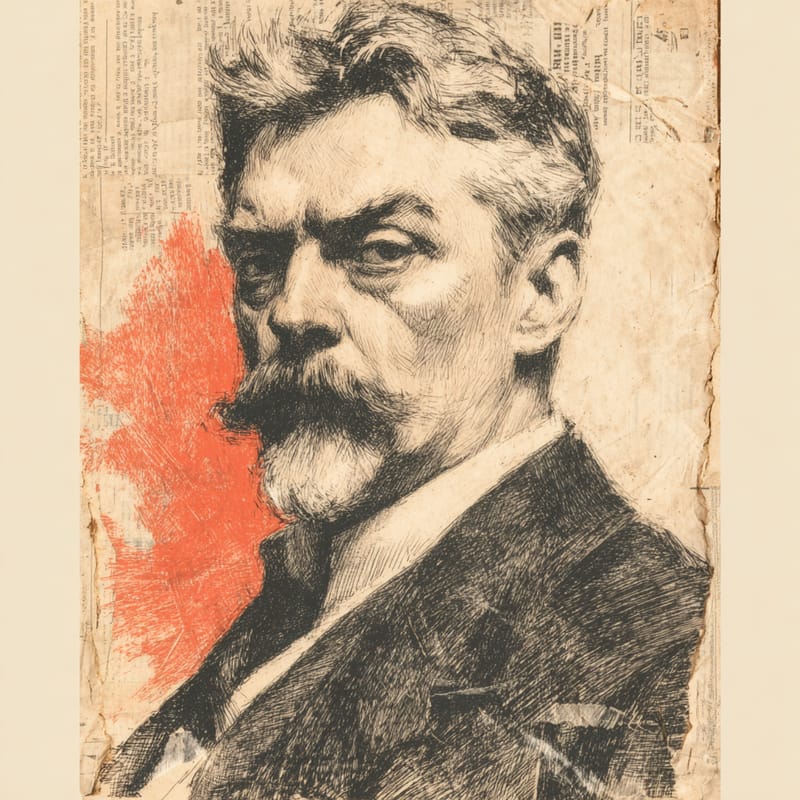
Herman Gorter
Reply to Lenin
Council communism's manifesto.
Reformist Council CommunistOne of 729 ideologies · enter the Council Communist hall →- Role
- Poet & theorist
- Era
- 1864–1927
- Region
- Netherlands
- Social band
- Reformist
- Placement
- −90 · −72 · +44
§ Where Herman Gorter stands
3 axesGorter sought a fully communist economy, held in common and run by the workers themselves. In Historical Materialism Explained for Workers (1908) he set out Marx's theory for a popular audience, and his Open Letter to Comrade Lenin (1920) argued that in Western Europe the working class stood alone against capital and could win only through its own mass action and factory organisations.
His Open Letter of 1920 rejected parliamentary participation and work inside the old trade unions, arguing that tactics suited to Russia's peasant society would lead Western workers into compromise. He favoured factory organisations and workers' councils, yet unlike Otto Rühle he still defended a small, disciplined party of conscious revolutionaries such as the KAPD.
Gorter's progressivism was that of a romantic revolutionary. His poetry moved from the lyrical individualism of Mei (1889) to the socialist vision of Pan (1912), which imagined humanity united in a free communist society. A committed internationalist, he condemned the First World War as an imperialist war in a 1914 Marxist study of imperialism and social democracy.
How close are you to Herman Gorter?
Three statements, one per axis. Answer them and we’ll drop you on the compass next to them.
§ The story
HistoricalHerman Gorter (1864–1927) was a Dutch poet and Marxist theorist. A classicist by training, he became famous with the long poem Mei (May) in 1889, a landmark of the Tachtigers, the generation of the 1880s that renewed Dutch literature. In the 1890s he turned to Marxism, joining the Social Democratic Workers' Party in 1897 and becoming, with Anton Pannekoek and Henriette Roland Holst, a leader of its radical Marxist wing.
After the party expelled the editors of the left-wing paper De Tribune in 1909, Gorter co-founded the Social Democratic Party, which became the Dutch Communist Party in 1918. In 1920 his Open Letter to Comrade Lenin answered Lenin's Left-Wing Communism, defending the anti-parliamentary German and Dutch left, and he argued the case of the German KAPD before the Communist International in Moscow. He went on to help found the short-lived Communist Workers' International in 1922 and kept writing poetry, including the socialist epic Pan.
Notable for
- 01'Open Letter to Comrade Lenin'
- 02Council-communist theory
- 03Major Dutch poet
Key works & moments
- 1889Publishes the long poem Mei (May), a landmark of the Dutch Movement of the Eighties.
- 1897Joins the Social Democratic Workers' Party and turns to Marxism.
- 1909Co-founds the Marxist Social Democratic Party after the Tribunist split.
- 1914Publishes a Marxist indictment of imperialism and the world war.
- 1920Writes Open Letter to Comrade Lenin, the founding polemic of council communism.
- 1922Helps found the Communist Workers' International with the German KAPD.
§ Minds closest to Herman Gorter
All minds →

§ Also in the Council Communist hall
Enter the hall →The closest minds above are this hall’s whole roster.
§ Common questions
4 answersWhat was Herman Gorter's political ideology?
Herman Gorter was a left communist and pioneer of council communism: on the 99ideologies three-axis compass, a Reformist Council Communist. Economically he sat near the socialist pole (−90), seeking common ownership through workers' mass action. On governance he was strongly libertarian (−72), rejecting parliaments and the old unions in favour of councils, though he kept faith in a disciplined revolutionary party. Socially he was progressive (+44), a romantic internationalist who opposed the First World War.
Was Herman Gorter left-wing or right-wing?
Left-wing, on the revolutionary far left. Gorter was a founder of Dutch communism who wanted capitalism abolished and production run by the working class. But he broke with Lenin in 1920 over tactics, insisting that Western workers should shun parliaments and reformist unions and act through their own councils. That places him among the left or council communists, critics of the Bolshevik model from within the revolutionary camp, rather than among social democrats or Leninists.
What did Herman Gorter argue in his Open Letter to Comrade Lenin?
Written in 1920 in reply to Lenin's Left-Wing Communism: An Infantile Disorder, the Open Letter argued that Russian tactics could not be transplanted to Western Europe. In Russia, Gorter said, workers could ally with a vast peasantry; in the West the proletariat stood alone against a united bourgeoisie, so it had to rely on its own mass consciousness and organisation. He therefore rejected participation in parliaments and work inside reformist trade unions, and defended factory organisations and the German KAPD.
Which minds are closest to Herman Gorter?
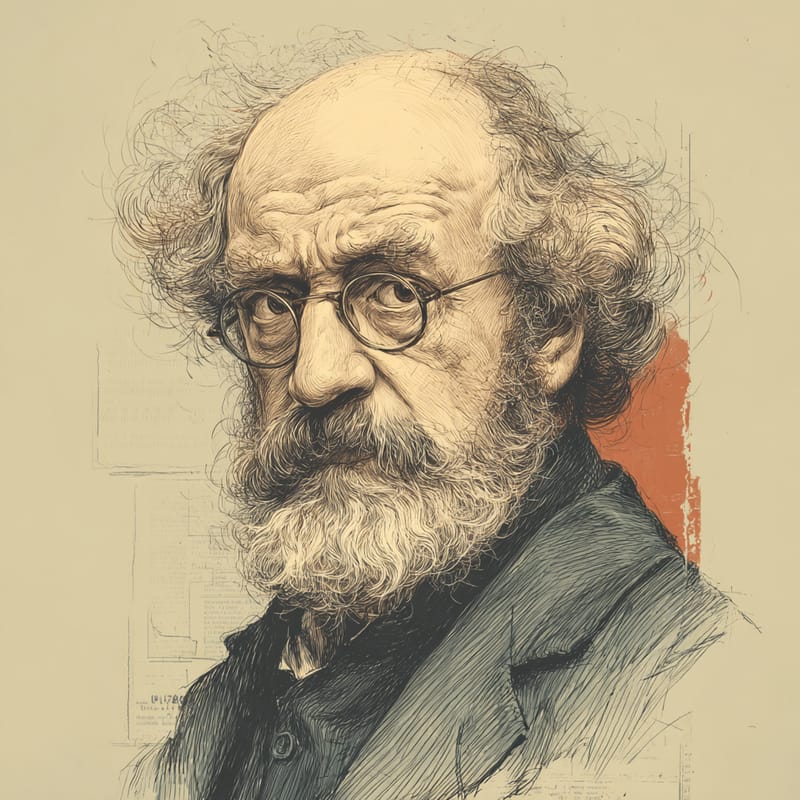
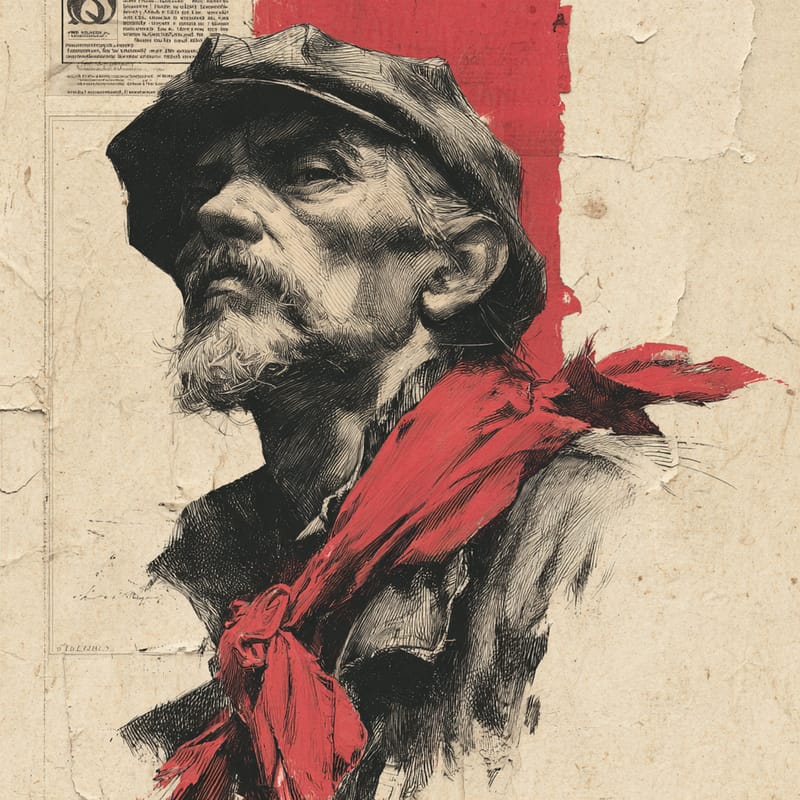
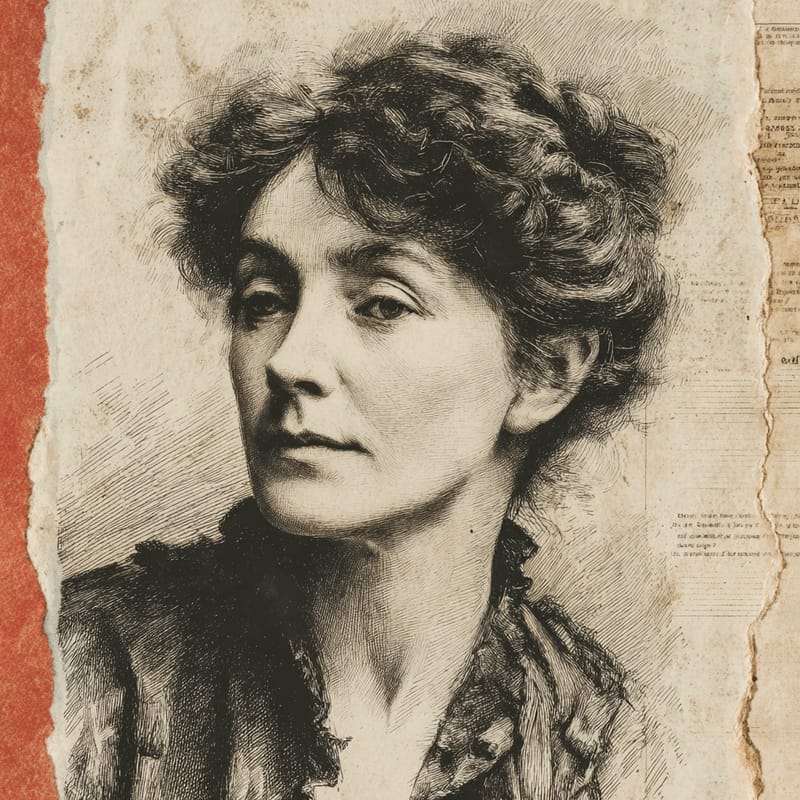
On the 99ideologies three-axis compass, the minds closest to Herman Gorter are Paul Mattick (99% alike), Otto Rühle (98% alike) and Anton Pannekoek (98% alike). The furthest is Adam Sutler (0% alike).