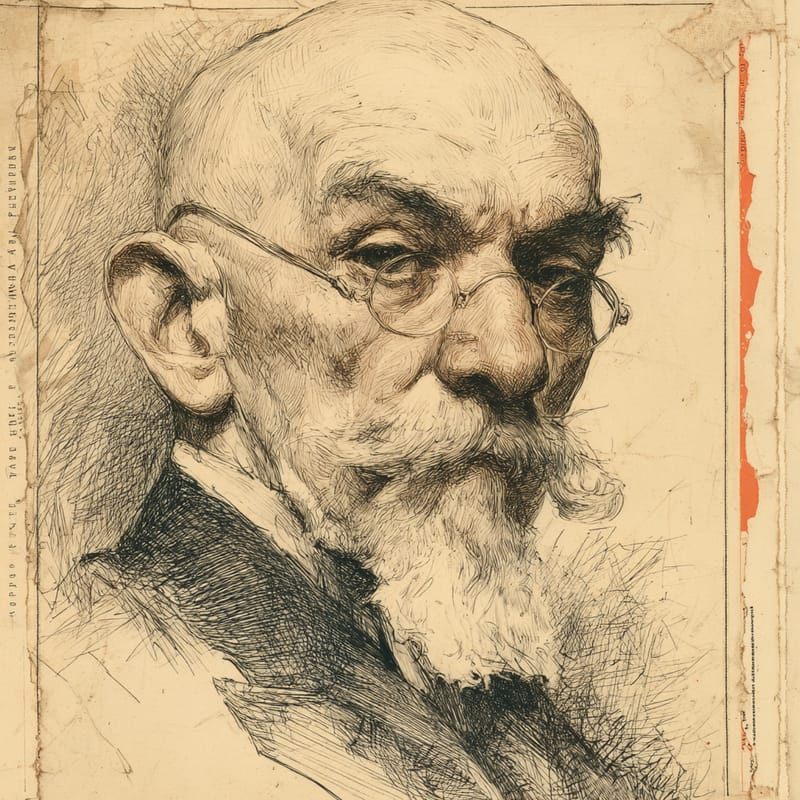
Anton Pannekoek
All power to the councils
Communism without the party-state.
Reformist Council CommunistOne of 729 ideologies · enter the Council Communist hall →- Role
- Theorist & astronomer
- Era
- 1873–1960
- Region
- Netherlands
- Social band
- Reformist
- Placement
- −92 · −74 · +48
§ Where Anton Pannekoek stands
3 axesPannekoek wanted common ownership run directly by the producers. In Workers' Councils, written during the German occupation and published in 1946, he described factories managed by elected councils, linked by recallable delegates into a federated system that would coordinate production without capitalists or state planners. He regarded nationalisation by a party-state as merely a new form of capitalism.
Pannekoek rejected both parliamentary politics and the vanguard party. In his 1912 debate with Kautsky he argued that mass action, not elections, would break the power of the bourgeois state, and he left the Dutch Communist Party in 1921 over the Comintern's turn to parliaments and trade unions. He still envisaged a structured council system with delegates, not the end of all collective authority.
A scientific rationalist, Pannekoek treated Marxism as an extension of the scientific worldview, linking it with evolutionary theory in Marxism and Darwinism (1909). He was an internationalist who opposed the First World War and wrote extensively for workers' education, and his progressive outlook lay in secular reason and working-class self-emancipation rather than in cultural campaigns.
How close are you to Anton Pannekoek?
Three statements, one per axis. Answer them and we’ll drop you on the compass next to them.
§ The story
HistoricalAntonie Pannekoek (1873–1960) was a Dutch astronomer and Marxist theorist. Born in Vaassen, he studied at Leiden and worked at its observatory, then taught at the German Social Democratic Party's school in Berlin and joined the radical left in Bremen before the First World War. Back in the Netherlands he became a lecturer and later professor at the University of Amsterdam, where he founded its astronomical institute in 1921, and he did lasting work on the structure of the Milky Way and on stellar atmospheres.
Pannekoek became the leading theorist of council communism. He backed mass strikes against Karl Kautsky's parliamentary caution, belonged to the Dutch party that became the Communist Party in 1918, and spoke for the anti-parliamentary Dutch and German left that Lenin attacked in Left-Wing Communism (1920). After breaking with the Communist International he argued, in Lenin as Philosopher (1938) and Workers' Councils (1946), that the Bolshevik party-state had produced a new ruling bureaucracy, and that socialism meant workers running production themselves through their own councils.
Notable for
- 01Theorist of workers' councils
- 02'Workers' Councils'
- 03Critic of Leninist vanguardism
Key works & moments
- 1909Publishes Marxism and Darwinism, linking historical materialism with evolutionary theory.
- 1912Debates Karl Kautsky on mass action and revolution in the SPD journal Die Neue Zeit.
- 1920Publishes World Revolution and Communist Tactics, rejecting parliamentary and union tactics for the West.
- 1921Founds the University of Amsterdam's astronomical institute and leaves the Dutch Communist Party.
- 1938Publishes Lenin as Philosopher under the pseudonym John Harper.
- 1946Publishes Workers' Councils, the classic statement of council communism.
§ Minds closest to Anton Pannekoek
All minds →

§ Also in the Council Communist hall
Enter the hall →The closest minds above are this hall’s whole roster.
§ Common questions
4 answersWhat was Anton Pannekoek's political ideology?
Anton Pannekoek was the leading theorist of council communism: on the 99ideologies three-axis compass, a Reformist Council Communist. Economically he sat at the socialist pole (−92), seeking production run directly by federated workers' councils. On governance he was strongly libertarian (−74), rejecting both parliament and the Bolshevik vanguard party. Socially he was progressive (+48), a scientific rationalist and internationalist who saw socialism as the self-emancipation of the working class.
Was Anton Pannekoek left-wing or right-wing?
Left-wing, on the far left but at odds with Leninism. Pannekoek wanted capitalism abolished and production placed in workers' hands, but he argued that the Bolshevik party-state had created a new ruling bureaucracy rather than socialism. That makes him a libertarian or left communist: as hostile to Soviet-style communism as to capitalism, and closer in spirit to anarchism's distrust of the state than to the Communist parties of his day.
What is council communism?
Council communism is a current of Marxism holding that workers' councils, not parties, parliaments or trade unions, are the organs of revolution and of a socialist society. It grew out of the German and Dutch revolutionary left after 1918, inspired by the Russian soviets and the German workers' councils, and was developed by Pannekoek, Herman Gorter, Otto Rühle and later Paul Mattick. Council communists rejected Lenin's vanguard party and came to see the Soviet Union as state capitalism, run by a bureaucracy rather than by workers.
Which minds are closest to Anton Pannekoek?
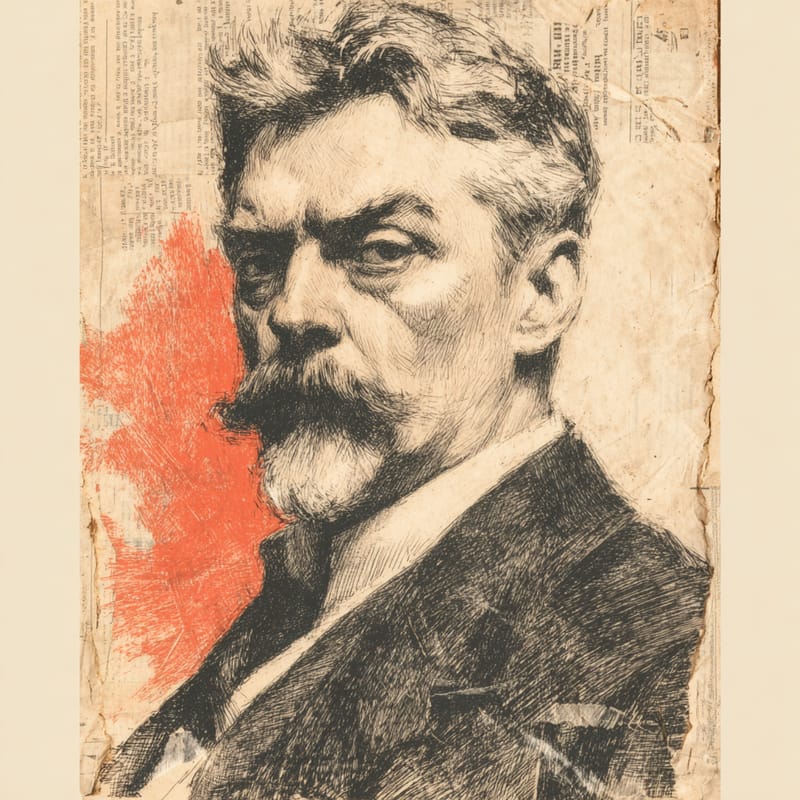
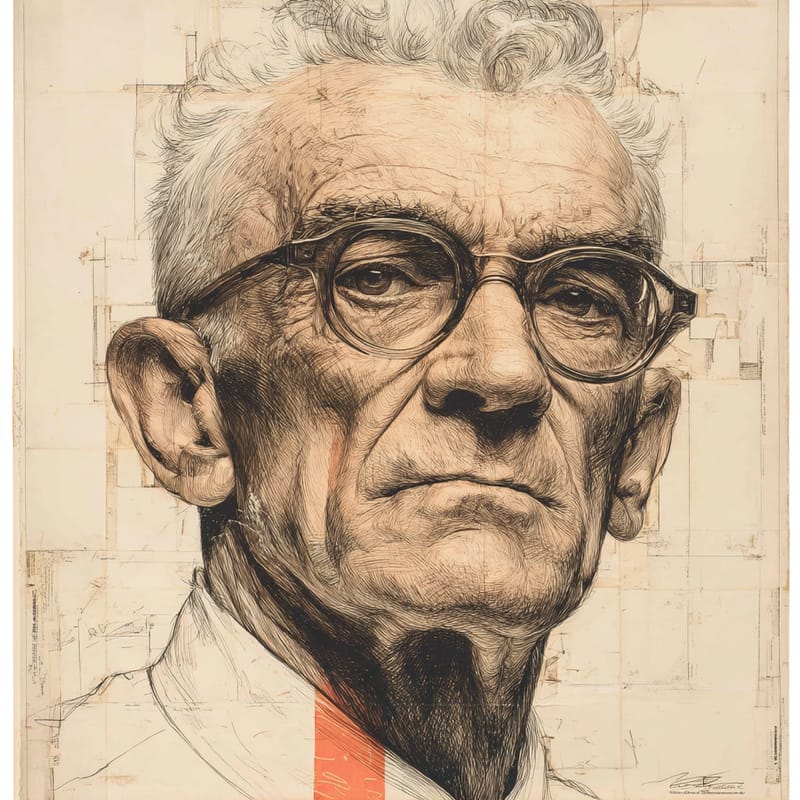
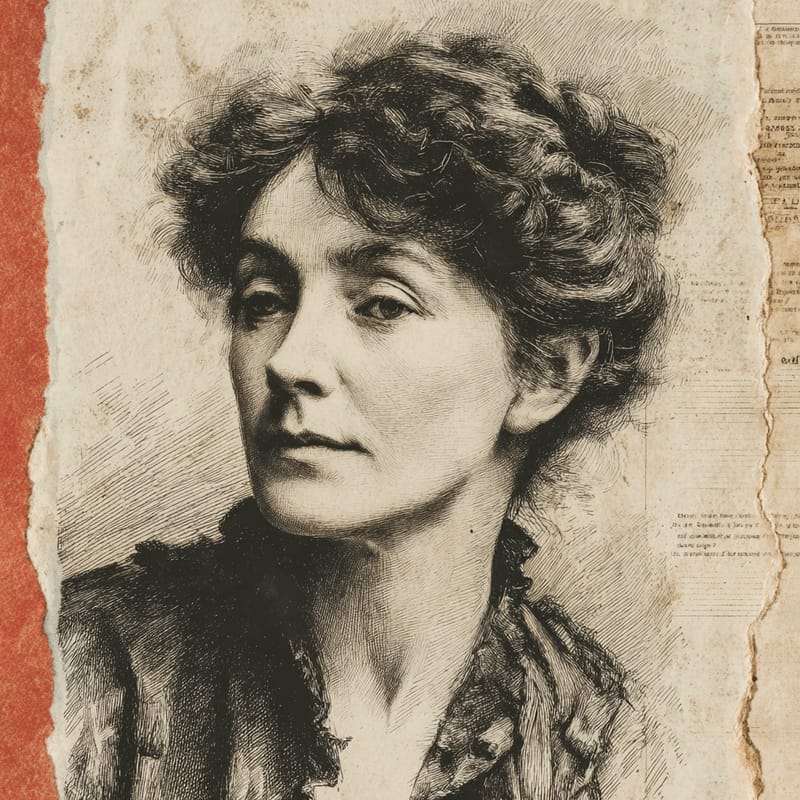
On the 99ideologies three-axis compass, the minds closest to Anton Pannekoek are Cornelius Castoriadis (99% alike), Otto Rühle (99% alike) and The Communard (archetype) (98% alike). The furthest is Adam Sutler (0% alike).