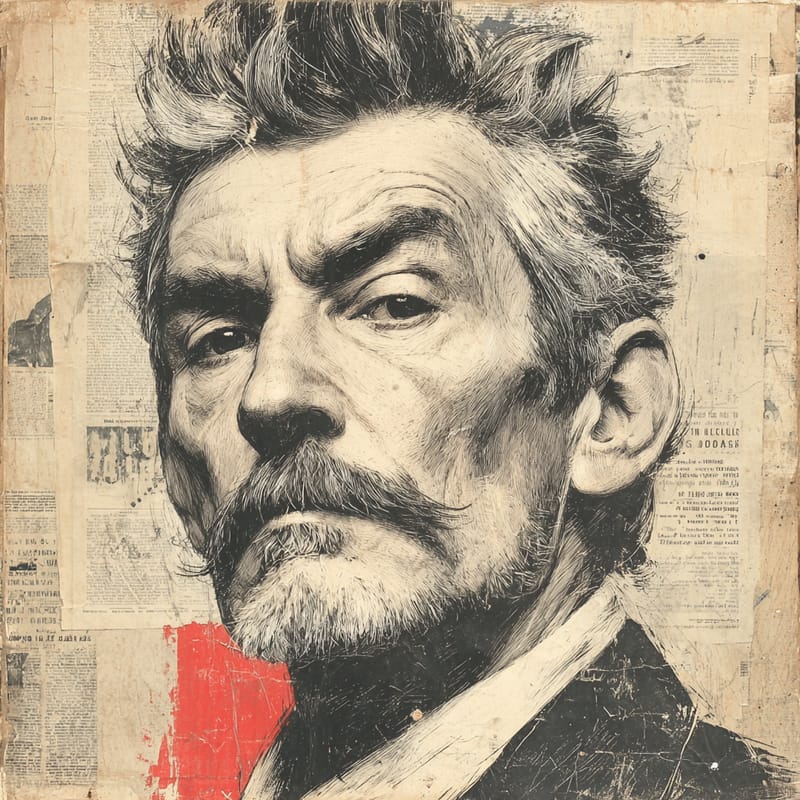
Carlos Cardoen (illustrative)
The regime's capitalist
Private fortune under authoritarian patronage.
Traditional PinochetistOne of 729 ideologies · enter the Pinochetist hall →- Role
- Industrialist
- Era
- b. 1942
- Region
- Chile
- Social band
- Traditional
- Placement
- +92 · +90 · −50
§ Where Carlos Cardoen (illustrative) stands
3 axesCardoen's career is a case study in private enterprise under Chile's free-market dictatorship. His firm grew in the late 1970s and 1980s, after the Chicago Boys had cut import tariffs to a uniform 10 per cent by 1979 and opened the economy to exports, and he built a private industrial fortune by selling abroad. Later investments in hotels, vineyards and tourism in Colchagua continued that entrepreneurial path.
Cardoen held no political office, so his place on this axis reflects the order in which he prospered. His arms business grew under a military regime that, cut off from US weapons by the 1976 Kennedy Amendment, encouraged a domestic arms industry, and the placement records that alignment with authoritarian-era capitalism rather than any public political role.
Cardoen is not known for public pronouncements on moral questions; the moderately traditional placement reflects the conservative business milieu he belonged to under the Pinochet regime. His later cultural projects in Colchagua, from the museum's collections on Chilean history to the region's wine tourism, celebrate national and regional heritage rather than challenging it.
How close are you to Carlos Cardoen (illustrative)?
Three statements, one per axis. Answer them and we’ll drop you on the compass next to them.
§ The story
HistoricalCarlos Cardoen Cornejo (born 1942) is a Chilean engineer and industrialist who built one of the country's best-known private arms businesses during the military government of Augusto Pinochet. He founded Industrias Cardoen, which expanded into armaments as Chile, cut off from American weapons by the US Kennedy Amendment of 1976, encouraged a domestic arms industry. The company became a significant exporter, and Cardoen a prominent member of the business elite of the period.
Cardoen became internationally known in the 1980s, when his company supplied cluster bombs to Iraq during the Iran–Iraq War, sales that drew scrutiny after Iraq's 1990 invasion of Kuwait. In later decades he turned to tourism, wine and culture in the Colchagua Valley, founding the Colchagua Museum in Santa Cruz. His career illustrates the entrepreneurial class that prospered under Chile's authoritarian free-market order, and he is profiled here in that illustrative role rather than as a political leader.
Notable for
- 01Built an industrial-arms fortune
- 02Regime-era business elite
- 03Authoritarian-capitalism patronage
Key works & moments
- 1970sFounds Industrias Cardoen, the company that makes his fortune.
- 1976The US Kennedy Amendment cuts off American arms sales to Chile, spurring local arms makers.
- 1980sIndustrias Cardoen supplies cluster bombs to Iraq during the Iran–Iraq War.
- 1990sTurns to tourism and culture in Colchagua, founding the Colchagua Museum in Santa Cruz.
§ Minds closest to Carlos Cardoen (illustrative)
All minds →

§ Also in the Pinochetist hall
Enter the hall →§ Common questions
4 answersWhat is Carlos Cardoen's political ideology?
Carlos Cardoen is profiled as an illustrative figure of the business class that prospered under Chile's military regime: on the 99ideologies three-axis compass, a Traditional Pinochetist. Economically he sits near the market extreme (+92) as a private industrialist who built an export fortune in a liberalised economy. On governance he is strongly authoritarian (+90), reflecting the dictatorship under which his business grew, and socially he is moderately traditional (−50), belonging to a conservative business elite.
Is Carlos Cardoen left-wing or right-wing?
The placement puts him on the right, although he is a businessman rather than a politician and has not led any party. His career is tied to private enterprise and to the economic order created under Augusto Pinochet, whose government liberalised trade and encouraged a domestic arms industry after the United States cut off weapons sales in 1976. The verdict reflects that alignment with free-market, authoritarian-era capitalism rather than any declared political programme.
Did Carlos Cardoen sell weapons to Iraq?
Yes. In the 1980s his company, Industrias Cardoen, supplied cluster bombs to Iraq during its war with Iran, as one of several foreign suppliers that armed Saddam Hussein's forces in that conflict. The sales became internationally controversial after Iraq's 1990 invasion of Kuwait, when Western governments and journalists examined how Baghdad had built up its arsenal. Cardoen later moved into tourism, wine and cultural projects in Chile's Colchagua Valley.
Which minds are closest to Carlos Cardoen (illustrative)?
On the 99ideologies three-axis compass, the minds closest to Carlos Cardoen (illustrative) are Vladimiro Montesinos (97% alike), Park Chung-hee (97% alike) and José Piñera (96% alike). The furthest is Emma Goldman (0% alike).