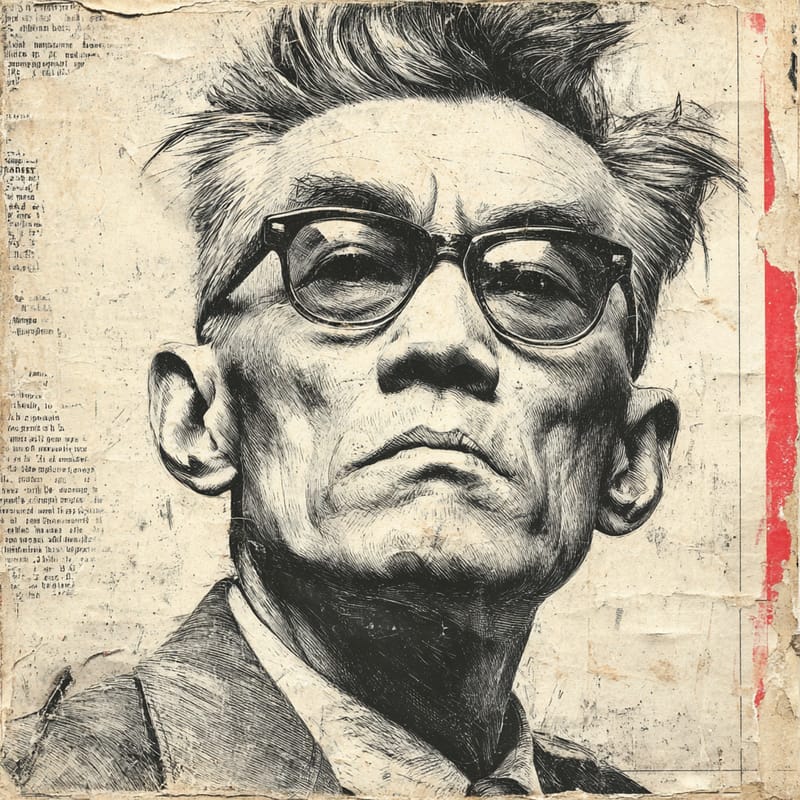
Park Chung-hee
Developmental dictatorship
Forced growth under an iron hand.
Traditional PinochetistOne of 729 ideologies · enter the Pinochetist hall →- Role
- President
- Era
- 1917–1979
- Region
- South Korea
- Social band
- Traditional
- Placement
- +90 · +92 · −58
§ Where Park Chung-hee stands
3 axesPark's South Korea was emphatically capitalist: private conglomerates such as Hyundai and Samsung became the engines of the export drive launched with the First Five-Year Economic Development Plan in 1962, and unions were kept weak. But it was capitalism under command: banks nationalised in 1961 channelled cheap credit to favoured exporters, and the 1973 Heavy and Chemical Industry Drive chose which industries would be built.
Park ruled through the army and the Korean Central Intelligence Agency. He won elections in 1963, 1967 and 1971, but in October 1972 declared martial law and imposed the Yushin Constitution, under which an electoral body he controlled chose the president without term limits. In 1975 eight men convicted in the People's Revolutionary Party case, later ruled a fabrication, were hanged within a day of their final appeal.
Park promoted a disciplined, Confucian-inflected nationalism. His 1968 National Charter of Education, memorised by schoolchildren, told citizens they were born with a historic mission to revive the nation, the New Village Movement of 1970 preached diligence, self-help and cooperation in the countryside, and in the 1970s police measured skirt lengths and cut long hair.
How close are you to Park Chung-hee?
Three statements, one per axis. Answer them and we’ll drop you on the compass next to them.
§ The story
HistoricalPark Chung-hee (1917–1979) ruled South Korea from 1961 until his assassination, first as head of a military junta and from 1963 as president. Born into a poor farming family near Gumi under Japanese rule, he trained as a teacher, then attended military academies in Manchukuo and Japan and served as a lieutenant in the Manchukuo army. After 1945 he joined the new Korean army, survived a death sentence after his arrest in 1948 for involvement in a communist cell, and rose to the rank of major general.
Park seized power in the coup of 16 May 1961 and oversaw an export-led industrialisation that transformed one of the world's poorest countries, the so-called Miracle on the Han River. That growth came with harsh repression: the KCIA spied on and abducted opponents, the 1972 Yushin Constitution allowed him to rule indefinitely, and dissidents were tortured and executed. He was shot dead by his own intelligence chief, Kim Jae-gyu, on 26 October 1979, and he remains one of the most divisive figures in Korean history.
Notable for
- 01Drove the 'Miracle on the Han'
- 02Yushin authoritarian constitution
- 03Export-led industrialisation
Key works & moments
- 1944Graduates from Japan's Imperial Army Academy and is commissioned in Manchukuo's army.
- 1961Seizes power in the 16 May military coup.
- 1962Launches the First Five-Year Economic Development Plan.
- 1965Normalises relations with Japan, securing grants and loans for industrialisation.
- 1972Declares martial law in October and imposes the Yushin Constitution, allowing indefinite rule.
- 1979Shot dead on 26 October by his intelligence chief, Kim Jae-gyu.
§ Minds closest to Park Chung-hee
All minds →


§ Also in the Pinochetist hall
Enter the hall →§ Common questions
4 answersWhat was Park Chung-hee's political ideology?
Park Chung-hee was a developmental dictator: on the 99ideologies three-axis compass, a Traditional Pinochetist. Economically he sat near the market end (+90), building an export-driven capitalist economy around private conglomerates, although the state directed credit and industry. On governance he was at the authoritarian extreme (+92), ruling through a coup, the KCIA and the Yushin Constitution, and socially he was traditionalist (−58), promoting disciplined nationalism and Confucian values.
Was Park Chung-hee left-wing or right-wing?
Right-wing. Although he was briefly involved with a communist cell in the late 1940s, Park ruled as a fierce anti-communist, sent combat troops to fight alongside the United States in Vietnam and suppressed the left at home. His economic model relied on private conglomerates and exports rather than public ownership, even with heavy state guidance, and his nationalist, authoritarian style places him on the developmental, authoritarian right.
Was Park Chung-hee a dictator?
Yes, by any standard definition, although he also won elections. Park took power in a military coup in 1961, ruled for 18 years and, after defeating Kim Dae-jung in the 1971 election, imposed the 1972 Yushin Constitution that removed term limits and let him be re-elected by a hand-picked electoral body. His intelligence agency abducted opponents, including Kim Dae-jung from Tokyo in 1973. Koreans remain divided over his legacy, crediting him with rapid growth while condemning his repression.
Which minds are closest to Park Chung-hee?
On the 99ideologies three-axis compass, the minds closest to Park Chung-hee are Suharto (99% alike), Carlos Cardoen (illustrative) (97% alike) and Coriolanus Snow (95% alike). The furthest is Emma Goldman (0% alike).