
Rosa Luxemburg
Freedom is always for the dissenter
Revolution through mass democracy, not dictatorship.
Progressive LuxemburgistOne of 729 ideologies · enter the Luxemburgist hall →- Role
- Revolutionary & theorist
- Era
- 1871–1919
- Region
- Poland / Germany
- Social band
- Progressive
- Placement
- −92 · −24 · +65
§ Where Rosa Luxemburg stands
3 axesLuxemburg wanted the full socialisation of production, won by the working class itself rather than granted from above. Her 1899 pamphlet Social Reform or Revolution? rejected Bernstein's claim that capitalism could be reformed into socialism, and The Accumulation of Capital (1913) argued that capitalism depends on expanding into non-capitalist regions, making imperialism and crisis unavoidable.
She was a fierce democrat inside revolutionary Marxism. In 1904 she attacked Lenin's centralist party model, and in The Russian Revolution, written in prison in 1918, she condemned the Bolsheviks' dissolution of the Constituent Assembly and their curbs on the press and elections. Yet she still endorsed a dictatorship of the proletariat, understood as the rule of the whole class, which is where her libertarian lean stops.
Luxemburg was a radical internationalist who opposed militarism and nationalism alike, even rejecting Polish independence as a distraction from the class struggle. Her Junius Pamphlet, written in 1915, indicted the war and the Social Democrats who had voted for it, and in her 1912 speech Women's Suffrage and Class Struggle she argued that votes for women were a working-class demand.
How close are you to Rosa Luxemburg?
Three statements, one per axis. Answer them and we’ll drop you on the compass next to them.
§ The story
HistoricalRosa Luxemburg (1871–1919) was a Polish-born Marxist theorist, economist and revolutionary who became one of the leading voices of the left wing of German Social Democracy. Born into a Jewish family in Zamość in Russian-ruled Poland, she fled to Switzerland at eighteen, earned a doctorate at the University of Zurich and co-founded the Social Democracy of the Kingdom of Poland. In 1898 she moved to Germany, where her polemic against Eduard Bernstein's revisionism made her name, and she later taught at the Social Democratic party school in Berlin.
Imprisoned for most of the First World War for opposing it, Luxemburg co-founded the Spartacus League with Karl Liebknecht and, at the turn of 1919, the Communist Party of Germany. Her critique of Lenin's centralism and of Bolshevik restrictions on democracy made her the patron of democratic and anti-authoritarian Marxism. During the failed January 1919 uprising, whose timing she had doubted, Freikorps soldiers seized and murdered her and threw her body into Berlin's Landwehr Canal. How far the Social Democratic government that deployed those troops bears responsibility remains bitterly contested.
Notable for
- 01'The Russian Revolution' (critique of Lenin)
- 02Mass-strike theory
- 03Co-founded the Spartacus League
Key works & moments
- 1899Publishes Social Reform or Revolution?, attacking Eduard Bernstein's revisionism.
- 1906The Mass Strike, the Political Party and the Trade Unions draws lessons from Russia's 1905 revolution.
- 1913Publishes The Accumulation of Capital, her major work of economic theory.
- 1915–16Writes the anti-war Junius Pamphlet in prison; it circulates illegally in 1916.
- 1918Writes The Russian Revolution in prison, criticising Bolshevik curbs on democracy.
- 1919Murdered by Freikorps soldiers in Berlin on 15 January, two weeks after co-founding the KPD.
In their own words
“Freedom is always and exclusively freedom for the one who thinks differently.”
§ Minds closest to Rosa Luxemburg
All minds →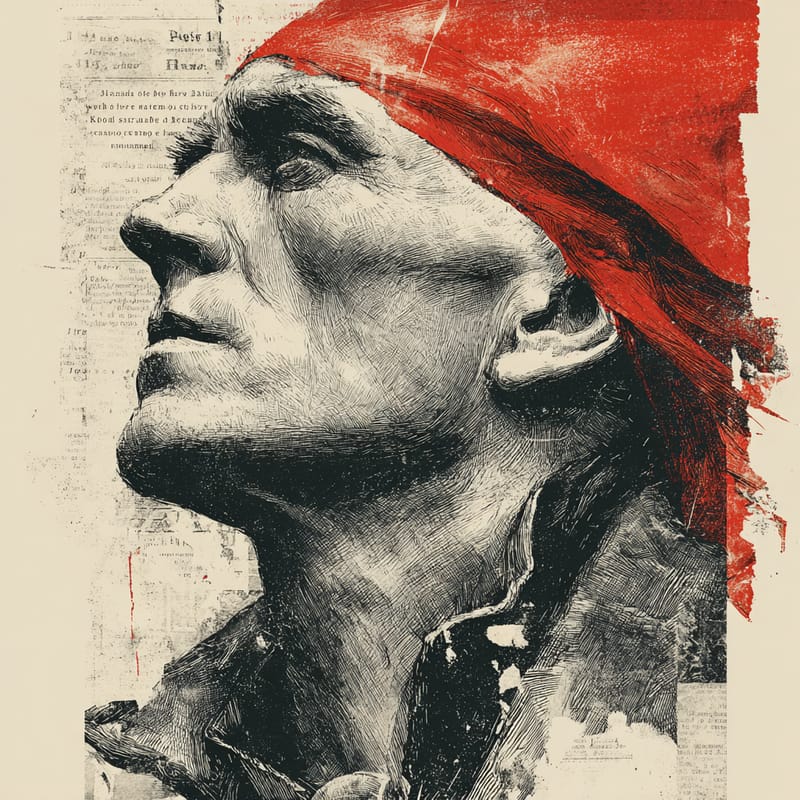



§ Also in the Luxemburgist hall
Enter the hall →The closest minds above are this hall’s whole roster.
§ Common questions
4 answersWhat was Rosa Luxemburg's political ideology?
Rosa Luxemburg was a revolutionary Marxist who gave her name to Luxemburgism: on the 99ideologies three-axis compass, a Progressive Luxemburgist. Economically she sat on the far left (−92), seeking common ownership won by workers' own mass action. On governance she leaned libertarian (−24), defending free elections, a free press and open debate against Bolshevik centralism. Socially she was clearly progressive (+65), an anti-militarist internationalist who backed votes for women.
Was Rosa Luxemburg left-wing or right-wing?
Left-wing, on the revolutionary far left. Luxemburg rejected the gradual reform of capitalism, co-founded the Communist Party of Germany and called for a workers' revolution. What distinguishes her from Leninists is her insistence that socialism be built by the masses themselves through democratic institutions, with freedom for opponents. That combination of radical economics and democratic principle is why both democratic socialists and anti-Stalinist communists claim her as their own.
Did Rosa Luxemburg support the Bolsheviks?
Only in part. Luxemburg hailed the October Revolution of 1917 as an act of historic daring and defended the Bolsheviks against Social Democrats who wanted them to fail. But in The Russian Revolution, written in prison in 1918, she condemned their dissolution of the Constituent Assembly, their restrictions on voting rights and their suppression of a free press, warning that without free elections and open debate public life would wither into the rule of a bureaucracy. She also criticised their land and nationalities policies.
Which minds are closest to Rosa Luxemburg?
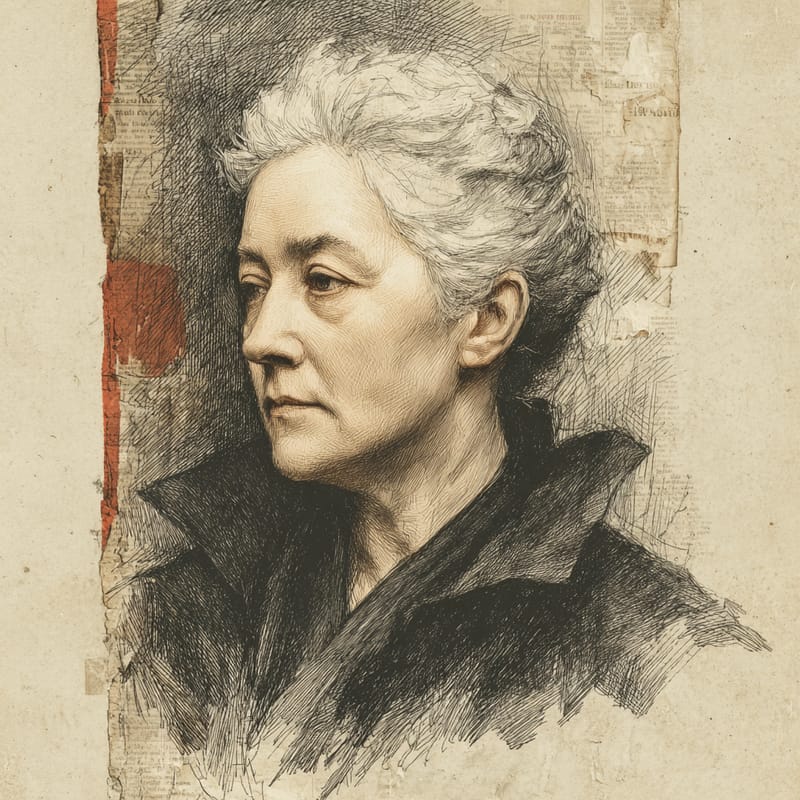
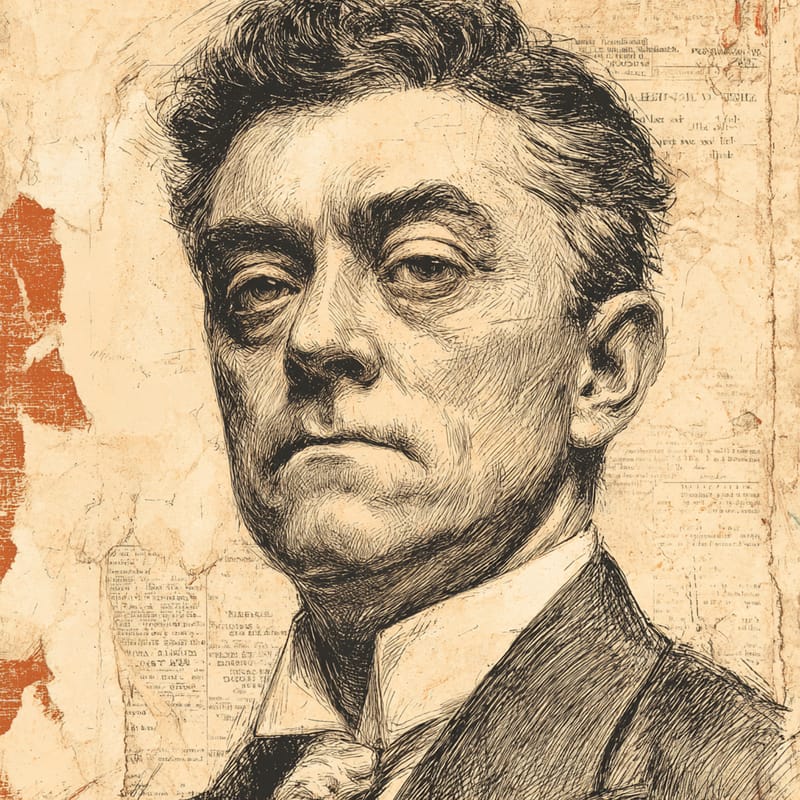
On the 99ideologies three-axis compass, the minds closest to Rosa Luxemburg are The Spartacist (archetype) (98% alike), Karl Liebknecht (98% alike) and Clara Zetkin (97% alike). The furthest is Adam Sutler (0% alike).