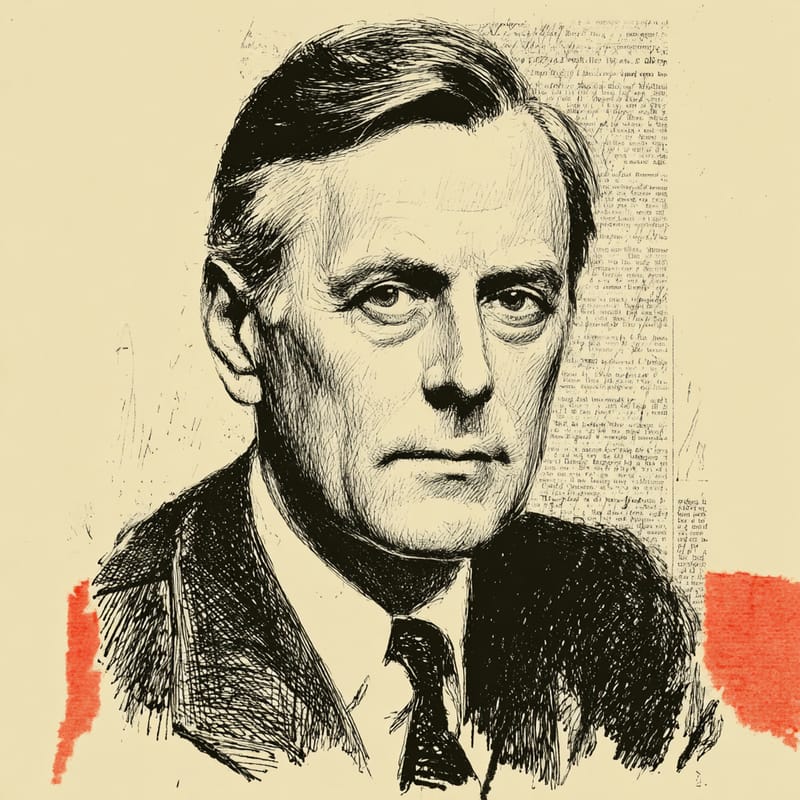
Paul Keating
The market reformer of Labor
Deregulation with a social conscience.
Heterodox Third-Way LabouriteOne of 729 ideologies · enter the Third-Way Labourite hall →- Role
- Prime Minister & Treasurer
- Era
- b. 1944
- Region
- Australia
- Social band
- Heterodox
- Placement
- +12 · +20 · +32
§ Where Paul Keating stands
3 axesAs treasurer Keating floated the Australian dollar in 1983, deregulated the banks, admitted foreign banks and cut tariffs, and his governments began selling Qantas and the Commonwealth Bank. He balanced this market opening with the Prices and Incomes Accord struck with the unions and compulsory employer superannuation from 1992, which keeps him only slightly right of centre.
Keating governed through cabinet, caucus and the corporatist Accord that brought unions and government together over national wage-setting. He used office energetically for national projects, from the Native Title Act 1993 to the push for annual APEC leaders' meetings, and his combative parliamentary style was famous, but he worked within the constitution even while campaigning to change it.
Keating was progressive on national identity and Indigenous rights. His 1992 Redfern Park speech acknowledged that non-Indigenous Australians had dispossessed Aboriginal people, his government legislated native title after the High Court's Mabo decision, and in 1993 he set up a Republic Advisory Committee to plan for replacing the monarchy with an Australian head of state.
How close are you to Paul Keating?
Three statements, one per axis. Answer them and we’ll drop you on the compass next to them.
§ The story
HistoricalPaul John Keating (b. 1944) was prime minister of Australia from 1991 to 1996 and, before that, treasurer from 1983 to 1991 in Bob Hawke's Labor government. Raised in working-class Bankstown in Sydney's south-west, he left school early, rose through Young Labor and the party machine, and was elected to the House of Representatives for Blaxland in 1969, aged 25. He challenged Hawke for the leadership twice in 1991, winning at the second attempt in December.
Keating was the driving force behind Labor's economic reforms of the 1980s, floating the dollar, deregulating finance and cutting tariffs, and he warned in 1986 that without reform Australia risked becoming a banana republic. As prime minister he won the 1993 election against the odds, legislated native title, delivered the Redfern Park speech and championed a republic and closer ties with Asia. Critics blamed his policies for the early-1990s recession, which he called 'the recession we had to have', and he lost heavily to John Howard in 1996.
Notable for
- 01Floated the Australian dollar
- 02Native Title and the Redfern Speech
- 03Compulsory superannuation
Key works & moments
- 1983As treasurer, floats the Australian dollar and begins deregulating the financial system.
- 1991Defeats Bob Hawke in a party-room ballot to become prime minister.
- 1992Delivers the Redfern Park speech; the superannuation guarantee becomes law.
- 1993Wins the 'unwinnable' election and passes the Native Title Act after the Mabo decision.
- 1996Loses office in a heavy defeat to John Howard's Coalition.
In their own words
“We took the traditional lands and smashed the traditional way of life.”
§ Minds closest to Paul Keating
All minds →


§ Also in the Third-Way Labourite hall
Enter the hall →§ Common questions
4 answersWhat is Paul Keating's political ideology?
Paul Keating is a Labor market reformer often seen as an early exponent of the Third Way: on the 99ideologies three-axis compass, a Heterodox Third-Way Labourite. Economically he sits slightly right of centre (+12), having floated the dollar, deregulated finance and cut tariffs while building compulsory superannuation and the union Accord. On governance he favours an active, reforming state (+20) working through cabinet and Parliament, and socially he is progressive (+32), above all on Indigenous reconciliation and an Australian republic.
Is Paul Keating left-wing or right-wing?
Centre-left, with a market-reforming streak that set him apart from Labor tradition. Keating dismantled much of the protected, regulated economy that Labor had long defended, which left-wing critics saw as neoliberalism. But he paired deregulation with a social wage negotiated with the unions, universal superannuation and support for Medicare, and on national identity, Indigenous rights and the republic he stood firmly on the progressive side of Australian politics.
Why did Paul Keating want Australia to become a republic?
Because he believed an independent, Asia-facing nation should have an Australian head of state rather than the British monarch. In 1993 he set up a Republic Advisory Committee chaired by Malcolm Turnbull, and in 1995 he told Parliament he wanted a republic by 2001, the centenary of federation, with a president chosen by a two-thirds vote of Parliament. He lost office in 1996, and the republic referendum held under John Howard in 1999 was defeated.
Which minds are closest to Paul Keating?
On the 99ideologies three-axis compass, the minds closest to Paul Keating are Matteo Renzi (98% alike), Josiah Bartlet's centrists (archetype) (98% alike) and Gerhard Schröder (97% alike). The furthest is Hans-Hermann Hoppe (34% alike).