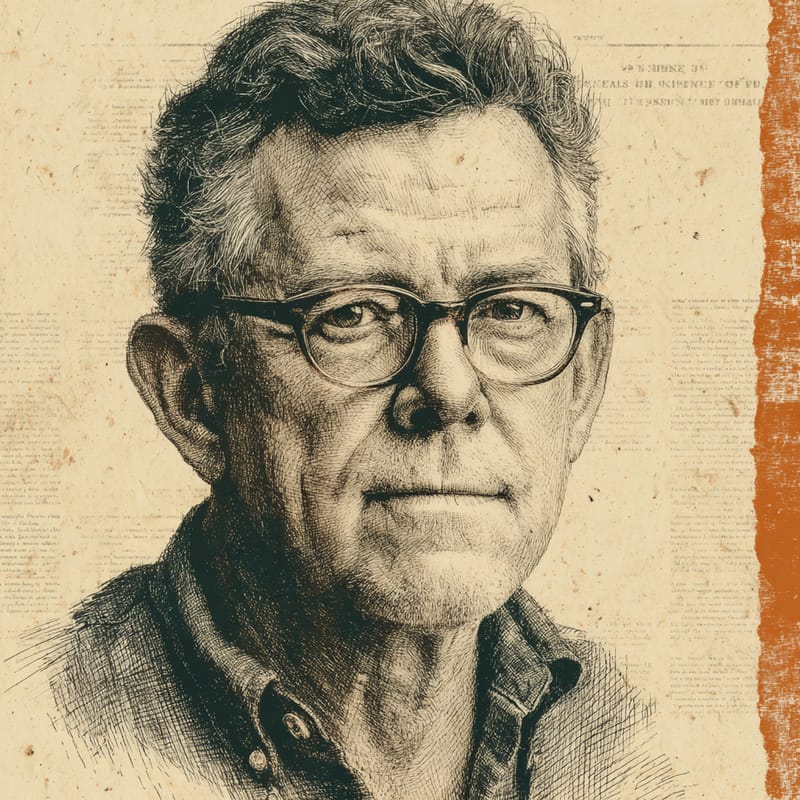
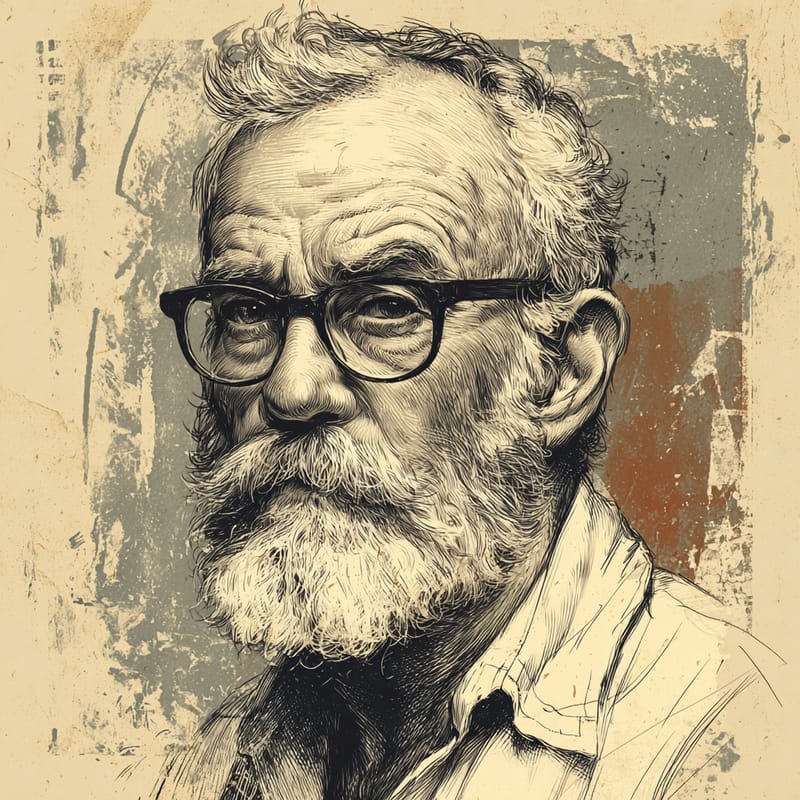
Hal Finney
Running bitcoin
The first transaction.
Heterodox Crypto-AnarchistOne of 729 ideologies · enter the Crypto-Anarchist hall →- Role
- Cryptographer
- Era
- 1956–2014
- Region
- United States
- Social band
- Heterodox
- Placement
- +70 · −90 · +35
§ Where Hal Finney stands
3 axesFinney devoted much of his energy to building money outside the banking system. His RPOW system of 2004 let users exchange reusable tokens backed by computational work, an attempt to create digital cash with real scarcity, and in 2009 he became one of Bitcoin's first users and testers. His goal was private, market-based money rather than any reform of the state's monetary policy.
Finney shared the cypherpunk conviction that code could protect individuals where laws would not. He worked on PGP, whose creator Phil Zimmermann was investigated by the US government over export controls from 1993 to 1996, and on anonymous remailers, tools meant to put private communication beyond the reach of state surveillance. In the cypherpunk manner, he preferred building tools to political campaigning.
Socially Finney was an optimistic individualist and transhumanist. Active in the Extropian movement of the 1990s, he hoped technology would extend human life and freedom, and after his death in 2014 his body was cryopreserved. His outlook was forward-looking and libertarian rather than egalitarian or traditionalist.
How close are you to Hal Finney?
Three statements, one per axis. Answer them and we’ll drop you on the compass next to them.
§ The story
HistoricalHarold Thomas 'Hal' Finney (1956–2014) was an American computer scientist and one of the most accomplished programmers of the cypherpunk movement. A Caltech engineering graduate who began his career developing video games, he became one of the first developers to work on Phil Zimmermann's encryption program PGP and ran early anonymous remailers for the movement. In 2004 he created RPOW, a system of reusable proofs of work that anticipated key ideas of digital currency.
Finney was one of the first people after Satoshi Nakamoto to run Bitcoin, posting 'Running bitcoin' in January 2009, and on 12 January he received the first Bitcoin transaction, ten coins sent by Nakamoto. Diagnosed with ALS in 2009, he kept programming with eye-tracking software as the disease paralysed him. He died in 2014 and his body was cryopreserved, reflecting a long interest in life extension. Some have speculated that he was Nakamoto, which he denied.
Notable for
- 01First Bitcoin transaction
- 02Reusable proof-of-work
- 03PGP development
Key works & moments
- 1990sWorks on PGP encryption software and runs anonymous remailers for the cypherpunks.
- 2004Creates RPOW, a reusable proof-of-work system for digital cash.
- 2008Among the first to respond to Satoshi Nakamoto's Bitcoin white paper on a cryptography mailing list.
- 2009Posts 'Running bitcoin' and receives the first Bitcoin transaction from Nakamoto on 12 January.
- 2009Diagnosed with ALS; continues programming with eye-tracking software as paralysis advances.
- 2014Dies of ALS complications; his body is cryopreserved by the Alcor Life Extension Foundation.
In their own words
“Running bitcoin”
§ Minds closest to Hal Finney
All minds →



§ Also in the Crypto-Anarchist hall
Enter the hall →§ Common questions
4 answersWhat was Hal Finney's political ideology?
Hal Finney was a cypherpunk who believed cryptography and digital cash could secure individual freedom: on the 99ideologies three-axis compass, a Heterodox Crypto-Anarchist. Economically he sat firmly on the market side (+70), building private money systems such as RPOW and helping launch Bitcoin. On governance he was strongly libertarian (−90), working on tools that put communication beyond state surveillance, and socially he leaned progressive (+35) as an optimistic transhumanist who hoped technology would extend human life.
Was Hal Finney left-wing or right-wing?
He is best described as libertarian rather than left or right. Finney's commitment to private digital money and his distrust of state control over communication and currency align with the free-market libertarian tradition. But he was not a social conservative: his enthusiasm for transhumanism, cryonics and radical technological change looked forward rather than to tradition, and his privacy work overlapped with civil-liberties causes shared across the spectrum.
Was Hal Finney Satoshi Nakamoto?
No firm evidence shows that he was, and he denied it. Finney had the skills and cypherpunk background, had built RPOW and received the first Bitcoin transaction, all of which fuelled speculation, as did the coincidence that he lived near a man named Dorian Nakamoto in California. But his public exchanges with Satoshi in 2008 and 2009 read as a conversation between two people, and Finney described himself as an early tester and supporter rather than the creator.
Which minds are closest to Hal Finney?
On the 99ideologies three-axis compass, the minds closest to Hal Finney are The Cryptonomicon Coder (archetype) (99% alike), Eric Hughes (97% alike) and Nick Szabo (97% alike). The furthest is Pol Pot (0% alike).